What Type of Watch Should I Get?
There are four real answers. Which one is right is decided by sleeves, water and ceremony.

Get a field watch. For most people asking this question, that is the answer: a plain dark dial with large numbers in a 36mm to 40mm case, which is legible, tough enough for daily life, fits more wrists than any other style, and looks correct with both a suit and a t-shirt. Pick a dive watch instead if the watch needs to go in water or you want presence on the wrist. Pick a dress watch if a jacket is worn most days. Pick a digital if the person wants function and weighs nothing above comfort.
The reason this question is hard to answer from a shop window is that every watch looks good in isolation. What separates them is context: how the watch will be worn, what it will get exposed to, and whether it has to be read quickly or merely glanced at. Below, each of the four types is described by what it is actually for, with the honest limitation that comes with it, and then three questions that settle the choice in about a minute.
How this page is funded: if you buy through a link here we may earn a commission, at no extra cost to you. It never decides what makes a list or what order the picks are in. Full disclosure.
Quick picks
The whole list at a glance. Tap any row to jump to the full write-up further down the page, or go straight to the listing.
| # | Product | Best for | Price |
|---|---|---|---|
| 1 | 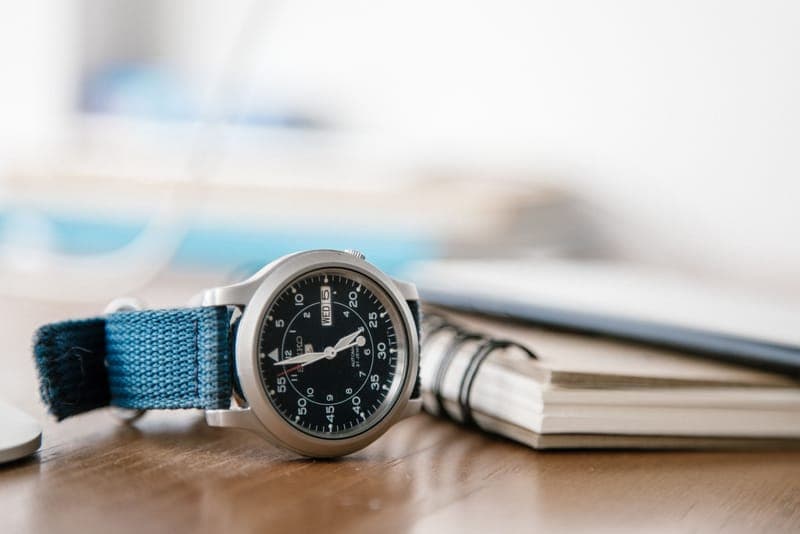 Seiko 5 SNK80937mm automatic, plain legible dial, goes with everythingUnder $200 | If the answer is a field watch | |
| 2 | 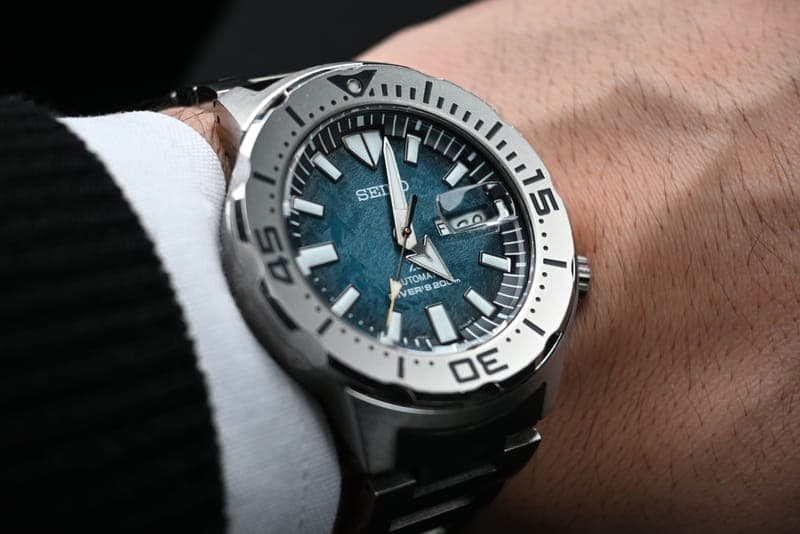 Casio MDV-106 Duro200m rated with a screw-down crown; looks far dearerUnder $50 | If the answer is a dive watch | |
| 3 | 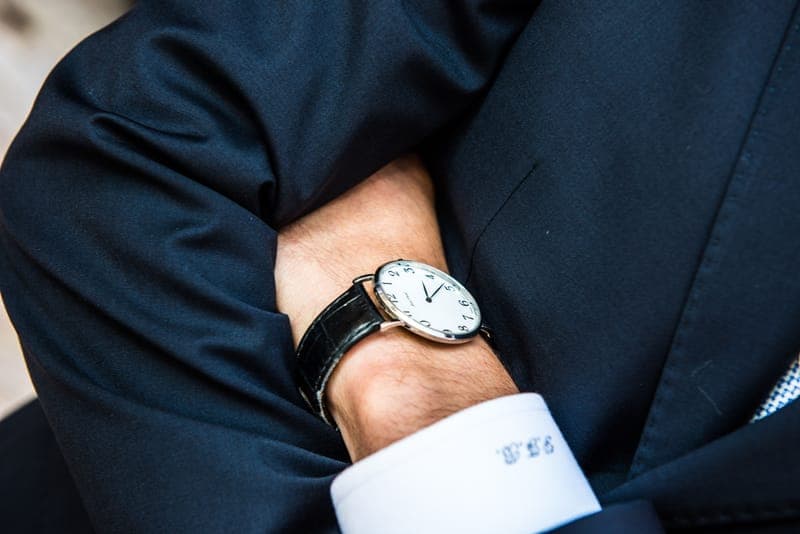 Orient Bambino Version 4Domed crystal and applied numerals; looks much pricierUnder $200 | If the answer is a dress watch | |
| 4 | 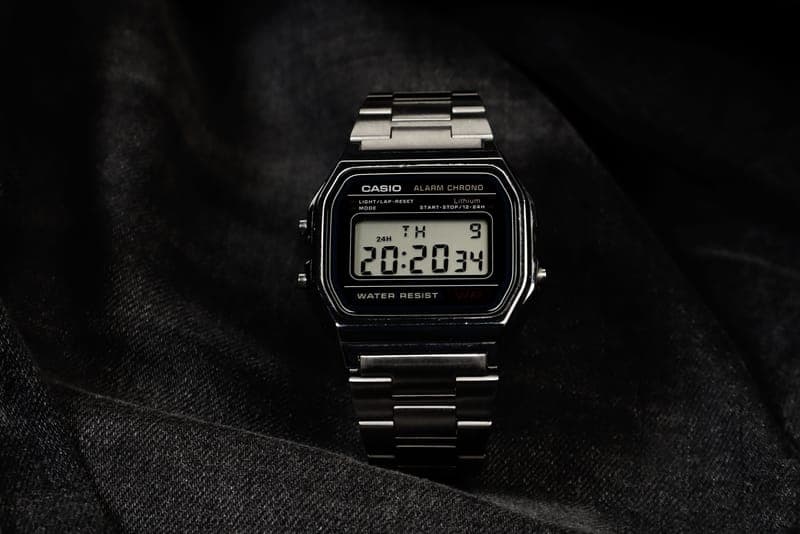 Casio G-Shock DW-5600EShock and 200m resistant, light, survives anythingUnder $100 | If the answer is a digital |
We have not handled these products. Nobody here has worn, tested or owned them, and we will not pretend otherwise. What we do is check that each pick is still sold, still holds up and still makes sense as a gift at this budget. How we choose.
What to buy, if you have decided
Seiko 5 SNK809
Seiko
A 37mm automatic field watch with a black dial, canvas strap and a window in the caseback showing the movement running.
The field watch answer, and the pick for the largest number of people asking this question. Plain black dial, large printed numbers, canvas strap, 37mm case — the whole style executed properly at a price that needs no justification. It is an automatic, wound by wrist movement with no battery at all, and the window in the caseback is the best possible way to show somebody why a mechanical watch is interesting. 37mm fits small and medium wrists without looking either borrowed or dainty. The limits: it stops after a day or two off the wrist and needs resetting, and water resistance is low, so it comes off before the pool.
What is good
- Automatic, so it is powered by wrist movement with no battery at all
- The exhibition caseback is the best possible way to show someone why mechanical watches are interesting
- 37mm is a genuinely versatile size
What to know
- Stops after a day or two off the wrist and needs resetting
- Water resistance is low, so keep it out of the pool
Casio MDV-106 Duro
Casio
A full-size analog dive-style watch with 200 meters of water resistance, a rotating bezel and a screw-down crown.
The dive watch answer, and the cheapest honest one there is. 200 meters of water resistance, a screw-down crown and a rotating bezel, which is the same functional recipe as watches costing twenty times more. The point of a dive watch for most owners is not diving — it is that water stops being something you think about, including showers, dishes, pools and the sea. It also has presence on the wrist in a way a field watch deliberately does not, which some recipients want. Two limits: at 42mm it is too large for a genuinely small wrist, and the stock rubber strap is the weakest part of the watch.
What is good
- 200m water resistance means swimming, showering and dishes with no thought at all
- Looks far more expensive than it is, which is the compliment owners repeat most
- Takes a strap swap well, so it can be smartened up later for very little
What to know
- The stock rubber strap is the weakest part and many owners replace it
- A 42mm case is too big for a genuinely small wrist
Orient Bambino Version 4
Orient
A dress watch with a domed crystal, applied numerals and an in-house automatic movement, on a leather strap.
The dress watch answer. A domed crystal over applied numerals is what makes this look considerably more expensive than it is, and the in-house automatic underneath both self-winds and hand-winds, so it can be set going without being worn for an hour first. This is the right type for somebody who wears a jacket regularly, because a dress watch is defined by sitting flat under a cuff — a thick sports case simply will not. The limits are the ones every dress watch has: low water resistance, so it comes off before the pool, and a leather strap that most owners eventually upgrade.
What is good
- Looks like a far more expensive dress watch, and the domed crystal does most of that work
- Automatic with hand-winding, so it can be set going without wearing it first
- The right answer for anyone who wears a jacket regularly
What to know
- Low water resistance, so it comes off before the pool
- The leather strap is the first thing most owners upgrade
Casio G-Shock DW-5600E
Casio
The original square G-Shock: shock resistant, 200 meters water resistant, resin case, digital display.
The digital answer, and the one to buy when function and durability outrank everything else. Shock resistant, 200 meters water resistant, resin case, and a silhouette so widely recognised that it needs no explaining. It survives work sites, gyms, boats and teenagers, and it is small enough for a slim wrist despite its reputation for bulk. For a gift the practical advantages are that there is nothing to size, nothing to be careful with and nothing that can realistically be broken. It will never read as dressy, and the backlight is dim by modern standards — both true, neither a reason to reconsider if durability is the brief.
What is good
- Survives work sites, gyms, boats and teenagers
- Small enough for a slim wrist despite the tough reputation
- A universally recognized silhouette that needs no explaining
What to know
- An all-resin build will never read as dressy
- The backlight is dim by modern standards
The four types, side by side
| Type | Built for | Typical size | Water | Weak at |
|---|---|---|---|---|
| Field | Being read instantly | 36 to 40mm | Low to 50m | Nothing much, which is the point |
| Dive | Water and presence | 40 to 44mm | 100 to 300m | Small wrists, formal settings |
| Dress | Sitting under a cuff | 34 to 39mm | Low | Water, rough use |
| Digital | Function and toughness | Varies | Splash to 200m | Looking smart |
Read the last column first. Every type of watch is good at something, and choosing well is mostly about which weakness you can live with rather than which strength appeals most in a photograph.
The field watch
A plain matte case, a dark dial, large printed numbers, luminous hands and nothing else. It was designed to be read instantly in bad light by somebody with other priorities, and that origin is why it is the most versatile style: there is no decoration to clash with anything, and a 36mm to 40mm case fits a wider range of wrists than any other category. It is also the hardest style to get wrong as a gift, which is why it leads this page.
The limitation is water. A classic field watch is not a swimming watch, and buyers routinely assume that because it looks rugged it must be waterproof. If the recipient swims or showers in a watch, either pick a higher-rated field-style watch or move to a dive watch instead.
The dive watch
A thick case, a screw-down crown, a rotating bezel and a water resistance rating of at least 100 meters, usually 200. Almost nobody who owns one dives, and that does not make it a costume: the practical benefit of 200 meters is that water stops being a consideration in daily life, which is a genuine quality-of-life feature for anyone who washes up, swims, sails or works outdoors.
Dive watches also have presence. They are bigger, heavier and more visible than anything else here, which is appealing to some recipients and the exact reason others never wear theirs. Two limits matter for a gift: they start around 40mm and go up, so a small wrist is a real problem, and the thickness means they do not sit under a shirt cuff comfortably.
The dress watch
Thin case, small diameter, clean dial, leather strap. A dress watch is defined by a single physical requirement — it has to disappear under a shirt cuff — and everything about the design follows from that. Typically 34mm to 39mm and as slim as the movement allows, with minimal markings and no bezel.
Buy this type only if the recipient actually wears a jacket or shirt cuffs regularly, which is the question most people skip. A dress watch worn with a t-shirt looks underpowered, and low water resistance means it has to come off for anything involving water. For somebody whose life has both halves in it, a field watch covers the dress occasions adequately and a dress watch does not cover the rest.
The digital
Function first: time, date, alarm, stopwatch, backlight, sometimes world time, often a battery measured in years. The modern digital watch is cheap, light, tough and genuinely useful, and the resin ones are nearly impossible to damage. For a gift, the advantages are that nothing needs sizing, nothing needs care, and nothing needs explaining.
The limitation is purely social. A resin digital watch will never read as smart, and a digital display is worse than an analog hand for the one task analog is genuinely better at — counting seconds while looking at something else. A steel-cased digital narrows the gap considerably and is worth considering if the recipient wants the function without the plastic.
Three questions that settle it
- Will the watch go in water? If yes, a dive watch or a high-rated digital. If that is the only requirement, stop here.
- Are shirt cuffs or a jacket worn most days? If yes, a dress watch or a slim field watch. If no, a dress watch is the wrong buy.
- Does the watch need to be read fast, in bad light, repeatedly? If yes, a field watch, and a plain one rather than a stylish one.
If the answers are no, no and no — the watch is simply going to be worn and enjoyed — buy the field watch. It is the default for a reason: it is the only one of the four types with no context in which it looks wrong.
What about a smartwatch?
A smartwatch is a different category rather than a fifth type, because it is a device with a replacement cycle rather than an object. It is the right answer for somebody who tracks their health or their running, and the wrong answer for anybody marking an occasion, wanting an engraving, or already happily wearing a watch. The ecosystem question matters too: an Apple Watch pairs only with an iPhone, so the recipient's phone decides the purchase before anything else does.
Size, whichever type you choose
Case diameter is the main reason a gifted watch goes unworn, and it is worth more attention than style. A wrist under about 6.5 inches around suits 34mm to 38mm. An average wrist of 6.5 to 7 inches takes 38mm to 41mm. Over 7 inches, 40mm and up works. If you have no measurement and cannot ask, 38mm is the figure that fits the widest range of people — which is one more argument for a field watch, since that is exactly where the style sits.
Questions buyers ask
What type of watch should I get?
A field watch, for most people: a plain dark dial with large numbers in a 36mm to 40mm case. It is legible, tough enough for daily wear, fits more wrists than any other style and looks correct with both a suit and a t-shirt. Choose a dive watch for water, a dress watch for cuffs, a digital for function.
What is the difference between a field watch and a dive watch?
A field watch is built to be read instantly: plain dial, matte case, 36mm to 40mm, usually low water resistance. A dive watch is built for water and presence: thicker case, rotating bezel, screw-down crown, 100 to 300 meters, usually 40mm and up.
Do I need a dress watch?
Only if shirt cuffs or a jacket are worn regularly. A dress watch is defined by sitting flat under a cuff, and it looks underpowered with casual clothes. If the week has both formal and casual days in it, a slim field watch covers both better than a dress watch covers one.
What is the most versatile type of watch?
The field watch. There is no decoration to clash with anything, the standard case sizes fit the widest range of wrists, and it reads correctly in both formal and casual settings. Its one real weakness is water resistance, which the higher-rated models partly solve.
What size watch should I buy?
34mm to 38mm for a wrist under 6.5 inches around, 38mm to 41mm for 6.5 to 7 inches, 40mm and up above that. If you cannot measure the wrist, 38mm is the safest single figure, because it fits the widest span of people without looking wrong at either end.
Read next
- Best field watches
If the answer was a field watch, here is the shortlist.
- Best dive watches under $500
If the answer was a dive watch.
- What size watch to buy
Wrist measurement to case diameter, with the table.
- Automatic vs quartz
The other half of the decision: what powers the watch you picked.