What Size Watch Should You Buy?
Measure the wrist, read the table, stop guessing. And if you cannot measure, guess small.

Measure the wrist circumference with a tape measure or a strip of paper, then match it to the table below. As a rule: a 6-inch wrist suits a 34 to 38mm case, a 7-inch wrist suits 38 to 42mm, and an 8-inch wrist suits 42 to 46mm. If you cannot measure, buy 38 to 40mm for a man and 28 to 34mm for a woman, and err small.
Size is the specification that most often ruins a watch gift, and it is the one nobody checks. A watch that is too big never gets worn, no matter how good it is — so this page is worth five minutes before you order.
How this page is funded: if you buy through a link here we may earn a commission, at no extra cost to you. It never decides what makes a list or what order the picks are in. Full disclosure.
Quick picks
The whole list at a glance. Tap any row to jump to the full write-up further down the page, or go straight to the listing.
| # | Product | Best for | Price |
|---|---|---|---|
| 1 |  Timex Weekender 38mm38mm suits nearly every adult wristUnder $50 | The safest size when you cannot measure | |
| 2 | Seiko 5 SNK80937mm, with short lugs that do not overhangUnder $200 | A genuinely slim wrist | |
| 3 | 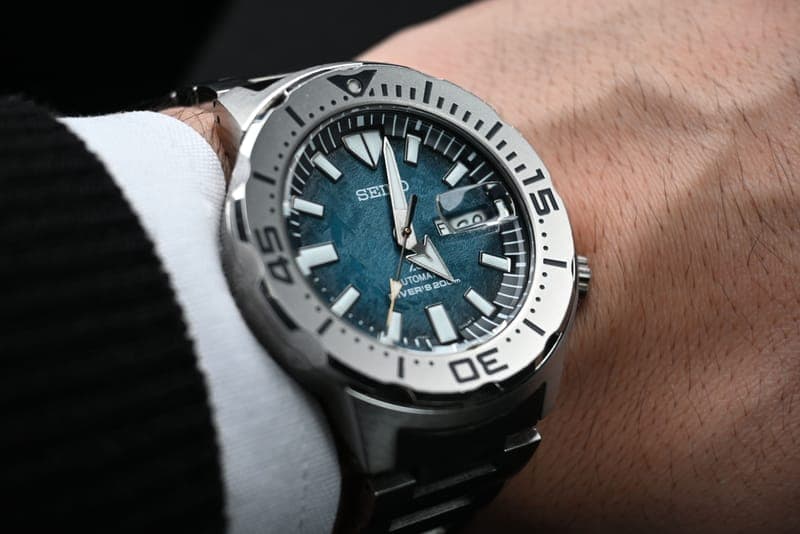 Orient KamasuSubstantial case that needs a wrist to carry itUnder $250 | A broad wrist |
We have not handled these products. Nobody here has worn, tested or owned them, and we will not pretend otherwise. What we do is check that each pick is still sold, still holds up and still makes sense as a gift at this budget. How we choose.
What to buy, if you have decided
Timex Weekender 38mm
Timex
A simple field-style watch on a slip-through fabric strap, with Timex's Indiglo backlight that lights the whole dial.
If you genuinely cannot get a measurement, this is the watch that removes the risk. A 38mm case sits well on the large majority of adult wrists — big enough not to look undersized on a broad one, small enough not to overwhelm a slim one. The fabric strap adjusts anywhere along its length, so there is no bracelet to size either, which is the other half of the fit problem.
What is good
- The strap pulls off in seconds, so one watch becomes several looks for pocket money
- A 38mm case is the safest size guess when you do not know the wrist
- Indiglo makes it readable in the dark, which sounds trivial until you use it
What to know
- The quartz movement ticks audibly in a quiet room
- A fabric strap is comfortable but never formal
Seiko 5 SNK809
Seiko
A 37mm automatic field watch with a black dial, canvas strap and a window in the caseback showing the movement running.
For a wrist around six inches, most modern watches look borrowed. At 37mm with a compact case, this one does not, and the short lug-to-lug distance matters as much as the diameter — it is what stops a watch overhanging the edges of a narrow wrist. It is also cheap enough to be a low-risk way to find out whether a smaller watch suits them.
What is good
- Automatic, so it is powered by wrist movement with no battery at all
- The exhibition caseback is the best possible way to show someone why mechanical watches are interesting
- 37mm is a genuinely versatile size
What to know
- Stops after a day or two off the wrist and needs resetting
- Water resistance is low, so keep it out of the pool
Orient Kamasu
Orient
A 200m automatic dive watch with a sapphire crystal and a steel bracelet, from Seiko-owned Orient.
The reverse problem is real too: on a wrist around eight inches, a 37mm watch looks lost. This one wears large and substantially, with a steel bracelet that adds visual weight, and on a broad wrist it looks proportionate rather than oversized. Sapphire crystal and 200 meters of water resistance mean it also happens to be the best-made watch in its bracket.
What is good
- A sapphire crystal at this money is unusual, and it resists scratches far better than mineral glass
- The 200m rating covers anything short of actual scuba work
- The bracelet is included, so nothing else needs buying
What to know
- Substantial on the wrist — think twice for a small-wristed recipient
- Bezel action is firm rather than smooth
The wrist size table
| Wrist circumference | In millimeters | Case diameter that suits it |
|---|---|---|
| 5.5 inches | 140mm | 28 to 34mm |
| 6 inches | 152mm | 34 to 38mm |
| 6.5 inches | 165mm | 36 to 40mm |
| 7 inches | 178mm | 38 to 42mm |
| 7.5 inches | 190mm | 40 to 44mm |
| 8 inches | 203mm | 42 to 46mm |
| 8.5 inches and above | 216mm+ | 44mm and above |
These are guides rather than rules, and personal preference moves them. Plenty of people deliberately wear watches at the small end of their range because the proportions look better, and plenty wear oversized watches on purpose. If you know what they currently wear, that beats any table.
How to measure a wrist without spoiling the surprise
The easiest method: find a watch or bracelet they already wear and measure that. A strap's total length, or a bracelet's inner circumference, tells you the wrist size without them ever knowing you looked.
- Take a strip of paper about half an inch wide, or a piece of string.
- Wrap it around the wrist just behind the wrist bone, snug but not tight.
- Mark where it overlaps, lay it flat, and measure to the mark.
- That figure is the wrist circumference — match it to the table above.
If you cannot get near the wrist at all, use build as a rough proxy: slim adults are usually 6 to 6.5 inches, average adults 6.5 to 7.5, and larger adults 7.5 to 8.5. Then err toward the smaller end of the resulting range.
Lug-to-lug matters as much as diameter
Case diameter is the number everybody quotes, but the measurement that decides whether a watch looks right is lug-to-lug: the distance from the top of the upper lugs to the bottom of the lower ones. That is the watch's actual footprint on the wrist, and if it exceeds the flat part of the wrist, the lugs overhang the edges and the watch looks too big no matter what the diameter says.
As a rough rule, lug-to-lug should be no more than about 80 percent of the flat width of the wrist. Two watches with the same 40mm case can differ by 6mm in lug-to-lug, which is why one looks right and the other does not. If a specification sheet lists it, it is worth a glance.
Thickness, strap width and bracelet sizing
Thickness is what decides whether a watch slides under a shirt cuff. Anything under about 11mm is comfortably dressy; over 14mm is a sports watch and will catch on a sleeve. For someone who wears shirts daily, thickness matters more than diameter does.
Strap width should be roughly half the case diameter — a 40mm watch typically takes a 20mm strap. And if the watch arrives on a steel bracelet, assume links need removing before it fits: a jeweler does it in ten minutes for a few dollars, and doing it before you wrap the gift is the difference between a watch they can wear that afternoon and one that needs a trip out.
If you get it wrong
Straps and bracelets are adjustable; case diameter is not. So check the returns window before buying, and do not engrave the watch until you know it fits — engraving makes a watch non-returnable and turns a fixable mistake into a permanent one.
One consolation: erring small is far more forgiving than erring large. A slightly small watch reads as a deliberate style choice, and smaller vintage-proportioned watches are currently fashionable. A slightly large watch reads as borrowed from somebody else, and no strap fixes it.
Questions buyers ask
What size watch should I get for a 7-inch wrist?
A case between 38 and 42mm, which covers most mainstream watches. If they prefer a vintage look, 38mm; if they like a substantial watch, 42mm. Check lug-to-lug as well as diameter.
What size watch should I get for a 6-inch wrist?
34 to 38mm, and pay attention to lug-to-lug — a compact case matters more than the diameter alone on a narrow wrist. A 37mm field watch is usually the sweet spot.
What is the safest size if I cannot measure?
38 to 40mm for a man and 28 to 34mm for a woman. Err small: a slightly small watch looks like a style choice, while a slightly large one looks borrowed and cannot be fixed with a strap.
What is lug-to-lug and why does it matter?
It is the distance from the top lugs to the bottom lugs — the watch's real footprint on the wrist. If it exceeds the flat part of the wrist, the lugs overhang and the watch looks oversized regardless of case diameter.
Will the bracelet need sizing?
Almost certainly, on any steel bracelet. A jeweler removes links in about ten minutes for a few dollars. Doing it before you wrap the gift is the single easiest way to make sure it is wearable straight away.
Read next
- Best watches for men
Sizes noted on every pick.
- Best watches for women
Cases actually sized for a narrower wrist.
- Is a watch a good gift?
The question that comes before this one.
- Best watches under $100
Where to start once you have the measurement.
- Best watch straps under $50
Including how to get the strap width right.