Dress Watch or Chronograph for the Office?
The honest answer usually comes down to case size and how strict the dress code is — not to which looks better.
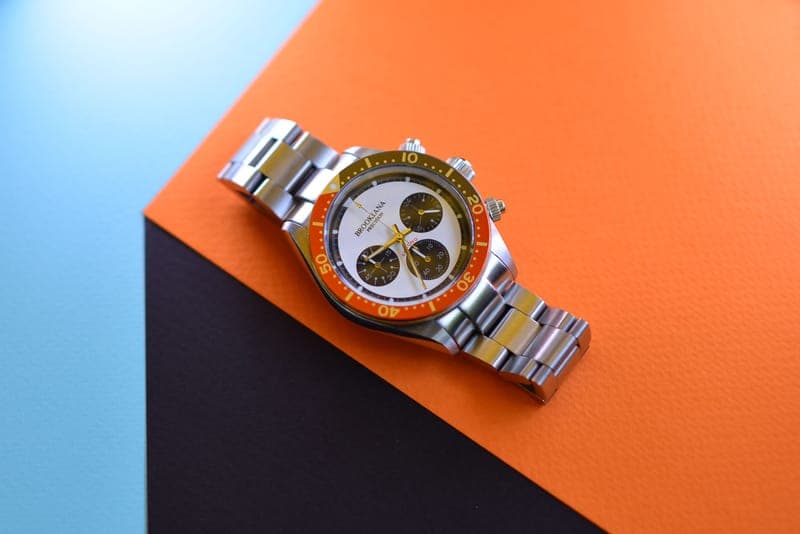
Short version. If the dress code involves a suit, or you have no idea how formal the office is, buy the dress watch — it is the lower-risk object and it works everywhere a chronograph works plus the places a chronograph does not. If the office is business-casual or softer and you would like the watch to be interesting rather than invisible, a chronograph is the better buy, with one caveat that decides more of these purchases than taste does: most chronographs are too big to go under a shirt cuff, and the ones that are not are the ones worth looking at.
The two categories are genuinely different objects rather than two styles of the same thing. A dress watch is a small, thin, plain watch designed to disappear under a cuff: two or three hands, a clean dial, usually a leather strap, often no date. A chronograph is a watch with a built-in stopwatch, which means pushers on the side, two or three sub-dials on the face, a wider and thicker case to fit the mechanism, and frequently a tachymeter scale around the edge. One is designed to be unobtrusive. The other is designed to be looked at.
That difference is why the usual advice — "a chronograph is more versatile because you can use the stopwatch" — is wrong for an office. Practically nobody uses the stopwatch. What you are actually buying in a chronograph is visual interest and a sense of mechanical purpose; what you are giving up is thinness, formality and sometimes legibility. Those are the real terms of the trade, and the four questions below settle it faster than any amount of looking at photographs.
What follows is those four questions, four picks — two of each, chosen so the comparison is real rather than rhetorical — a table of the figures that matter, and a plain section on the size problem. Every pick was confirmed live and in stock on the day this page was written, and every one carries its honest drawbacks.
How this page is funded: if you buy through a link here we may earn a commission, at no extra cost to you. It never decides what makes a list or what order the picks are in. Full disclosure.
Quick picks
The whole list at a glance. Tap any row to jump to the full write-up further down the page, or go straight to the listing.
| # | Product | Best for | Price |
|---|---|---|---|
| 1 | 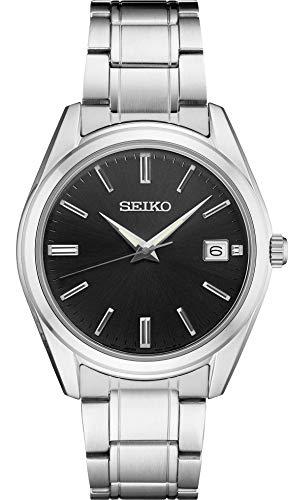 Seiko Essentials (SUR series)Slim quartz dress watch, sapphire on many references, 100mUnder $200 | The safe dress-watch answer for any dress code | $212.00$265.00−20% View on Amazon #ad How this is funded · Price as of November 21, 2026 |
| 2 | 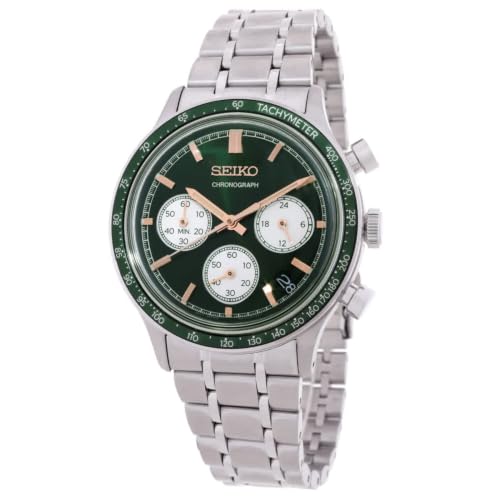 Seiko Essentials SSB48138.7mm chronograph — small enough to wear with a shirtUnder $500 | The chronograph that actually fits under a cuff | $313.94 View on Amazon #ad How this is funded · Price as of November 21, 2026 |
| 3 | 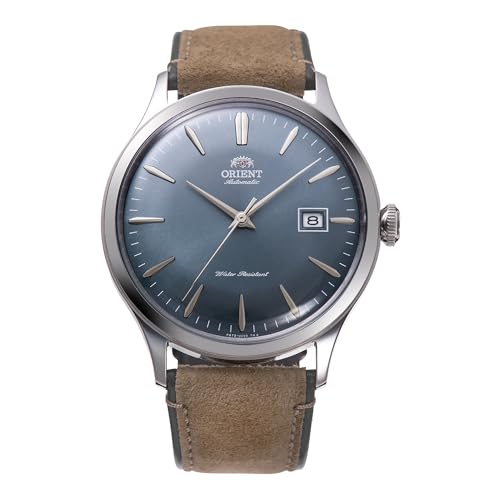 Orient Bambino Version 4Mechanical dress watch with a domed crystal, on leatherUnder $200 | Best dress watch if it should feel like an object | $206.65 View on Amazon #ad How this is funded · Price as of November 21, 2026 |
| 4 | 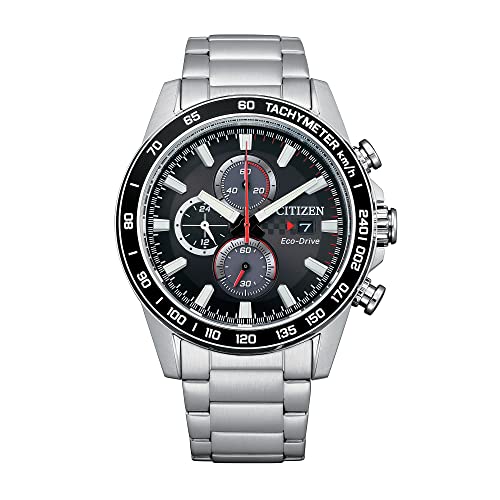 Citizen Eco-Drive Brycen44mm Eco-Drive chronograph — runs on light, no battery everUnder $250 | Best chronograph if you never want to change a battery | $189.00$375.00−50% View on Amazon #ad How this is funded · Price as of November 21, 2026 |
We have not handled these products. Nobody here has worn, tested or owned them, and we will not pretend otherwise. What we do is check that each pick is still sold, still holds up and still makes sense as a gift at this budget. How we choose.
What to buy, if you have decided
Seiko Essentials (SUR series)
Seiko
Seiko's quartz dress line: slim steel cases, clean dials, sapphire crystals on many references and 100 meters of water resistance.
The pick when the office is formal, or when you do not know how formal it is. Seiko's Essentials quartz line is a slim steel case with a clean dial, sapphire crystal on many references and 100 meters of water resistance, and it is the lowest-risk watch on this page by a wide margin: it is correct with a suit, correct with a jumper, and correct with a t-shirt, which is something no chronograph here can claim. Quartz is the right movement for this job too — nothing to wind, nothing to reset, and it is still accurate after a fortnight in a drawer, which matters for a watch you may only wear on working days. The Seiko name also carries weight with people who know nothing about watches, which is worth something in an office. Two honest cons. It is less romantic than a mechanical watch if the wearer is or might become an enthusiast — this is a tool bought for its competence, not an object with a story. And a plain quartz dress watch is, by design, not very interesting to look at; if you want the watch to be noticed, you are on the wrong side of this page.
What is good
- Quartz accuracy in a dress-watch shape — nothing to wind and nothing to reset
- Slim enough for a shirt cuff and tough enough for daily wear
- The Seiko name carries weight even with people who know nothing about watches
What to know
- Less romantic than a mechanical watch for an enthusiast recipient
- The reference numbers are confusing to shop — decide on the dial first
#ad How this is funded · Price as of November 21, 2026
Seiko Essentials SSB481
Seiko
A 38.7mm steel chronograph on a steel bracelet, running Seiko's 8T63 quartz movement: a 60-minute stopwatch in fifth-of-a-second steps, a date, a 24-hour hand and a small seconds hand. Box-shaped Hardlex crystal, screw-down case back, 5 bar water resistance.
The pick when you want a chronograph and you want it to work in an office, and it is the pick that makes this comparison close rather than one-sided. The Essentials SSB481 is a 38.7mm steel chronograph on a steel bracelet, and that measurement is the entire argument: the median chronograph is 42 to 45mm and simply does not slide under a buttoned cuff, while this one does. Lug-to-lug is 45.1mm, so it sits properly on a normal wrist rather than overhanging it. Inside is Seiko's 8T63 quartz chronograph — a 60-minute stopwatch in fifth-of-a-second steps, a date, a 24-hour hand and a small seconds hand — rated at plus or minus fifteen seconds a month with about three years per battery. It also has a screw-down case back and a box-shaped crystal, details usually reserved for pricier watches. Four honest cons. Water resistance is 5 bar, which is hand-washing and rain rather than swimming. Hardlex resists scratches better than acrylic but is well short of sapphire — the dress Seiko above is actually the tougher-faced watch. The tachymeter bezel is racing decoration almost nobody will use. And it is sold in several dial colors at different prices, so check which one a listing is selling.
What is good
- At 38.7mm across and 45.1mm lug to lug it is the rare chronograph that fits a normal wrist and goes under a shirt cuff
- Seiko rates the movement at plus or minus fifteen seconds a month and about three years per battery, so it asks almost nothing of its owner
- A screw-down case back and a box crystal are details usually reserved for more expensive watches
What to know
- 5 bar is hand-washing and rain, not swimming — treat it as a dry-land watch
- Hardlex resists scratches better than acrylic but is well short of sapphire
- The tachymeter bezel is racing decoration that almost nobody who buys one will use
- Sold in several dial colors at different prices, so check which one the listing is actually selling
#ad How this is funded · Price as of November 21, 2026
Orient Bambino Version 4
Orient
A dress watch with a domed crystal, applied numerals and an in-house automatic movement, on a leather strap.
The pick when the watch is meant to be a thing rather than a tool, and the office is formal enough to deserve it. The Bambino is a dress watch with a domed crystal, applied numerals and Orient's own automatic movement on a leather strap, and the domed crystal does most of the work — it catches light the way a far more expensive dress watch does, which is why this model has the reputation it has. It is automatic with hand-winding, so it can be set running without being worn first, which matters if it is a gift that gets opened and put on immediately. For anybody who wears a jacket regularly, this is the right answer on this page. Two honest cons, and the first is a real constraint rather than a quibble. Water resistance is low, so it comes off before the pool and ideally before washing up — a dress watch is a dry-land object and this one more than most. And the leather strap is the first thing most owners replace, so budget for that or expect it to look tired within a year or two of daily wear.
What is good
- Looks like a far more expensive dress watch, and the domed crystal does most of that work
- Automatic with hand-winding, so it can be set going without wearing it first
- The right answer for anyone who wears a jacket regularly
What to know
- Low water resistance, so it comes off before the pool
- The leather strap is the first thing most owners upgrade
#ad How this is funded · Price as of November 21, 2026
Citizen Eco-Drive Brycen
Citizen
A 44mm stainless steel Eco-Drive chronograph, powered by any light, so it never needs a battery and never needs winding. Chronograph sub-dials on a large, high-contrast dial.
The pick when you want the full chronograph look and the lowest possible maintenance, and you have the wrist for it. This is a 44mm steel Eco-Drive chronograph: it runs on any light, so it never needs a battery and never needs winding, which removes the one recurring cost a quartz chronograph normally carries. The dial is big and high-contrast, so it reads instantly — genuinely easier to use at a glance than several smaller chronographs where three sub-dials fight for space. It is also frequently discounted well below list, which makes it the value pick among steel chronographs. Three honest cons, and the first is the whole size problem on this page in one line. At 44mm it is a large watch: it will overhang a slim wrist and it will not go under a buttoned shirt cuff, so if the office is formal this is the wrong pick and the Seiko chronograph above is the right one. Eco-Drive needs to see light periodically, so months shut in a drawer will stop it. And it is sold in several case and strap variants at very different prices, so read the listing before ordering.
What is good
- Eco-Drive means no battery changes ever, which removes the one recurring cost a chronograph normally carries
- A big, legible dial that reads instantly, unlike several smaller chronographs
- Often discounted hard from its list price, which makes it the value pick among steel chronographs
What to know
- At nearly 45mm it is a large watch and will overhang a slim wrist
- Needs to see light periodically — months shut in a drawer will stop it
- Sold in several case and strap variants at very different prices, so read the listing before ordering
#ad How this is funded · Price as of November 21, 2026
If your budget flexes
Everything on this page respects the ceiling in the title. Nothing here needs you to spend more — but if the number moves, these are the neighboring lists.
Four questions that settle it
Answer these in order. The first two decide the category and the second two decide the model.
- Does the dress code involve a suit, or might it? If yes, buy the dress watch. A thin plain watch is correct in every office that exists; a chronograph with sub-dials and pushers is not correct in the most formal ones. Where you are unsure, the dress watch is the answer that cannot be wrong.
- Do you want the watch to be noticed? A dress watch is designed to disappear and succeeds. If the point of buying it is that somebody comments on it, you want a chronograph — and that is a legitimate reason, not a vain one.
- Will it go under a buttoned cuff? Measure the chronograph before you fall for it. Above about 40mm, the answer is usually no, and a watch that has to be worn over a sleeve or with the cuff open is a weekend watch whatever you paid for it.
- Who deals with the battery? A mechanical dress watch needs servicing eventually. A quartz chronograph needs a cell every few years. A solar chronograph needs neither. For a gift this decides more satisfaction than the dial design does.
Notice what is not on that list: whether you will use the stopwatch. In twenty years of these watches being sold to office workers, the stopwatch has been used for timing parking meters and boiling eggs. Buy the chronograph because you like how it looks, which is an honest reason, rather than because of a function you are quietly planning never to use.
The four picks side by side
Case sizes are the manufacturer's published figures for the base reference. The water-resistance column is the one most buyers misread: none of these four is a swimming watch, and two of them should come off before washing up.
| Pick | Type | Case size | Power | Formal enough for a suit? |
|---|---|---|---|---|
| Seiko Essentials (SUR) | Dress | Slim steel case | Quartz — battery | Yes |
| Seiko Essentials SSB481 | Chronograph | 38.7mm, 45.1mm lug to lug | Quartz — about 3 years | Business-casual yes, suit borderline |
| Orient Bambino V4 | Dress | Dress-sized, domed crystal | Automatic — winds itself | Yes, and the best of the four for it |
| Citizen Eco-Drive Brycen | Chronograph | 44mm | Eco-Drive — no battery ever | No — too large for a cuff |
Read that table as two pairs rather than four options. Within the dress pair, the question is quartz convenience against mechanical character. Within the chronograph pair, the question is almost entirely size: 38.7mm goes under a cuff and 44mm does not, and everything else about those two watches is secondary to that fact.
The size trap, in detail
This is the single most common way an office watch purchase goes wrong, and it goes wrong in a specific direction. A chronograph needs physical room for the stopwatch mechanism and for two or three sub-dials to be legible, so the category trends large — 42mm, 44mm, sometimes more. On a screen, at the size of a thumbnail, that reads as impressive. On a 16cm wrist under a buttoned shirt, it reads as a watch that does not fit.
Two numbers matter and most listings only give you one. Case width is the figure everybody quotes. Lug-to-lug — the distance across the watch from one strap horn to the other — is the figure that decides whether it sits flat on your wrist or perches on it with the ends lifting off. Under about 47mm lug-to-lug is safe for most wrists; above 50mm you want to know your measurement before committing.
Thickness is the third factor and it is specifically a cuff problem rather than a looks problem. A watch over roughly 13mm thick will catch on the inside of a buttoned shirt sleeve every time you move your arm, which is the thing that quietly makes people stop wearing an otherwise good watch at work. If you cannot find a thickness figure for a chronograph you are considering, treat that as a reason for caution.
What a chronograph actually gives you
Visual interest, mostly, and that is worth saying without embarrassment. Sub-dials, pushers and a busier dial make a watch more rewarding to look at and give it an air of purpose, and plenty of people genuinely enjoy wearing one for exactly that reason. In a business-casual office a chronograph is the more interesting object on the wrist and the dress watch is the more correct one.
You also get a stopwatch that is genuinely convenient when you happen to want one — a cooking timer, a parking meter, how long a meeting has run. It is not useless. It is just not a reason to choose the category, and a page that tells you otherwise is selling you a feature instead of describing one. If you want to know how the complication works and how to read the sub-dials, our explainer on what a chronograph watch is covers it properly.
What you give up is thinness, formality and some legibility. A three-sub-dial face is harder to read the time on than a plain one, which sounds trivial until you have glanced at your wrist in a meeting and had to look twice. If a quick, unambiguous read of the time is what you want from a watch at work, the dress side of this page wins on function as well as on formality.
Quartz, automatic or solar
All three appear on this page and the practical differences are bigger than the romance suggests. Quartz is accurate to seconds a month, needs a cell every few years, and is still right after sitting unworn — the correct choice for a watch worn only on working days. Automatic needs no battery but loses or gains more time per day and stops after a day or two off the wrist, so it has to be reset before each stretch of wear. Solar, as on the Citizen, needs nothing at all beyond light.
For an office watch specifically, the stopping-and-resetting habit is the thing people underestimate about automatics. If the watch lives in a drawer at weekends, a mechanical dress watch greets you dead every Monday morning. That is charming to an enthusiast and a nuisance to everybody else, and it is worth being honest with yourself about which of those you are before buying the Bambino over the Seiko.
Our comparison of automatic and quartz goes through the trade in full, and the eco-drive versus automatic page covers the solar side specifically. If you are buying this as a gift rather than for yourself, weight that decision toward quartz or solar — the recipient did not choose the maintenance, and you should not hand them a chore.
A note on prices
Prices come live from the retailer when you load this page, not from a figure typed into the article — a number written into prose is stale within a week, and anchoring you to the wrong one is worse than showing none. If a pick shows no price, the listing could not be confirmed live at that moment and the honest action is to check before buying.
Both chronographs here are sold in multiple dial and strap variants whose prices differ substantially, and the thumbnails look near-identical. Read the listing title rather than the photograph — this is the category where that advice earns its keep.
Questions buyers ask
Is a chronograph appropriate for the office?
In a business-casual or softer office, yes. With a suit and a formal dress code, a plain dress watch is the correct choice and a chronograph is a compromise. The practical constraint matters more than the etiquette: most chronographs are too wide and too thick to go under a buttoned shirt cuff, which is what actually stops people wearing them at work.
What size chronograph fits under a shirt cuff?
As a rule, under about 40mm wide and under about 13mm thick, with a lug-to-lug span below roughly 47mm. The Seiko Essentials SSB481 at 38.7mm and 45.1mm lug-to-lug is on the right side of all three figures; a 44mm chronograph is on the wrong side of the first and usually the third.
Will I actually use the stopwatch?
Almost certainly not, and that is fine. What a chronograph gives you is a more interesting dial and a sense of mechanical purpose, which is an honest reason to buy one. Choosing the category for the stopwatch function is how people end up with a watch they find too large for the office.
Dress watch or chronograph as a gift?
A dress watch, unless you know the recipient's office and wrist size. It is correct in more settings, it is harder to get wrong on size because the category trends small, and it does not need the wearer to like busy dials. If you do know they want something with more going on, buy the smaller of the two chronographs.
Should an office watch be quartz or automatic?
Quartz or solar for most people, because an office watch is often worn only on working days and an automatic stops after a day or two off the wrist — that means resetting it every Monday. An automatic is the better object and the worse tool; be honest about which one you want before you choose.
Can I wear either of these swimming?
No. The Seiko chronograph is rated at 5 bar, which covers hand-washing and rain rather than swimming. The Orient dress watch has low water resistance and should come off before washing up. The Citizen is the most robust of the four on paper, but none of these is a watch to swim in — that is what the dive watches on this site are for.
Read next
- Best chronograph watches
The ranked list, if the answer turned out to be a chronograph.
- What is a chronograph watch?
What the complication is and how to read the sub-dials.
- Best dress watches for men
The formal side in full, if question one settled it.
- Best minimalist watches
The middle ground: neither formal nor busy, works everywhere.
- Automatic vs quartz
The movement decision, with what each one asks of its owner.
- What size watch should you buy?
The measurement table, which is the real decider here.
- What type of watch should I get?
The whole-category version of this decision, one level up.