What Is a Chronograph Watch?
A watch with a stopwatch built in. Here is what the extra dials and buttons do.
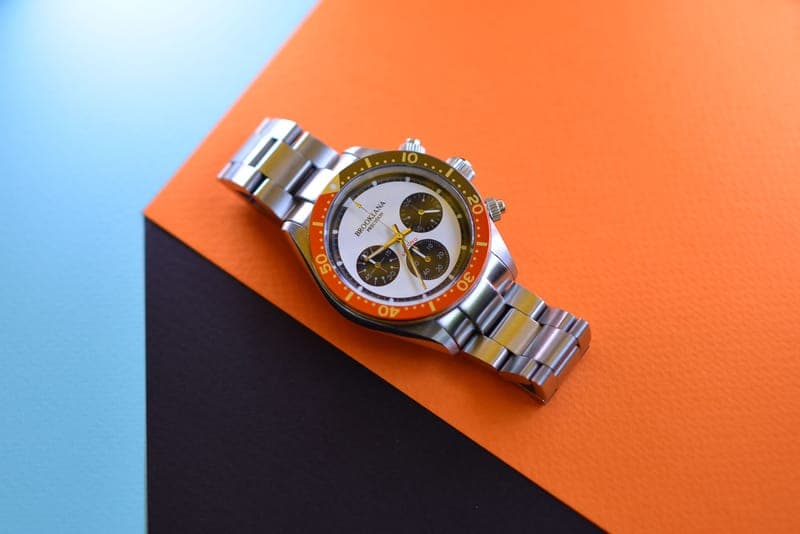
A chronograph is a watch with a stopwatch built into it. The extra small dials on the face — usually two or three of them — are where the elapsed time is read, and the two buttons on the side of the case, called pushers, start and stop it and reset it to zero. The main hands keep telling the time throughout, so a chronograph is one watch doing two jobs rather than a watch that stops being a watch when you time something.
That is the whole mechanism. The word itself is Greek for time writer, which is a fair description of a device that records a duration, and it is also the source of most of the confusion around it: a chronograph is a stopwatch and a chronometer is a certified-accuracy watch, and the two words sound similar enough that they get swapped constantly, including by retailers.
The honest answer to whether you need one is probably not — a phone times things more accurately and more conveniently than any mechanical chronograph, and most chronograph owners use the pushers rarely. People buy them because they like the look: three sub-dials and two pushers make a busier, more technical, more substantial-looking watch, and that is a legitimate reason. Below is what each part does, the two picks that do the timing job better than any chronograph, and the one chronograph worth owning for its own sake.
How this page is funded: if you buy through a link here we may earn a commission, at no extra cost to you. It never decides what makes a list or what order the picks are in. Full disclosure.
Quick picks
The whole list at a glance. Tap any row to jump to the full write-up further down the page, or go straight to the listing.
| # | Product | Best for | Price |
|---|---|---|---|
| 1 | 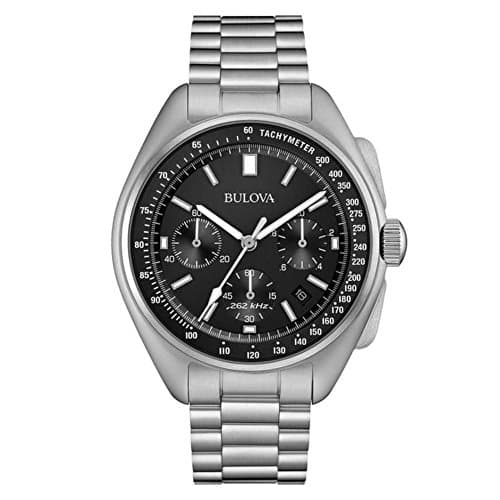 Bulova Lunar PilotA usable chronograph with high-accuracy quartz and Apollo historyUnder $1,000 | A chronograph worth owning, with a real story behind it | $577.50$825.00−30% View on Amazon #ad How this is funded · Price as of October 17, 2026 |
| 2 | 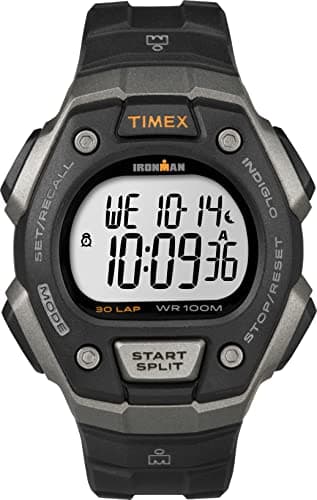 Timex Ironman Classic 3030-lap memory, which no mechanical chronograph can doUnder $50 | If you actually want to time things | $54.92 View on Amazon #ad How this is funded · Price as of October 17, 2026 |
| 3 | 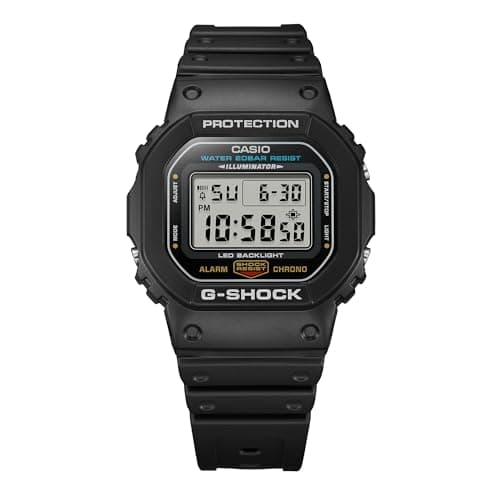 Casio G-Shock DW-5600Stopwatch, countdown and 200m in something nearly indestructibleUnder $200 | Timing plus toughness, for very little money | $83.99$99.95−16% View on Amazon #ad How this is funded · Price as of October 17, 2026 |
We have not handled these products. Nobody here has worn, tested or owned them, and we will not pretend otherwise. What we do is check that each pick is still sold, still holds up and still makes sense as a gift at this budget. How we choose.
What to buy, if you have decided
Bulova Lunar Pilot
Bulova
A chronograph based on the watch an astronaut wore on the moon during Apollo 15, running Bulova's high-accuracy quartz movement.
The one true chronograph in our picks, and the one worth buying if you want the real thing rather than the look of it. The Lunar Pilot is based on the watch an astronaut wore on the moon during Apollo 15, and it runs Bulova's high-accuracy quartz movement rather than a mechanical one. The story is the main reason to choose it as a gift and it is a story that is actually true rather than marketing, which is unusual at this money and does genuinely matter when somebody asks about the watch. The high-accuracy quartz also means it keeps far better time than any mechanical watch in its price range and asks nothing of the wearer. And the chronograph itself is usable rather than decorative — the sub-dials are large enough to read and the pushers have a positive action. Three honest points. It is quartz, so a recipient who specifically wants a mechanical watch will be disappointed. It is a large case that overwhelms a slim wrist. And the original moon-watch styling is a specific taste — check they like chronographs before you commit.
What is good
- The best story of any watch on this page, and a story that is true rather than marketing — that matters for a gift
- High-accuracy quartz, so it keeps far better time than any mechanical watch here and needs nothing from the wearer
- A chronograph that is genuinely usable rather than decorative
What to know
- Quartz, so a recipient who specifically wants a mechanical watch will be disappointed
- A large case that overwhelms a slim wrist
- The original moon-watch styling is a specific taste — check they like chronographs first
#ad How this is funded · Price as of October 17, 2026
Timex Ironman Classic 30
Timex
The long-running Ironman sports watch: 30-lap memory, stopwatch, alarms and 100 meters of water resistance.
The pick if the timing is the point rather than the look, and it beats every mechanical chronograph at the job it exists for. The Ironman Classic 30 is the long-running Timex sports watch — 30-lap memory, stopwatch, alarms and 100 meters of water resistance — and the lap memory is the feature that separates it from a chronograph completely: a mechanical chronograph can time one interval and then has to be reset, losing it. This records thirty of them and lets you read them back afterwards. For anybody doing intervals, swim sets or repeated timed tasks, that is not a marginal improvement, it is the difference between a usable tool and a gesture. It is light enough to forget on the wrist mid-exercise, and the 100-meter rating covers pool and ocean swimming. Two honest points. The styling is pure sports and will not go anywhere near a suit. And the resin strap eventually stiffens, which is a cheap fix but a fix.
What is good
- Genuinely useful to anyone who times runs, swims or intervals
- Light enough to forget on the wrist mid-exercise
- Handles pool and ocean swimming
What to know
- Pure sports styling, so it will not go with a suit
- The resin strap eventually stiffens
#ad How this is funded · Price as of October 17, 2026
Casio G-Shock DW-5600
Casio
The original square G-Shock: shock resistant, 200 meters water resistant, resin case, digital display.
The pick when timing matters and so does survival, and the cheapest route to both. The square G-Shock has a stopwatch and a countdown timer like every digital Casio, but what it adds is shock resistance, 200 meters of water resistance and a case that survives work sites, gyms, boats and teenagers. It is on a page about chronographs because the honest comparison is worth making: a digital stopwatch is more accurate, easier to read under effort, and considerably cheaper than any mechanical chronograph, and it does not care if you knock it against something while the timer is running. The silhouette is recognized everywhere, so there is nothing to explain. It is also smaller on the wrist than its reputation suggests, which makes it viable on a slim wrist. Two honest points. An all-resin build will never read as dressy, so it is an everyday watch rather than a dress one. And the backlight is dim by modern standards.
What is good
- Survives work sites, gyms, boats and teenagers
- Small enough for a slim wrist despite the tough reputation
- A universally recognized silhouette that needs no explaining
What to know
- An all-resin build will never read as dressy
- The backlight is dim by modern standards
#ad How this is funded · Price as of October 17, 2026
What the sub-dials and pushers do
A chronograph dial has more on it than a normal watch, and the layout is more consistent across brands than it looks. There are three things to identify, and once you can read one chronograph you can read nearly all of them.
| Part | Where it is | What it does |
|---|---|---|
| Central chronograph hand | On the main dial, often slimmer | Counts elapsed seconds. Still when not running |
| Minutes sub-dial | Usually a small dial, 30 or 60 marks | Counts elapsed minutes |
| Hours sub-dial | A small dial, often 12 marks | Counts elapsed hours |
| Running seconds sub-dial | A small dial, always ticking | The normal seconds hand, moved off-center |
| Top pusher | Side of the case, above the crown | Start and stop |
| Bottom pusher | Side of the case, below the crown | Reset to zero |
The sub-dial that confuses people most is the running seconds. On a normal watch the seconds hand sweeps the main dial; on a chronograph that position is taken by the chronograph hand, so the ordinary seconds get demoted to a small dial of their own. If one small dial is always moving and the others are not, that is what it is — and it also means the watch is working fine.
How to use one
- Press the top pusher. The central chronograph hand starts sweeping.
- Press the top pusher again to stop it. Read the elapsed time: seconds from the central hand, minutes and hours from the sub-dials.
- Press the bottom pusher to reset everything to zero. Always reset before starting a new timing rather than leaving it part-run.
One rule worth knowing on a mechanical chronograph: do not leave it running continuously for days. The chronograph mechanism is an additional load on the movement, it will use the power reserve faster, and on some designs continuous running accelerates wear. Start it, stop it, reset it. Also never press either pusher underwater, whatever the water rating says — pressing a pusher under pressure is a reliable way to get water past a seal.
Chronograph, chronometer, tachymeter: three words that get mixed up
These three turn up together constantly and mean entirely different things, which is worth untangling before you shop.
- A chronograph is a watch with a built-in stopwatch. It is a function, and it says nothing about accuracy.
- A chronometer is a watch whose movement has passed an official accuracy certification. It is a quality standard, and it says nothing about having a stopwatch.
- A tachymeter is the scale printed around the outside of many chronograph dials, reading up to 400 or so. Used with the chronograph it converts elapsed time into a rate per hour — originally for speed over a measured mile. It is decorative on almost every watch that carries it.
If a listing says chronograph it means the stopwatch. If it says chronometer it is making an accuracy claim. A watch can be both, neither, or either one alone.
Do you actually need one?
Honestly, no. A phone times things more precisely, records laps, and is already in your pocket. The overwhelming majority of chronograph owners press the pushers a handful of times a year, and several press them only to check the watch still works.
That is not an argument against buying one, because almost nobody buys a chronograph for the timing. They buy it because three sub-dials and two pushers make a watch look technical and substantial, because the category has genuine history behind it in motorsport and aviation, and because a busier dial is more interesting to look at than a plain one. Those are real reasons and they are worth being clear-eyed about rather than pretending the stopwatch is the point.
Where it does become a bad buy is when somebody needs the timing to work. If the recipient genuinely times intervals, swim sets or anything repeated, a mechanical chronograph is the wrong tool — it times one thing and then needs resetting, and a digital sports watch with lap memory does it properly for a fraction of the money. That is why two of the three picks on this page are not chronographs.
If you are buying one as a gift
Check two things first. Chronographs run large — the extra mechanism takes diameter and thickness — so a chronograph is often the wrong choice for a wrist under about six and a half inches. And the busy dial is a specific taste: somebody who likes plain, minimal watches will not warm to three sub-dials just because the watch is nice, and the opposite is also true.
If both check out, a quartz chronograph is the lower-risk buy. It keeps better time, costs less, needs nothing from the wearer, and the pushers work identically. Mechanical chronographs are considerably more expensive for a mechanism the recipient will mostly admire rather than use.
How we put this guide together
The explanation of how a chronograph works, and the distinction between chronograph, chronometer and tachymeter, are standard across the category rather than claims of ours. We have not worn or tested the watches named above; everything stated about each one comes from its manufacturer's published specification and its live listing. The judgement that two non-chronographs do the timing job better is an editorial one, and it is the reason this page carries three picks rather than padding the list with watches we do not stock.
No price is typed into this page. The number inside each buy button comes from Amazon's live listing with the date it was read, so it goes out of date by disappearing rather than by being wrong.
Questions buyers ask
What is a chronograph watch?
A watch with a stopwatch built in. The extra small dials on the face show elapsed minutes and hours, the slim central hand counts elapsed seconds, and the two buttons on the side of the case start, stop and reset it. The main hands keep telling the time throughout.
What is a chronograph watch used for?
Timing something while still being able to read the time. Historically that meant motorsport, aviation and laboratory work. In practice most owners use it rarely and buy the watch for the look of the sub-dials and pushers, which is a legitimate reason.
What is the difference between a chronograph and a chronometer?
A chronograph is a function — a built-in stopwatch — and says nothing about accuracy. A chronometer is a movement that has passed an official accuracy certification and says nothing about having a stopwatch. A watch can be either, both, or neither.
How do you use a chronograph?
Press the top pusher to start, press it again to stop, and press the bottom pusher to reset to zero. Read the elapsed seconds from the central hand and the minutes and hours from the sub-dials. Always reset before timing something new.
Can you leave a chronograph running all the time?
On a mechanical chronograph, no. The mechanism is an extra load on the movement, it drains the power reserve faster, and on some designs continuous running accelerates wear. Start it, stop it, reset it. And never press a pusher underwater, whatever the water rating.
Is a chronograph a good gift?
Only if the recipient likes busy dials and has a wrist that can carry one, since chronographs run large and thick. If they actually need to time intervals, a digital sports watch with lap memory does the job far better for much less — a mechanical chronograph times one thing and then needs resetting.
What is the tachymeter scale on a chronograph for?
It converts an elapsed time into a rate per hour, originally speed over a measured mile. Time an event with the chronograph and read the number the hand points to on the outer scale. On nearly every watch that carries one it is decorative.
Read next
- What type of watch should I get?
Where a chronograph sits against every other style.
- Best watch brands for men
Who makes a chronograph worth owning.
- Best digital watches
If the timing rather than the look is the point.
- Automatic vs quartz
Which movement to put under the chronograph.
- Best watches for men
The whole category, ranked for gifting.
- Are expensive watches worth it?
Relevant, because mechanical chronographs are where the money goes.