Apple Watch Alternatives
There are three real reasons to buy something else, and which one applies to you changes the answer completely.
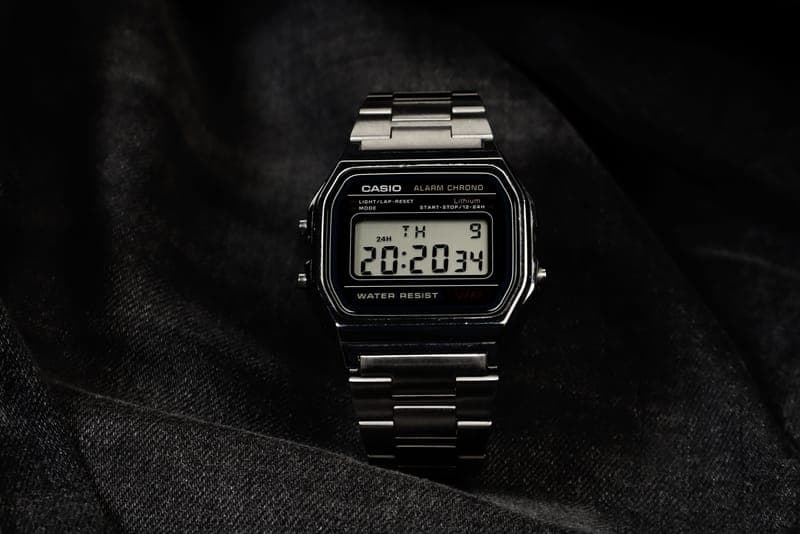
Start with what the Apple Watch is actually good at, because pretending otherwise would make this page useless. It is the most capable everyday smartwatch anybody sells: the deepest phone integration of any wearable, an app library nothing else comes close to, a heart and health sensor array that includes an ECG on the current models, fall detection and emergency calling, and Apple Pay on the wrist. If the person you are buying for owns an iPhone and wants a smartwatch, the honest recommendation is usually an Apple Watch, and the SE is the inexpensive way in.
So why is this page here? Because there are three reasons people look elsewhere, and all three are legitimate. The first is the only one that is absolute: the Apple Watch requires an iPhone. On an Android phone it does nothing at all, and that single fact rules it out for roughly half the people you might be buying for. The second is battery life - an Apple Watch charges most nights, which means it comes off at bedtime and never tracks a night's sleep properly, and some people never adapt to that. The third is price, which matters most when the watch is a gift rather than a purchase.
Those three reasons produce different answers, which is why this page is sorted by them rather than by a single overall score. If the phone is Android, the Garmin or an Amazfit is the shortlist. If the problem is nightly charging, almost everything here beats the Apple Watch by days or weeks. If the problem is price, the Amazfits are a quarter of the money and the honest surprise is how little you give up.
If you want the short answer: the Garmin Vivoactive 6 is the closest thing to a full replacement - it pairs with iPhone and Android, has built-in GPS and real workout tracking, and Garmin rates it at up to eleven days. On a budget, the Amazfit Active 2 is a round-faced smartwatch for a fraction of the price with no paywall on your own health data. Eight picks follow, with honest drawbacks on every one, including the case for just buying the Apple Watch SE after all.
How this page is funded: if you buy through a link here we may earn a commission, at no extra cost to you. It never decides what makes a list or what order the picks are in. Full disclosure.
Quick picks
The whole list at a glance. Tap any row to jump to the full write-up further down the page, or go straight to the listing.
| # | Product | Best for | Price |
|---|---|---|---|
| 1 | 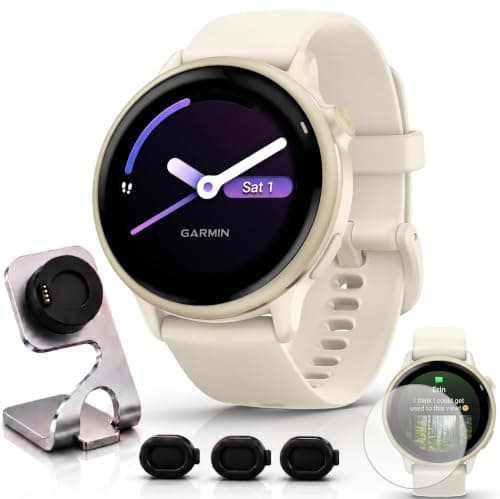 Garmin Vivoactive 6Eleven rated days, real GPS, pairs with either phoneUnder $500 | The closest thing to a full replacement | $259.99$309.99−16% View on Amazon #ad How this is funded · Price as of November 21, 2026 |
| 2 | 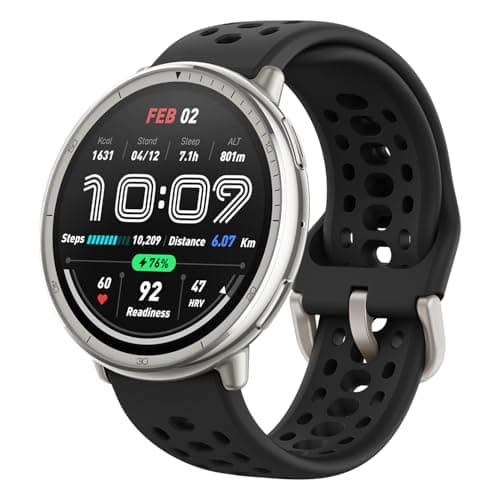 Amazfit Active 2A round smartwatch at a fraction of the price, no paywallUnder $100 | The budget pick | |
| 3 | 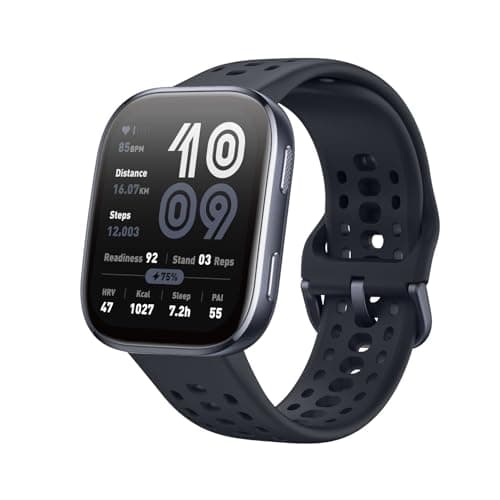 Amazfit Bip 6Up to fourteen rated days and the biggest screen hereUnder $100 | Best battery life, and the easiest to read | $79.00 View on Amazon #ad How this is funded · Price as of November 21, 2026 |
| 4 | 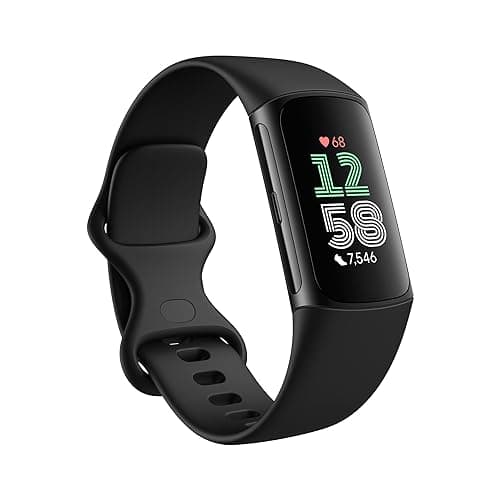 Fitbit Charge 6ECG sensor and built-in GPS in a slim bandUnder $200 | Best if health tracking is the actual reason | |
| 5 | 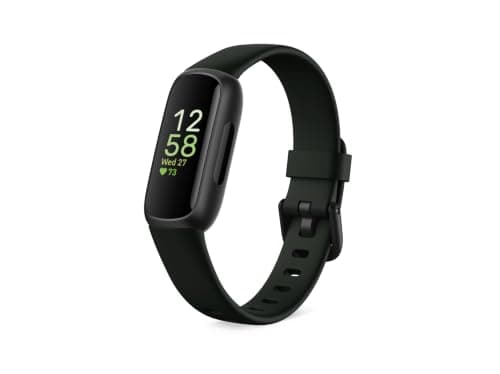 Fitbit Inspire 3Ten rated days, slim enough to forget it is onUnder $100 | Best for somebody who does not want a watch | |
| 6 | 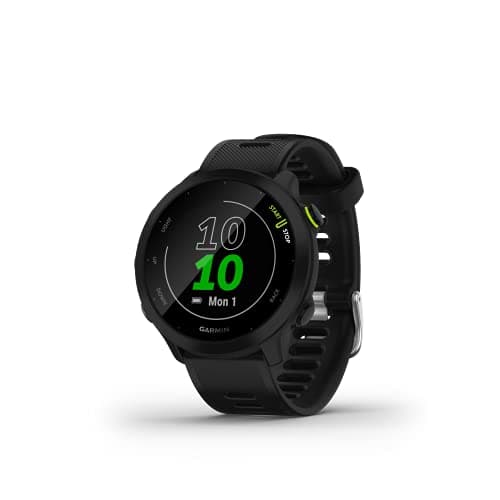 Garmin Forerunner 55GPS pace and distance, multi-day battery, light enough to sleep inUnder $250 | Best for a runner | $161.99$199.99−19% View on Amazon #ad How this is funded · Price as of November 21, 2026 |
| 7 | 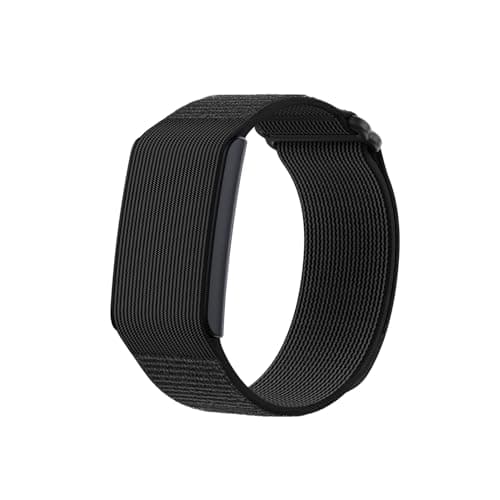 Amazfit Helio StrapScreenless, ten rated days, no subscriptionUnder $100 | Best for sleep and recovery, with no screen at all | $99.00 View on Amazon #ad How this is funded · Price as of November 21, 2026 |
| 8 | 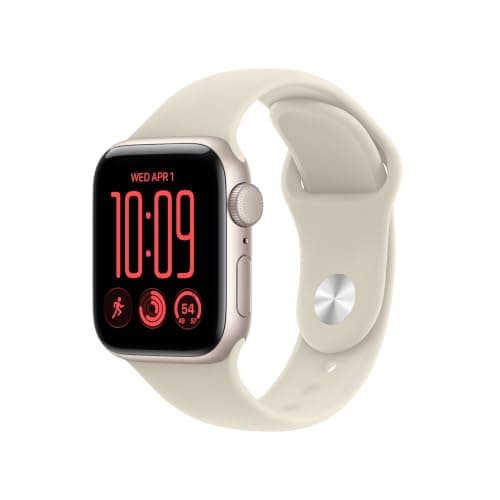 Apple Watch SEFall detection, the full app library, at the entry priceUnder $250 | When the honest answer is to buy the Apple Watch anyway | $199.00$249.00−20% View on Amazon #ad How this is funded · Price as of November 21, 2026 |
We have not handled these products. Nobody here has worn, tested or owned them, and we will not pretend otherwise. What we do is check that each pick is still sold, still holds up and still makes sense as a gift at this budget. How we choose.
Every pick in detail
Garmin Vivoactive 6
Garmin
Garmin's all-round health and fitness smartwatch: an AMOLED screen, built-in GPS, workout and sleep tracking, rated at up to eleven days in smartwatch mode and about twenty-one hours with GPS running.
The pick if you want to lose as little as possible. The Vivoactive 6 is an AMOLED-screened all-rounder with built-in GPS, a 5 ATM water rating, genuine workout and sleep tracking, and - the part that matters here - it pairs with iPhone and Android equally, which removes the single biggest risk in gifting a smartwatch. Garmin rates it at up to eleven days in smartwatch mode and about twenty-one hours with GPS running, and that is the real difference you feel: eleven days is the gap between a watch that gets worn and one that lives on a charger, and it is why this tracks sleep properly when an Apple Watch mostly cannot. Four honest cons. Turning the always-on display on drops the rated battery from about eleven days to about five, which is most of the advantage gone. Reviewers found the GPS less accurate in canyons and dense forest, and there are no detailed navigation maps. Some of the more advanced recovery and training metrics sit behind Garmin's paid tier. And it is the most expensive wearable on this site - a casual wearer will never touch most of what it does, which makes it the wrong pick for somebody who mainly wants notifications and a step count.
What is good
- Eleven days of rated battery life is the difference between a watch that gets worn and one that lives on a charger
- Built-in GPS, a 5 ATM water rating and real workout tracking, so it is useful without a phone in a pocket
- Pairs with both iPhone and Android, which removes the worst single risk in gifting a smartwatch
What to know
- Switching the always-on display on drops the rated battery life from about eleven days to about five
- Reviewers found GPS less accurate in canyons and dense forest, and there are no detailed navigation maps
- Some of the more advanced metrics sit behind Garmin's paid tier
- The most expensive wearable on this site, and a casual wearer will never touch most of it
#ad How this is funded · Price as of November 21, 2026
Amazfit Active 2
Amazfit
The Bip 6's round-faced sibling: a smaller, more watch-like case with more sensors, including the body-temperature and elevation tracking the Bip 6 leaves out.
The budget pick, and the one that makes the strongest value argument on this page. The Active 2 is the round-faced sibling of the Bip 6: a smaller, more watch-like case with more sensors than its stablemate, body temperature and elevation among them, and it looks like a watch rather than a gadget - which is the reason to choose it over the big-screen Bip. It works with iPhone and Android, and the health data is not paywalled, so nobody is paying a monthly fee to see their own sleep score. For a gift at this money that is a genuinely good watch rather than a compromise, and it is the pick we would make for somebody who is curious about a smartwatch but not committed enough to justify a Garmin. The cons: rated battery life is shorter than the Bip 6's, which is the trade for the extra sensors. It is sold in more than one version, so it is easy to order the one without the feature you were buying it for - read the listing carefully. The smaller screen is harder to read at a glance than the Bip 6's. And the app ecosystem is thin next to Apple's, so it does little beyond health, notifications and timers.
What is good
- Looks like a watch rather than a gadget, which is the reason to choose it over the big-screen Bip 6
- More sensors than the Bip 6, body temperature and elevation among them
- Still far below any Apple or Garmin wearable, and still no subscription to read your own data
What to know
- Rated battery life is shorter than the Bip 6's, which is the trade for the extra sensors
- Sold in more than one version, so it is easy to order the one without the feature you were buying it for
- The smaller screen is harder to read at a glance than the Bip 6's
Amazfit Bip 6
Amazfit
A budget smartwatch with a large bright screen, built-in GPS with offline maps, and a battery Amazfit rates at up to fourteen days. No subscription is needed to see your own data.
The pick if the nightly charge is the specific thing that put you off. Amazfit rates the Bip 6 at up to fourteen days, which is roughly two weeks of not thinking about it, and for a gift that is the most forgiving feature a smartwatch can have - a watch that dies on a charger nobody set up is a gift that failed in week one. It has built-in GPS with offline maps, works with iPhone and Android, and the health data is not behind a subscription. The screen is the biggest of anything at this money, which makes it the pick for an older recipient or anybody who would otherwise need reading glasses to check a notification. The cons are the usual budget trade-offs, stated plainly. The app ecosystem is thin next to Apple or Google, so it does little beyond health, notifications and timers. The build is plastic and feels like the price, which matters for something unwrapped in front of other people. And a screen that large on a small wrist looks exactly like a screen that large on a small wrist - if the recipient is slightly built, the Active 2 above is the better-looking choice.
What is good
- Nearly two weeks of rated battery life, which is the most forgiving feature a gift smartwatch can have
- The biggest screen of anything at this money, so it reads at a glance without reading glasses
- Works with iPhone and Android, and the health data is not paywalled
What to know
- The app ecosystem is thin next to Apple or Google, so it does little beyond health, notifications and timers
- The build is plastic and feels like the price, which matters for something unwrapped in front of people
- A screen that large on a small wrist looks exactly like a screen that large on a small wrist
#ad How this is funded · Price as of November 21, 2026
Fitbit Charge 6
Fitbit
Fitbit's full-feature band: built-in GPS, an ECG sensor, heart rate and sleep tracking, rated at up to seven days per charge and about five hours of continuous GPS.
The pick when the gift is really about health rather than about having a smartwatch. The Charge 6 is Fitbit's full-feature band: built-in GPS and GLONASS so a walk or a run is mapped without a phone in a pocket, an ECG sensor, heart rate, and sleep tracking that Fitbit built its reputation on, rated at up to seven days per charge and about five hours of continuous GPS. It is a band rather than a watch, which is a real advantage for a recipient who does not want a screen the size of a watch face on their wrist - it reads as a bracelet and disappears under a cuff. If the reason you are not buying an Apple Watch is price but the reason you were considering one was heart health, this is the most direct substitute on the page. The cons matter here. Rated battery life is shorter than the Inspire 3's, and heavy GPS use cuts it to roughly four days. Some features, the ECG readings among them, sit behind a Fitbit Premium subscription once the included trial runs out - so budget for that or accept a narrower watch. And like every Fitbit it needs a phone app and a Google account before it does anything, which is a setup step between unwrapping and wearing.
What is good
- Built-in GPS and GLONASS, so a walk or a run is mapped without carrying a phone
- Has the ECG sensor the cheaper Inspire 3 does not, which matters when heart health is the reason for the gift
- Still a band rather than a watch, which suits a recipient who does not want a screen the size of a watch face
What to know
- Shorter rated battery life than the Inspire 3, and heavy GPS use cuts it to roughly four days
- Some features, the ECG readings among them, sit behind a Fitbit Premium subscription once the included trial ends
- Like every Fitbit it needs a phone app and a Google account before it does anything
Fitbit Inspire 3
Fitbit
A slim fitness band that tracks steps, heart rate and sleep stages, rated by Fitbit at up to ten days per charge. It borrows the phone's GPS rather than carrying its own.
The pick for the recipient who has said, in one way or another, that they do not want a screen on their wrist. The Inspire 3 is a slim band that tracks steps, heart rate and sleep stages, and Fitbit rates it at up to ten days per charge - light and narrow enough that somebody who has never worn a watch genuinely forgets it is there, which is the whole point of it. Sleep stages are the headline feature and the one number an exhausted recipient actually looks at in the morning, which makes this a quietly excellent gift for a new parent or a shift worker. It is also the cheapest route to Fitbit's sleep tracking. The cons, and there are four worth knowing. It uses connected GPS only, borrowing the phone's: it records duration and heart rate but not a route or a GPS pace. There is no ECG sensor - that is the step-up Charge 6. Setup needs a phone app and a Google account, so it is not a gift that works straight out of the box. And the hardware dates from 2022 and is overdue a replacement, so a newer model may land during its life, which is worth weighing if you are buying at full price.
What is good
- The longest rated battery life in the Fitbit range, so it can be worn through the night without a nightly charge
- Light and narrow enough that somebody who has never worn a watch forgets it is on
- Sleep stages are the headline feature, which is the one number an exhausted recipient actually looks at
What to know
- Connected GPS only: it records duration and heart rate but not a route or a GPS pace
- No ECG sensor, which the step-up Charge 6 has
- Setup needs a phone app and a Google account, so it is not a gift that works straight out of the box
- The hardware dates from 2022 and is overdue a replacement, so a newer model may land during its life
Garmin Forerunner 55
Garmin
An entry-level GPS running watch with pace, distance, heart rate and suggested workouts, in a light plastic case.
The pick if the person you are buying for runs, because a running watch and a smartwatch are not the same product and a runner can tell immediately. The Forerunner 55 is an entry-level GPS running watch with pace, distance, heart rate and suggested workouts in a light plastic case, and the two things it gets right are the two things a runner actually wants: GPS pace and distance on the wrist with no phone, and multi-day battery life rather than a nightly charge. It is light enough to sleep in for rest tracking, which closes the loop between training and recovery that an Apple Watch only manages if its owner charges it in the shower. For somebody training for a first 10k or a half marathon, this beats a general-purpose smartwatch at twice the money. The cons are what you would expect from a single-purpose tool. It has a plastic sports look and makes no attempt at anything else, so it is the wrong gift for an occasion where the watch is meant to be admired. It needs a phone app set up before it is useful. And it does far less than the Vivoactive above outside of running, so buying it for a non-runner wastes most of what it is.
What is good
- Multi-day battery life, unlike a smartwatch that needs charging every night
- GPS pace and distance is exactly what a runner wants from a watch
- Light enough to sleep in for rest tracking
What to know
- A plastic sports look and a single-purpose watch
- Needs a phone app set up before it is useful
#ad How this is funded · Price as of November 21, 2026
Amazfit Helio Strap
Amazfit
A screenless band worn for sleep and recovery tracking rather than for telling the time. Rated at ten days per charge, water-resistant to 5 ATM, and it carries no subscription fee.
The most specific pick on the page, and the right one for a narrow group. The Helio Strap is a screenless band worn for sleep and recovery tracking rather than for telling the time: ten days per charge, water-resistant to 5 ATM, and - unlike the strap-style recovery trackers it is modeled on - no subscription fee to read your own data. Reviewers rate its sleep tracking well above its price, which is the entire reason to buy one. The no-screen design is a feature rather than a limitation for the person it suits: there is nothing to light up at 3am and nothing to pull attention during a conversation, which is precisely why somebody who resents smartwatches might wear this one. The cons are absolute and you should read them before buying. No screen means no time, no notifications and nothing glanceable - it is a sensor, not a watch. There is no GPS, so it cannot map a run. Reviewers found the automatic workout detection unreliable. And it is the wrong gift for anybody who wanted a watch, which is worth being completely certain about before you wrap it, because it is the one pick here that cannot be mistaken for a watch at any point.
What is good
- No screen at all, so there is nothing to light up at 3am and nothing to pull attention
- Reviewers rate its sleep tracking well above its price, which is the entire reason to buy it
- No subscription, unlike the strap-style recovery trackers it is modeled on
What to know
- No screen means no time, no notifications and nothing glanceable — it is a sensor, not a watch
- No GPS, so it cannot map a run
- Reviewers found the automatic workout detection unreliable
- The wrong gift for anybody who wanted a watch, and worth being certain about before you wrap it
#ad How this is funded · Price as of November 21, 2026
Apple Watch SE
Apple
Apple's entry smartwatch: notifications, workouts, heart rate, fall detection and Apple Pay, paired to an iPhone.
The pick we would be dishonest to leave out. If the recipient owns an iPhone, and the reason you were looking at alternatives was price rather than the phone or the battery, then the Apple Watch SE is very likely the right buy and this page has talked you out of nothing. It is Apple's entry smartwatch - notifications, workouts, heart rate, fall detection and Apple Pay - and it is genuinely useful every day in a way that almost nothing else at this money can claim. Two specifics decide it. Fall detection with emergency calling is a real safety feature and it is the one thing on this page we would not substitute if that is the reason for the gift, particularly for an older recipient. And for a teenager who already lives inside an iPhone, nothing else is the same gift, however good the specifications look. The cons are the two that sent you here. It requires an iPhone, so it is useless to an Android user - check the phone before you buy, every time. And it charges nightly, which some people never adapt to and which rules out uninterrupted sleep tracking. If either of those applies, go back to the top of this page.
What is good
- Genuinely useful every day, which almost nothing else at this money can claim
- Fall detection and emergency calling matter for an older recipient
- The default gift for a teenager who already lives inside an iPhone
What to know
- Requires an iPhone, so it is useless to an Android user
- Charges nightly, which some people never adapt to
#ad How this is funded · Price as of November 21, 2026
If your budget flexes
Everything on this page respects the ceiling in the title. Nothing here needs you to spend more — but if the number moves, these are the neighboring lists.
How we chose
This page is sorted by the reason you are reading it, not by an overall score, because the three reasons people look past an Apple Watch do not share an answer.
- Does it work with the phone they actually own? This is the absolute filter and the reason most people are here. The Apple Watch requires an iPhone and does nothing on Android. The Garmins, the Amazfits and the Fitbits here all pair with both, and that is stated on every pick rather than buried - because buying a wearable for the wrong phone is the single most expensive mistake in this category.
- How often does somebody have to charge it? An Apple Watch charges most nights. Garmin rates the Vivoactive 6 at up to eleven days, Amazfit rates the Bip 6 at up to fourteen, Fitbit rates the Inspire 3 at up to ten. That is not a marginal spec difference; it changes whether the watch tracks sleep at all, and whether it is still being worn in March. Rated figures, from the manufacturer, are in the table below.
- What do you give up, and is it the thing that mattered? Every pick here loses something to the Apple Watch, and we name it on each one: the app ecosystem, the ECG sensor, fall detection, the finish and feel of the materials. The useful question is not whether an alternative is worse overall - it is whether what it loses is the part you were buying.
What we did not use: a star rating, a verdict out of ten, or any claim to have tested these. We have not worn them. Battery figures are manufacturer ratings and are labeled as such, the GPS and sleep-tracking observations are published review findings, and where a feature sits behind a subscription we say so rather than listing it as though it were included.
The eight picks, side by side
| Pick | Works with | Rated battery | GPS | Shape |
|---|---|---|---|---|
| Garmin Vivoactive 6 | iPhone and Android | Up to 11 days (about 5 with always-on) | Built-in | Watch, AMOLED screen |
| Amazfit Active 2 | iPhone and Android | Shorter than the Bip 6 | Yes | Round watch, small case |
| Amazfit Bip 6 | iPhone and Android | Up to 14 days | Built-in, offline maps | Watch, large screen |
| Fitbit Charge 6 | iPhone and Android | Up to 7 days (about 4 with GPS) | Built-in | Slim band |
| Fitbit Inspire 3 | iPhone and Android | Up to 10 days | Connected only - uses the phone | Slim band |
| Garmin Forerunner 55 | iPhone and Android | Multi-day | Built-in | Light plastic sports watch |
| Amazfit Helio Strap | iPhone and Android | Up to 10 days | None | Screenless strap |
| Apple Watch SE | iPhone only | Charges most nights | Built-in | Watch, the familiar one |
Two rows deserve a second look. The Vivoactive's battery column carries its own caveat - switching the always-on display on drops the rated figure from about eleven days to about five, which is most of the reason you bought it, so that is a setting to leave alone. And the Inspire 3's GPS entry is the one specification people misread most often: connected GPS records how long and how hard, not where, so it cannot produce a map of a run.
If the problem is the phone
This is the only reason on this page with no workaround. An Apple Watch paired to an Android phone is an expensive bracelet - there is no adapter, no app and no partial mode. If the recipient's phone is a Samsung, a Pixel or anything else running Android, every pick on this page except the Apple Watch SE works, and the question becomes which one rather than whether.
For an Android user who wants the full smartwatch experience, the Garmin Vivoactive 6 is the closest match in capability and the pick we would make. For an Android user who mainly wants health data and notifications without spending Garmin money, the Amazfit Active 2 does the same job for a fraction of the price, and the fact that it does not paywall your own health data is worth more over three years than any single feature it lacks.
One warning worth passing on with the gift: check the phone before you buy, out loud, even if you are sure. The most common version of this mistake is not buying an Apple Watch for an Android user - it is buying one for somebody who has just switched phones and not mentioned it. Our guide to choosing a first smartwatch as a gift covers the other questions worth asking first.
If the problem is charging it every night
A smartwatch that needs charging nightly has a specific failure mode: it comes off at bedtime, so it never tracks sleep, and the charging habit is the first thing to lapse. Three weeks later the watch is in a drawer and the gift has quietly ended. This is the most common way an expensive wearable stops being worn, and it has nothing to do with how good the watch is.
Everything on this page except the Apple Watch SE is rated in days or weeks rather than hours, and the gap is large enough to change behavior rather than merely to look better on a spec sheet. Amazfit rates the Bip 6 at up to fourteen days; Garmin rates the Vivoactive 6 at up to eleven; Fitbit rates the Inspire 3 at up to ten. A watch charged once a fortnight is a watch that is still being worn in six months, and it is also a watch that can actually tell its owner how they slept.
The honest counterweight: rated figures are best-case, and real use with the screen always on, GPS running and notifications firing will be shorter on every one of these. Garmin's own numbers show the size of that gap - about eleven days becomes about five with the always-on display enabled. Treat the ratings as a ranking rather than a promise.
What you give up, honestly
Four things, and whether any of them matters depends entirely on the person.
- The app ecosystem. Nothing here comes close, and nothing here pretends to. An Amazfit or a Fitbit does health, notifications, timers and music controls. If the recipient wants apps on their wrist, the Apple Watch is the only real answer among these.
- Fall detection and emergency calling. Of these eight, the Apple Watch SE is the one we can state carries it. If fall detection is the reason you are buying - for an older parent, most often - that is the pick, and the rest of this page is the wrong page.
- Materials and the unboxing. The Amazfits are plastic and feel like the price, which matters when a gift is unwrapped in front of people. The Garmins and Fitbits sit in between. This is the one place where the cheap picks genuinely read as cheap.
- Subscriptions, in the other direction. This one favors the alternatives: Fitbit puts some features including ECG readings behind Fitbit Premium after the trial, and Garmin paywalls some advanced metrics, but the Amazfits charge nothing to see your own data. Worth checking before you assume a cheaper watch is cheaper over three years.
A note on prices and variants
Prices on this page come live from the retailer when the page loads rather than from a number typed into the article - a figure written into prose is stale within a week, and anchoring you to a wrong one is worse than showing none. If a pick shows no price, the listing could not be confirmed live at that moment and the honest action is to check before committing.
Variants are the trap in wearables. Amazfit sells several versions of the Active 2 whose sensor lists differ, Fitbit sells band sizes as separate listings, and the Apple Watch SE is sold in two case sizes and in GPS and cellular versions at meaningfully different prices. Read the listing title and the variant selector, not the product family name, and if a feature is the reason for the purchase, confirm the specific version you are ordering has it.
Questions buyers ask
What is the best alternative to the Apple Watch?
The Garmin Vivoactive 6 is the closest thing to a full replacement: it pairs with iPhone and Android, has built-in GPS and real workout tracking, and Garmin rates it at up to eleven days against the Apple Watch's nightly charge. On a budget, the Amazfit Active 2 is a round-faced smartwatch for a fraction of the price that does not paywall your own health data. Which is right depends on why you are looking - the phone, the battery or the price.
Is there an Apple Watch that works with Android?
No. An Apple Watch requires an iPhone, and on an Android phone it does nothing at all - there is no adapter, no app and no partial mode. That is the one reason on this page with no workaround. Every other pick here pairs with both iPhone and Android, so for an Android user the question is which alternative rather than whether to buy one.
Which smartwatch has the best battery life?
Of these eight, Amazfit rates the Bip 6 highest at up to fourteen days, with Garmin's Vivoactive 6 at up to eleven and Fitbit's Inspire 3 at up to ten. Those are manufacturer ratings and real use is shorter on all of them - Garmin's own figures drop from about eleven days to about five with the always-on display enabled. Treat the numbers as a ranking rather than a promise.
Which Apple Watch alternative has an ECG?
The Fitbit Charge 6 carries an ECG sensor, and it is the most direct substitute on this page if heart health is the reason for the gift. Note that ECG readings are among the features Fitbit places behind its Premium subscription once the included trial ends, so factor that into the cost rather than assuming it is included outright.
Is a cheap smartwatch worth buying as a gift?
Often yes, and the Amazfits are the reason. For a quarter of the money you get a watch with built-in GPS, two weeks of rated battery, iPhone and Android support and no subscription to read your own health data. What you give up is the app ecosystem and the feel of the materials - the plastic build does read as cheap when something is unwrapped in front of people. For somebody curious about a smartwatch rather than committed, that is a good trade.
Should I just buy the Apple Watch SE instead?
If the recipient owns an iPhone and price was your only hesitation, very possibly yes - the SE is genuinely useful every day in a way little else at that money is, and its fall detection with emergency calling is the one feature on this page we would not substitute if that is why you are buying. The two reasons not to are the two that brought you here: it needs an iPhone, and it charges most nights.
What is the best alternative for someone who does not want a screen on their wrist?
The Amazfit Helio Strap, which has no screen at all - it tracks sleep and recovery and nothing else, runs ten rated days, and carries no subscription, unlike the recovery straps it is modeled on. Be certain before you buy it: no screen means no time, no notifications and nothing glanceable, so it is the wrong gift for anybody who wanted a watch. The Fitbit Inspire 3 is the middle ground, slim enough to forget but still able to show the time.
Read next
- Best smartwatch gifts
The wider list, ranked by who you are buying for rather than by what you are avoiding.
- Smartwatch or regular watch?
Worth settling first if a smartwatch is not a given.
- Buying a first smartwatch as a gift
The questions to ask before you order anything, including about the phone.
- Best solar watches
If the charging habit is the real objection, a watch that never needs charging answers it differently.
- Best smartwatch for health tracking
Where the Fitbits sit if heart and sleep data is the whole reason for the gift.
- Best smartwatches for teens
A different set of trade-offs, where the phone the family uses usually decides it.
- Best wearable gifts for parents
If fall detection and health alerts are the point of the purchase.