Best Smartwatch for a Mom Who Wants to Track Her Health
Which one depends on her phone. What it can measure depends on physics.

If your mom has an iPhone, buy her the Apple Watch SE. It gives her heart rate, workouts, activity rings, sleep tracking and fall detection with emergency calling, and because it is genuinely useful for things other than health — messages, timers, paying for coffee — it stays on her wrist, which is the only way any of the health tracking happens. If she has an Android phone, buy the Garmin Forerunner 55 instead: it pairs with both platforms, it runs for several days per charge rather than needing one every night, and it is light enough to actually sleep in.
That is the whole answer, and the first thing to establish is which phone she carries, because an Apple Watch does not work with an Android phone at all. There is no adapter, no limited mode and no workaround. If you do not know and it has to be a surprise, Garmin is the safe choice.
The harder half of this question is what a wrist sensor can honestly tell her, because the marketing around health wearables is considerably more confident than the hardware. Below is each of the three picks, what they genuinely measure well, what they estimate loosely, what they cannot measure at all, and the specific reason a mom who said she wants to track her health might still be better off with the third pick on this page — which is not a smartwatch.
How this page is funded: if you buy through a link here we may earn a commission, at no extra cost to you. It never decides what makes a list or what order the picks are in. Full disclosure.
Quick picks
The whole list at a glance. Tap any row to jump to the full write-up further down the page, or go straight to the listing.
| # | Product | Best for | Price |
|---|---|---|---|
| 1 | 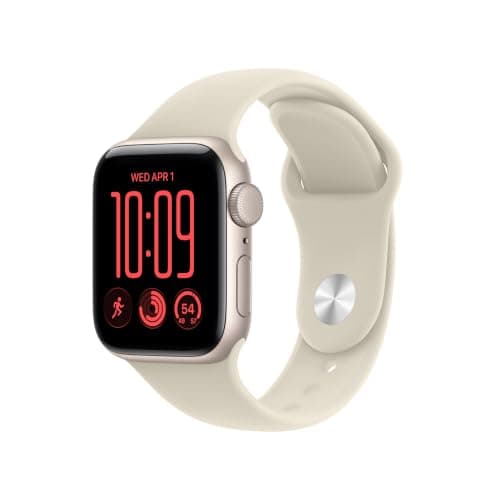 Apple Watch SEHeart rate, sleep and fall detection, inside an iPhone she already usesUnder $250 | A mom with an iPhone — the answer, if she has one | $199.99$249.00−20% View on Amazon #ad How this is funded · Price as of October 17, 2026 |
| 2 | 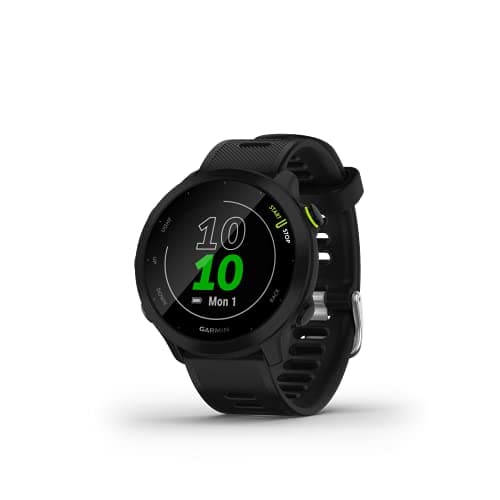 Garmin Forerunner 55Multi-day battery and both platforms, so it survives real lifeUnder $250 | A mom with an Android phone, or one who hates charging | $161.99$199.99−19% View on Amazon #ad How this is funded · Price as of October 17, 2026 |
| 3 | 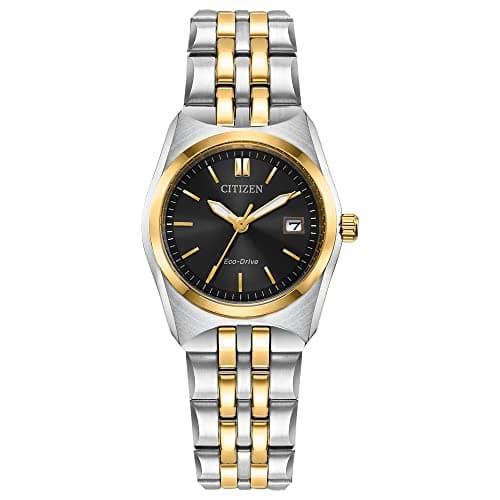 Citizen Eco-Drive women's dress watchLight-powered, so there is nothing to charge and nothing to learnUnder $250 | A mom who said she does not want another device | $248.95$425.00−41% View on Amazon #ad How this is funded · Price as of October 17, 2026 |
We have not handled these products. Nobody here has worn, tested or owned them, and we will not pretend otherwise. What we do is check that each pick is still sold, still holds up and still makes sense as a gift at this budget. How we choose.
What to buy, if you have decided
Apple Watch SE
Apple
Apple's entry smartwatch: notifications, workouts, heart rate, fall detection and Apple Pay, paired to an iPhone.
The pick if she has an iPhone, and the strongest health wearable here for one unglamorous reason: it is useful enough at everything else that it does not come off. Apple's entry smartwatch gives notifications, workouts, heart rate, fall detection and Apple Pay, and the health data lands in an app she already has on a phone she already understands, which removes the setup barrier that leaves wearables in drawers. Fall detection with emergency calling is the feature adult children actually buy these for, and it is a genuine capability rather than a marketing line — if it detects a hard fall and she does not respond, it can call emergency services and share her location. For a mom living alone that is worth the nightly charge on its own. Two honest points, and both are decisive. It requires an iPhone, so it is useless with an Android phone and there is no way around that. And it charges every night, which some people simply never adopt — if that is her, do not buy it, because an uncharged watch measures nothing.
What is good
- Genuinely useful every day, which almost nothing else at this money can claim
- Fall detection and emergency calling matter for an older recipient
- The default gift for a teenager who already lives inside an iPhone
What to know
- Requires an iPhone, so it is useless to an Android user
- Charges nightly, which some people never adapt to
#ad How this is funded · Price as of October 17, 2026
Garmin Forerunner 55
Garmin
An entry-level GPS running watch with pace, distance, heart rate and suggested workouts, in a light plastic case.
The pick when she is on Android, and a better pick than the Apple Watch for any mom whose honest relationship with charging cables is a bad one. The Forerunner 55 is an entry-level GPS watch — pace, distance, heart rate, suggested workouts — in a light plastic case, and the two properties that matter here are that it pairs with both iPhone and Android and that it runs for several days between charges rather than one. Multi-day battery life is what makes sleep tracking real: a watch that has to be charged every night is a watch that is off the wrist exactly when sleep is being measured, and no amount of clever software fixes that. It is also light enough to sleep in comfortably, which a steel-cased watch is not. GPS pace and distance is exactly what a mom who has started walking or running wants to see. Two honest points. It looks like a plastic sports watch and will never read as jewelry, so it is a tool rather than a gift that dresses up. And it needs its phone app configured before it does anything — do that with her on the day.
What is good
- Multi-day battery life, unlike a smartwatch that needs charging every night
- GPS pace and distance is exactly what a runner wants from a watch
- Light enough to sleep in for rest tracking
What to know
- A plastic sports look and a single-purpose watch
- Needs a phone app set up before it is useful
#ad How this is funded · Price as of October 17, 2026
Citizen Eco-Drive women's dress watch
Citizen
Citizen's women's Eco-Drive line: small cases, two-tone or single-tone bracelets, light-powered so no battery is ever needed.
The pick that most gift guides leave out and that is sometimes the right answer. If your mom has told you she does not want another screen, another charger or another app, buying one anyway produces a polite thank-you and a drawer — and no health data whatsoever. Citizen's women's Eco-Drive line is light-powered, so there is no battery to replace and nothing to charge: it runs on daylight, indefinitely, and asks absolutely nothing of her. The case sizes are designed for a narrower wrist rather than scaled down from men's models, and the two-tone finishes sit alongside both gold and silver jewelry so it does not quietly demand that she change the rest of what she wears. It is on this page because a watch she wears every day beats a tracker she wore twice, and because the honest version of health tracking for many people is a walk rather than a graph. Two honest points. It tracks nothing at all, which is the trade and should be stated plainly. And the bracelet almost certainly needs links removed to fit — have that done before you wrap it.
What is good
- Never needs a battery, which removes the most common reason a gifted watch ends up in a drawer
- Case sizes designed for a narrower wrist rather than scaled-down men's watches
- Two-tone finishes work alongside both gold and silver jewelry
What to know
- Bracelets usually need links removed to fit
- Needs periodic light exposure to stay charged
#ad How this is funded · Price as of October 17, 2026
If your budget flexes
Everything on this page respects the ceiling in the title. Nothing here needs you to spend more — but if the number moves, these are the neighboring lists.
Which phone does she have? Answer this first
Everything else on this page is secondary to this. An Apple Watch pairs only with an iPhone — there is no Android version, no partial functionality and no third-party fix. A mom with a Samsung or Pixel phone cannot use one, and the gift becomes a return trip rather than a surprise.
Garmin pairs with both. That single fact is why the Forerunner 55 is the default recommendation whenever the phone is unknown, and why it is worth asking a sibling rather than guessing. If the surprise matters more than the optimum, buy Garmin.
What a wrist sensor can actually measure
This is where it pays to be precise, because a mom who has said she wants to track her health usually has a specific worry behind it, and the honest answer depends entirely on which worry it is. Broadly, the sensors on these devices measure three things directly and infer everything else.
| Metric | How well | What to know |
|---|---|---|
| Steps and movement | Reliably | The most genuinely useful number on the watch |
| Heart rate in exercise | Well | Good enough to train by; a chest strap is better |
| Resting heart rate trend | Well | The trend matters far more than any single reading |
| Sleep duration | Roughly | Time asleep is decent; sleep stages are an estimate |
| Calories burned | Loosely | An estimate from movement and heart rate, not a measurement |
| Blood pressure | Not at all | No wrist wearable here measures it. Use a cuff |
| Blood sugar | Not at all | Not measurable from the wrist by any consumer device |
The reading to take from that table is that the useful part of a health wearable is the boring part. Step counts and resting heart rate trends, watched over weeks, turn vague intentions into something visible — and that visibility is most of why these devices change anybody's behavior. The precise-sounding numbers are the estimates.
What it cannot do, and why that matters for a gift
None of these devices is a medical instrument. None of them diagnoses anything, none replaces a blood pressure cuff, and none substitutes for an appointment. A notification from a watch is a prompt to get something looked at — it is not a result, and it is not reassurance either.
This matters specifically when the person you are buying for is worried about her health, because the wrong gift in that situation is one that invites her to self-monitor instead of going to a doctor. If there is a real concern, the genuinely useful gift is to go with her to the appointment. A watch is a good companion to that; it is a poor substitute for it.
Which Apple Watch, if that is the direction
Apple sells several tiers, and for a mom tracking everyday health the entry model does almost everything the expensive ones do. Heart rate, workouts, activity tracking, sleep and fall detection with emergency calling are all on the SE. The step up buys a brighter always-on display, extra sensors and a tougher case — real improvements, but not the ones that decide whether somebody uses the watch.
If budget is the constraint, buy the SE and spend the difference on a second band, which does more for whether a watch gets worn daily than any sensor does. If budget is not the constraint and she is likely to wear it to bed, the longer-running models are worth considering, because battery life is the one axis where the cheaper Apple Watch genuinely loses to the Garmin.
Three practical things to do on the day
- Set it up with her. Every device here needs a phone app configured, a profile entered and permissions granted before it reports anything. Twenty minutes together on the day is the difference between a wearable that works and one that was never paired.
- Decide where the charger lives. A cable in a bedside drawer is a watch that gets charged; a cable in a kitchen drawer is a watch that does not. For a nightly-charging watch this is the single biggest predictor of whether it is still in use in three months.
- Turn the notifications down, not up. The most common reason an older recipient abandons a smartwatch is that it buzzes constantly. Leave calls and alarms on, switch most app alerts off, and let her add things back if she wants them.
How we chose these
We have not worn or tested the devices on this page, and there is no testing lab behind this site. Sensors, battery life and phone compatibility come from each manufacturer's published specification and its live listing. The judgements about which metrics are reliable and which are estimates reflect what the manufacturers themselves claim and disclaim — none of them presents a wrist-measured calorie figure or a sleep-stage breakdown as a clinical measurement, and neither do we.
Nothing on this page is medical advice. No price is typed into it either: the number inside each buy button comes from Amazon's live listing with the date it was read, so it goes out of date by disappearing rather than by being wrong.
Questions buyers ask
What is the best smartwatch for a mom who wants to track her health?
The Apple Watch SE if she has an iPhone, because the data lands in an app she already has and the watch is useful enough at other things to stay on her wrist. The Garmin Forerunner 55 if she has an Android phone, or if she will not charge something every night.
Which Apple Watch should I get my mom?
The SE covers everything that matters for everyday health tracking — heart rate, workouts, sleep and fall detection with emergency calling. The pricier models add a brighter display, more sensors and a tougher case, none of which decide whether she actually wears it.
Can a smartwatch measure blood pressure?
No. None of the wrist wearables here measures blood pressure, and no consumer wrist device measures blood sugar either. For blood pressure she needs an upper-arm cuff, and for anything she is genuinely worried about she needs a clinician.
Will a smartwatch work if my mom has an Android phone?
A Garmin will — the Forerunner 55 pairs with both iPhone and Android. An Apple Watch will not: it requires an iPhone and there is no workaround. Establish which phone she carries before buying anything, because this is the one mistake that cannot be fixed afterwards.
Is a smartwatch accurate for sleep tracking?
Reasonably good at how long she slept, much looser on sleep stages, which are an estimate built from movement and heart rate. The bigger practical issue is charging: a watch that has to be charged overnight is off her wrist exactly when sleep is being measured.
What if my mom does not want a smartwatch?
Then do not buy one — it will be thanked for and shelved, and it will measure nothing. A light-powered watch like Citizen's Eco-Drive runs on daylight, needs no charging and no app, and gets worn every day. A worn watch beats an abandoned tracker.
Read next
- Best smartwatch gifts
The whole category, ranked for gifting.
- Best wearable gifts for parents
The same problem with charging burden as the sort order.
- What smartwatch for a partner's birthday?
The platform question, for a recipient you live with.
- Gifts for mom
Everything else, if a wearable is the wrong direction.
- Best watches for women
If she would rather have a watch than a device.
- Smartwatch vs regular watch
The underlying trade, argued out properly.