What Hand Do You Wear a Watch On?
The non-dominant wrist. There is a mechanical reason, and it changes which watch you should buy.
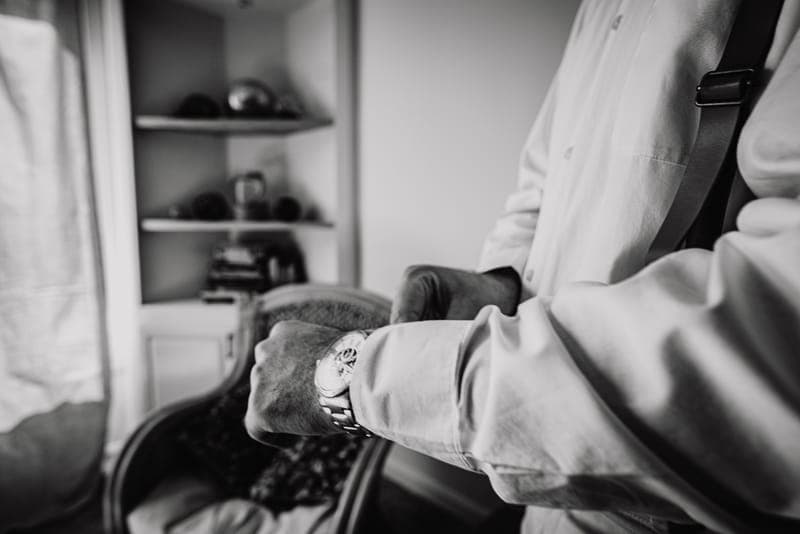
Wear a watch on your non-dominant wrist: the left wrist if you are right-handed, the right wrist if you are left-handed. That is the convention almost everywhere, and it exists for two practical reasons rather than fashion ones — the non-dominant arm moves less, so the watch takes fewer knocks and the crown is not pressed into the back of your hand, and you can still set the watch with your dominant hand. There is no etiquette rule here and nobody will judge either choice, but there is a real buying consequence for left-handed wearers, which is covered below.
The question matters more than it first appears if you are buying a watch for somebody else. Almost every watch made is designed around a left-wrist wearer: the winding crown sits at the three o'clock position, which is comfortable on a left wrist and digs into the top of the hand on a right one. For about one person in ten that is a daily irritation the buyer never thought about. Below: the reason behind the convention, the exceptions, what a left-handed recipient should be given, and the style questions that genuinely have no right answer.
How this page is funded: if you buy through a link here we may earn a commission, at no extra cost to you. It never decides what makes a list or what order the picks are in. Full disclosure.
Quick picks
The whole list at a glance. Tap any row to jump to the full write-up further down the page, or go straight to the listing.
| # | Product | Best for | Price |
|---|---|---|---|
| 1 | 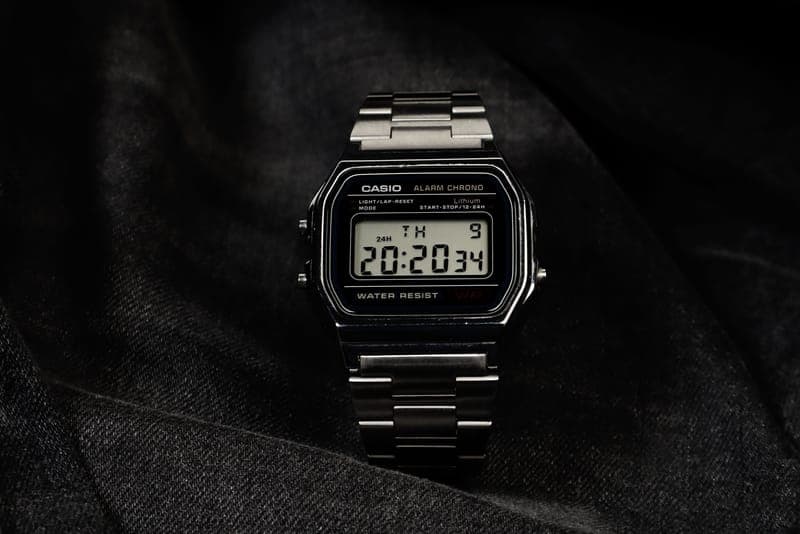 Casio F-91WNo crown at all — nothing to press into the back of the handUnder $25 | Works equally on either wrist | |
| 2 | Casio G-Shock DW-5600EButtons rather than a crown, and symmetric on either wristUnder $100 | A left-handed wearer who wants a proper watch | |
| 3 | 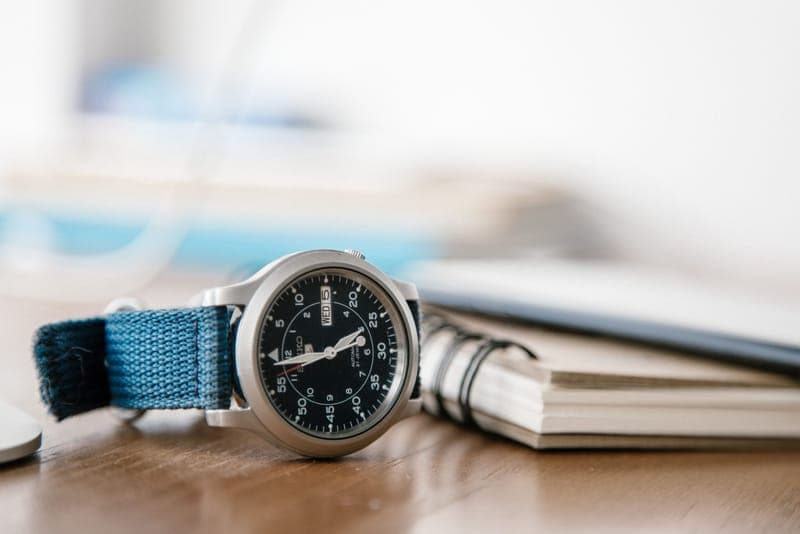 Timex Weekender 38mmSlip-through strap with no fixed holes to missUnder $50 | An analog watch that fits either wrist out of the box | |
| 4 | 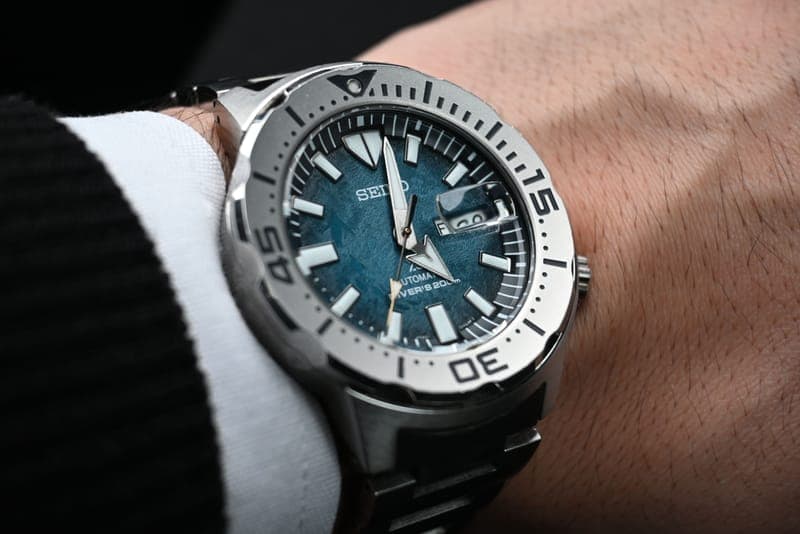 Seiko 5 Sports (SRPD series)Screw-down crown that tucks in; hand-winds and hacksUnder $250 | A mechanical watch, with the crown caveat |
We have not handled these products. Nobody here has worn, tested or owned them, and we will not pretend otherwise. What we do is check that each pick is still sold, still holds up and still makes sense as a gift at this budget. How we choose.
What to buy, if you have decided
Casio F-91W
Casio
The thin resin digital watch Casio has sold, essentially unchanged, since 1989. Time, date, alarm, stopwatch, backlight.
The pick that sidesteps the whole problem, and the reason it leads here. A digital watch has no winding crown, so there is no protruding knob at three o'clock to dig into the back of the hand when the wrist bends — which is the single most common complaint from left-handed wearers of conventional watches. The F-91W is symmetric, weighs almost nothing, has a battery measured in years and a stopwatch and alarm, and costs so little that buying it to test whether somebody likes wearing a watch at all is a sensible thing to do. It is not an impressive gift and it is not pretending to be. The display is small enough that reading it takes a deliberate look, and the thin resin strap will eventually crack — though the strap is the cheapest part to replace.
What is good
- Weighs so little that people who say they hate watches forget it is on
- Battery life is measured in years, not months
- Genuinely hard to damage, which makes it a safe gift for anyone rough on things
What to know
- The resin strap looks exactly as inexpensive as it is
- Splash-resistant only, so it is not a swimming watch
Casio G-Shock DW-5600E
Casio
The original square G-Shock: shock resistant, 200 meters water resistant, resin case, digital display.
The pick when the recipient is left-handed and wants a watch with real presence rather than a basic digital. The DW-5600 is controlled by four buttons set into the sides of the case rather than a protruding crown, so it is genuinely comfortable on either wrist — there is nothing sticking out to press against the hand. It is also close to indestructible: 200 meters of water resistance, shock resistance, a battery measured in years, and a case design unchanged for decades, which means straps and parts will still exist years from now. For a left-hander who has quietly put up with crowns digging in, this is a real solution rather than a compromise. The square case is a specific look the recipient either likes or does not, and it is heavier on the wrist than a thin analog watch.
What is good
- Survives work sites, gyms, boats and teenagers
- Small enough for a slim wrist despite the tough reputation
- A universally recognized silhouette that needs no explaining
What to know
- An all-resin build will never read as dressy
- The backlight is dim by modern standards
Timex Weekender 38mm
Timex
A simple field-style watch on a slip-through fabric strap, with Timex's Indiglo backlight that lights the whole dial.
The pick when the recipient wants a conventional analog watch and you do not know which wrist it is going on or how big that wrist is. The Weekender's slip-through fabric strap has no fixed holes and no bracelet links, so it fits any wrist in either orientation without adjustment — which removes the two uncertainties that most often send a gift watch back. It is a plain, legible 38mm field-style watch with Indiglo that lights the entire dial, and the strap pulls off in seconds without tools, so a wrong color is a trivial fix. It does have a conventional crown at three o'clock, so a left-handed wearer will feel it occasionally, which is why the two digital picks above come first for that specific case. It also ticks audibly in a quiet room.
What is good
- The strap pulls off in seconds, so one watch becomes several looks for pocket money
- A 38mm case is the safest size guess when you do not know the wrist
- Indiglo makes it readable in the dark, which sounds trivial until you use it
What to know
- The quartz movement ticks audibly in a quiet room
- A fabric strap is comfortable but never formal
Seiko 5 Sports (SRPD series)
Seiko
Seiko's modern 5 Sports: a 100m water-resistant automatic in a diver-style case, with a day-date display and a movement that both hand-winds and hacks.
The pick when the recipient wants a genuine mechanical watch and will wear it on the left wrist like most people. The 5 Sports is a real automatic wound by wrist motion, rated to 100 meters, sold in dozens of dial colors, and it both hand-winds and hacks so it can be set precisely without being worn first. Relevant to this page: the screw-down crown tucks flush against the case when closed, which makes it less intrusive than an unprotected pull-out crown — but it is still at three o'clock, so a left-handed wearer will notice it. If the recipient is left-handed and specifically wants a mechanical watch, look for a destro model with the crown at nine o'clock instead. It also wears larger than its stated diameter, so mind a slim wrist.
What is good
- The default recommendation for a first serious mechanical watch, and has been for years
- 100m water resistance covers swimming
- Dozens of dial colors, so it can be matched to a taste
What to know
- The case wears larger than its stated diameter suggests
- Mechanical accuracy drifts by seconds a day — normal, but worth explaining
Why the non-dominant wrist
- Fewer knocks. Your dominant hand does the reaching, lifting and door-opening, so a watch on that wrist meets more doorframes and desk edges.
- The crown does not dig in. On almost every watch the winding crown sits at three o'clock, which points away from the hand on a left wrist and into the back of the hand on a right one.
- You can set it. Operating a small crown and tiny pushers is a fine-motor job, and your dominant hand is better at it.
- Writing comfort. A watch on the writing wrist rests on the desk and on the page, which is a genuine nuisance for anyone who writes by hand.
- Habit and expectation. Watch dials, date windows and bracelet clasps are all laid out assuming a left-wrist wearer.
None of those is an etiquette rule. They are ergonomic observations, which is why the convention is so consistent across cultures without anybody ever having agreed on it, and why breaking it has no social cost whatsoever.
What a left-handed wearer should look for
| Option | How it works | Trade-off |
|---|---|---|
| A digital watch | No crown at all — buttons set into the case | Not an analog watch, which may be the point of the gift |
| A destro model | Crown moved to nine o'clock, made for the right wrist | Far fewer models exist, mostly dive watches |
| A screw-down crown | Tucks flush to the case when closed | Still at three o'clock, so still noticeable |
| Wear it on the left anyway | Most left-handers do exactly this | Setting the watch is slightly fiddlier |
The word to know is destro — Italian for right — which is the industry term for a watch with the crown at nine o'clock, designed for right-wrist wear. If you are buying for a left-handed person who wears their watch on the right, that single search term is the most useful thing on this page.
It is also worth knowing that the majority of left-handed people wear their watch on the left wrist like everybody else, out of habit and because the choice of watches is so much wider. Ask before you go hunting for a destro model.
Does it matter which wrist for women?
No. The convention is the same and for the same reasons: non-dominant wrist, which is the left for most people. The only additional consideration is practical rather than gendered — if a bracelet is worn on one wrist habitually, the watch usually goes on the other to avoid the two knocking together and scratching each other.
On the question of wearing a watch and a bracelet on the same wrist: it is common, it looks deliberate when the metals are matched, and the only real risk is that a hard bracelet will mark a watch case over time. A fabric or beaded bracelet alongside a steel watch avoids that entirely.
The watch-face-inward question
Some people wear the watch with the dial on the inside of the wrist. There are two legitimate reasons: it protects the crystal from knocks when working with the hands, which is why mechanics, nurses and soldiers often do it, and it lets you check the time discreetly without the obvious wrist-turn.
The drawbacks are real too. The caseback and crown press against the bones of the inner wrist, which is less comfortable for most people, and the crystal is actually more exposed to being scraped along surfaces when reaching. It is a preference, not a rule, and it has no bearing on which watch to buy.
What this changes about buying a watch
- Find out whether the recipient is left-handed, and if so, which wrist they actually use. Most use the left anyway.
- If they wear it on the right wrist, favor a digital watch, a watch with a screw-down crown, or search specifically for a destro model.
- Check the clasp if you are buying a bracelet. Folding clasps are designed to be operated by the free hand, which works either way round, but they are fiddlier for some people regardless.
- A slip-through fabric strap is the most orientation-neutral option there is, with no holes to miss and nothing to size.
- Do not overthink it. The crown is a minor irritation, not a dealbreaker, and most left-handed people have never given it a thought.
If the recipient already wears a watch, the answer to this entire page is on their wrist right now. Look at which arm it is on before buying anything — it takes a second and it settles the question better than any convention can.
Questions buyers ask
What hand do you wear a watch on?
The non-dominant wrist — the left if you are right-handed, the right if you are left-handed. The reasons are practical: the non-dominant arm takes fewer knocks, the crown at three o'clock does not dig into the back of the hand, and you can set the watch with your dominant hand.
Which wrist should a left-handed person wear a watch on?
The right wrist by the convention, though most left-handed people wear theirs on the left anyway out of habit and because the choice of watches is far wider. If they do wear it on the right, look for a digital watch or a destro model with the crown moved to nine o'clock.
What is a destro watch?
A watch with its winding crown at the nine o'clock position instead of three, designed to be worn on the right wrist so the crown points away from the hand. Destro is Italian for right. Relatively few models exist, and most of them are dive watches.
Does it matter which wrist a woman wears a watch on?
No — the convention and the reasons are identical: the non-dominant wrist, which is the left for most people. The only extra consideration is practical: if a bracelet is habitually worn on one wrist, the watch usually goes on the other so they do not scratch each other.
Why do some people wear a watch with the face on the inside of the wrist?
To protect the crystal from knocks when working with their hands, which is common among mechanics, nurses and soldiers, and to check the time discreetly without the obvious wrist-turn. The trade-off is that the caseback and crown press against the inner wrist bones.
Read next
- What size watch to buy
The other sizing question, and the one that decides fit.
- What type of watch should I get?
Field, dive, dress or digital, decided by how it will be worn.
- Best watches for nurses
Where the dial-inward habit comes from, and the watches that suit it.
- What size watch strap?
Lug width and strap length, which decide comfort either way round.