What Size Watch Strap Do You Need?
One number: the lug width, in millimeters. Here are three ways to find it.

You need the lug width: the gap between the two points on the watch case where the strap attaches, measured in millimeters. It is almost always an even number, commonly 18, 20 or 22mm on a men's watch and 12 to 16mm on a women's. Search the watch model name plus lug width and the answer is usually the first result.
That is the whole answer for most people. The rest of this page covers measuring it yourself when nothing is published, choosing strap length, and the two smaller decisions — taper and buckle color — that make a strap look right rather than merely fit.
How this page is funded: if you buy through a link here we may earn a commission, at no extra cost to you. It never decides what makes a list or what order the picks are in. Full disclosure.
Quick picks
The whole list at a glance. Tap any row to jump to the full write-up further down the page, or go straight to the listing.
| # | Product | Best for | Price |
|---|---|---|---|
| 1 | Clockwork Synergy NATO strapSold in every common width; cheap enough to experimentUnder $25 | Once you have the number | |
| 2 | Barton quick-release watch strapsQuick release: ten seconds, no tools, no scratched lugsUnder $50 | If they will change straps often | |
| 3 | 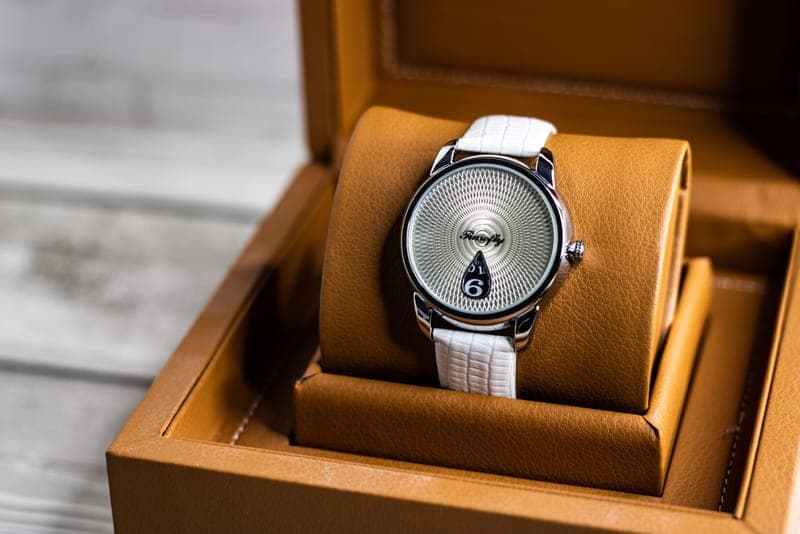 Barton leather watch rollStops straps tangling and spring bars catchingUnder $100 | Once there are several straps |
We have not handled these products. Nobody here has worn, tested or owned them, and we will not pretend otherwise. What we do is check that each pick is still sold, still holds up and still makes sense as a gift at this budget. How we choose.
What to buy, if you have decided
Clockwork Synergy NATO strap
Clockwork Synergy
A woven nylon slip-through strap in a very wide range of colors and lug widths, from a long-established strap maker.
The straightforward thing to buy once you know the width. Nylon slip-through straps are sold in every common lug width, they cost very little, and they survive water and sweat — which makes them the low-risk way to try a size and a color at the same time. They add a little thickness under the case, which is worth knowing but bothers very few people.
What is good
- The cheapest way to make a plain watch look deliberate
- Nylon survives water, sweat and a washing machine
- The widest color choice of any strap type, so it can be matched to almost anything
What to know
- Adds a little thickness under the watch
- The lug width has to be right or it will not fit
Barton quick-release watch straps
Barton
Watch straps with spring bars that release by sliding a small tab, so a strap change needs no tools and no scratched lugs.
Worth the small premium if the recipient is likely to swap straps more than once. The sliding tab on the spring bar means the change needs no tool and cannot scratch the lugs, which is what turns a strap collection into something that actually gets used. Available in leather, canvas and silicone in every common width.
What is good
- Quick release turns a strap change into a ten-second job, which is what makes people actually do it
- A huge range of leather, silicone and canvas options
- Makes a watch the recipient already owns feel new
What to know
- You must know the lug width before buying
- Silicone straps attract dust
Barton leather watch roll
Barton
A soft leather roll that holds two or three watches in padded pockets, designed for travel rather than a dresser top.
The natural follow-up gift. Three or four straps in a drawer become a tangle with spring bars catching on everything, and a leather roll holds them flat alongside the watches. It also works for travel, which is its other job. Only worth it once there is actually a small collection to store.
What is good
- Solves a real problem for anyone who travels with more than one watch
- Takes far less bag space than a hard case
- Reads as a considered gift to someone who already owns watches
What to know
- Pointless for a one-watch person
- Soft sides offer less crush protection than a hard case
Three ways to find the lug width
- Search the exact watch model name plus the words lug width. For any mainstream watch this is published and easy to find.
- Check the manufacturer's specification page, where it appears as lug width, strap width or band width.
- Measure it yourself: lay a ruler across the gap between the lugs, where the strap sits, and read the distance in millimeters.
If your measurement lands on an odd number, round to the nearest even one — odd lug widths exist but are rare, and a ruler reading of 19mm is almost always a 20mm lug measured slightly off. If you genuinely cannot establish the number, buy a watch roll or a box instead; neither needs a measurement.
Common widths by watch size
| Case diameter | Usual lug width | Typical examples |
|---|---|---|
| 28 to 34mm | 12 to 16mm | Women's dress watches, small vintage-styled watches |
| 36 to 38mm | 18mm | Field watches, smaller dress watches |
| 39 to 41mm | 20mm | The most common size on men's watches |
| 42 to 44mm | 22mm | Divers and larger sports watches |
| 45mm and up | 24mm | Oversized watches |
Treat this as a fallback rather than a shortcut. Lug width does not follow case size reliably — plenty of 40mm watches take 22mm straps and some 42mm watches take 20mm — so use the published specification whenever one exists.
Strap length, and when it matters
Most straps are sold in one standard length that fits the large majority of wrists, and for a gift that is usually fine. It matters in two cases: a very slim wrist, where a standard strap leaves a long tail flapping past the keeper, and a large wrist, where a standard strap runs out of holes.
If either applies, look for straps sold in short or long versions, or choose a nylon slip-through strap, which adjusts anywhere along its length and so sidesteps the problem entirely. That flexibility is another quiet argument for nylon as a gift.
Taper and buckle: the two details that finish it
Taper is how much narrower the strap gets at the buckle end. A 20mm strap tapering to 16mm looks more elegant on a dress watch; a straight strap with no taper looks more purposeful on a sports watch. Neither is wrong, and matching the watch's character is what makes it look considered.
Buckle color should match the watch case: steel with steel, gold-tone with gold-tone. It is a small thing that is immediately visible when it is wrong, and most makers sell the same strap with either finish, so it costs nothing to get right.
If you get the size wrong
A strap that is too narrow will slide in the gap and look wrong; one that is too wide will not fit at all. Neither is recoverable by adjustment, so keep the receipt — and buy from a maker that sells the same strap in adjacent sizes, so an exchange is trivial rather than a refund and a fresh search.
We have not handled any of these straps. Each is verified as currently sold and described only from what the maker publishes, and the sizing guidance above is standard published practice rather than our own measurement.
Questions buyers ask
What size watch strap do I need?
You need the lug width in millimeters — the gap between the points where the strap attaches. Search the watch model name plus lug width, check the manufacturer's specification, or measure the gap with a ruler. It is almost always an even number.
What is the most common watch strap size?
20mm, which fits most men's watches in the 39 to 41mm case range. 18mm is common on smaller field and dress watches, 22mm on divers and larger sports watches, and 12 to 16mm on women's watches.
Can I work out the lug width from the case size?
Only roughly, and it is unreliable — plenty of 40mm watches take 22mm straps. Use it as a fallback when nothing is published, and round to the nearest even number.
Does strap length matter?
For most wrists, no — standard lengths fit. It matters on a very slim wrist, where the tail flaps past the keeper, and on a large one, where the holes run out. A nylon slip-through strap adjusts anywhere and avoids the issue.
Should the buckle match the watch?
Yes — steel with steel, gold-tone with gold-tone. It is immediately visible when it is wrong, and most makers offer the same strap in either finish, so it costs nothing to get right.
Read next
- Best watch straps under $50
What to buy once you have the number.
- Leather vs nylon watch straps
Which material suits which watch.
- What size watch should you buy?
The same exercise, for the watch itself.
- Gifts for watch lovers
Why a strap is the most reliable gift for someone who owns watches.
- Best watch cases and rolls
Where a strap collection should live.