Do Automatic Watches Need Winding?
Worn daily, it winds itself. Left in a drawer for two days, it stops and needs you.

If it is worn every day, no — the motion of the wrist winds it, which is what automatic means. If it has sat unworn for a day or two, yes: it will have stopped, and the simplest fix is to wind the crown twenty to thirty turns and then set the time. Most modern automatics can be hand-wound this way. A few older designs cannot, and on those the fix is to shake the watch gently for twenty or thirty seconds to get the rotor spinning, then set it.
This is the question almost every new automatic owner asks in their first week, usually because the watch has stopped and they assume something is wrong. Nothing is wrong. An automatic watch stores energy in a spring, that spring holds somewhere between a day and three days of running — the power reserve — and when it runs out the watch stops. It is the one behaviour that separates a mechanical watch from everything else, and it is worth explaining when you give one as a gift so the recipient does not quietly conclude the present is faulty.
How this page is funded: if you buy through a link here we may earn a commission, at no extra cost to you. It never decides what makes a list or what order the picks are in. Full disclosure.
Quick picks
The whole list at a glance. Tap any row to jump to the full write-up further down the page, or go straight to the listing.
| # | Product | Best for | Price |
|---|---|---|---|
| 1 | 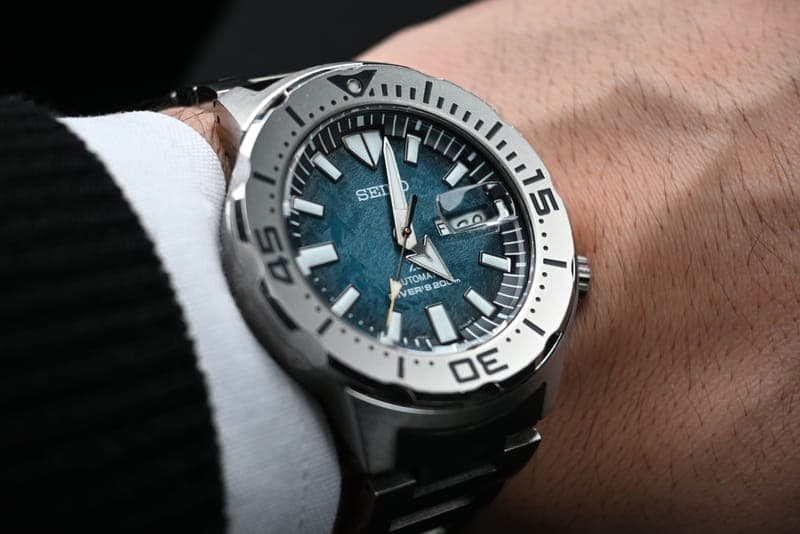 Seiko 5 Sports (SRPD series)Winds by crown and the seconds hand stops for settingUnder $250 | An automatic that hand-winds and hacks | |
| 2 | 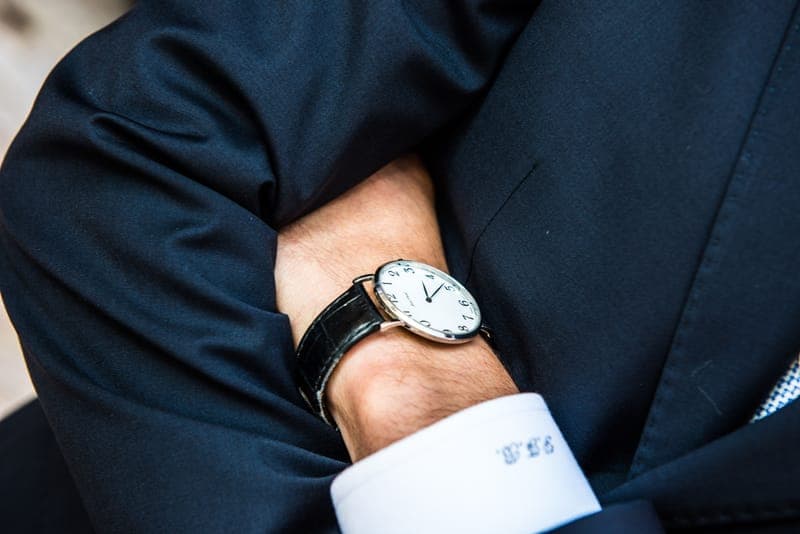 Orient Bambino Version 4Hand-winds, so it runs the moment it is unwrappedUnder $200 | A dress automatic that can be set going cold | |
| 3 | 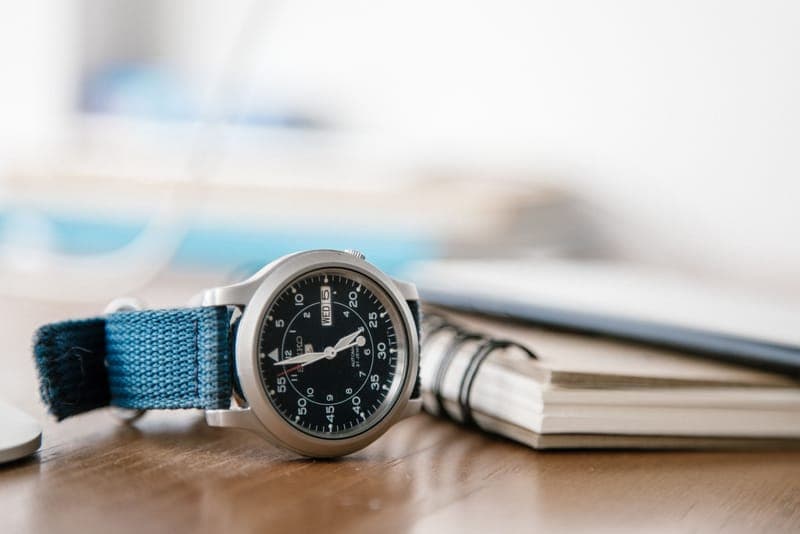 Seiko 5 SNK809Exhibition caseback shows the rotor and balance in motionUnder $200 | Seeing exactly what winding does |
We have not handled these products. Nobody here has worn, tested or owned them, and we will not pretend otherwise. What we do is check that each pick is still sold, still holds up and still makes sense as a gift at this budget. How we choose.
What to buy, if you have decided
Seiko 5 Sports (SRPD series)
Seiko
Seiko's modern 5 Sports: a 100m water-resistant automatic in a diver-style case, with a day-date display and a movement that both hand-winds and hacks.
The pick if you want the winding question to be easy. The 5 Sports movement both hand-winds, so the crown winds the spring directly rather than requiring the watch to be worn, and hacks, meaning the seconds hand stops when the crown is pulled out so the time can be set precisely. Together those two features turn a stopped watch into a thirty-second fix instead of a ritual. It is also 100 meters water resistant, which makes it a genuinely practical daily automatic rather than a careful one. The case wears larger than the stated diameter suggests, so think twice for a small wrist, and mechanical accuracy drifts by seconds a day.
What is good
- The default recommendation for a first serious mechanical watch, and has been for years
- 100m water resistance covers swimming
- Dozens of dial colors, so it can be matched to a taste
What to know
- The case wears larger than its stated diameter suggests
- Mechanical accuracy drifts by seconds a day — normal, but worth explaining
Orient Bambino Version 4
Orient
A dress watch with a domed crystal, applied numerals and an in-house automatic movement, on a leather strap.
The pick when the watch is a dress watch and the winding behaviour still needs to be simple. The in-house automatic hand-winds as well as self-winds, which has a specific advantage for a gift: it can be wound up and set correctly before being wrapped, so it is running when the recipient opens the box rather than sitting dead at a random time. A domed crystal over applied numerals makes it look considerably more expensive than it is, and it is the right answer for anyone who wears a jacket regularly. Low water resistance means it comes off before the pool, and the leather strap is the usual first upgrade.
What is good
- Looks like a far more expensive dress watch, and the domed crystal does most of that work
- Automatic with hand-winding, so it can be set going without wearing it first
- The right answer for anyone who wears a jacket regularly
What to know
- Low water resistance, so it comes off before the pool
- The leather strap is the first thing most owners upgrade
Seiko 5 SNK809
Seiko
A 37mm automatic field watch with a black dial, canvas strap and a window in the caseback showing the movement running.
The pick if the point is to understand the mechanism rather than to avoid thinking about it. The window in the caseback shows the rotor swinging and the balance wheel oscillating, which makes the whole power-reserve idea concrete in a way no explanation manages: move your wrist, watch the rotor turn, understand where the energy comes from. At 37mm it suits small and medium wrists. The two caveats are directly relevant to this page: this older Seiko 5 design neither hand-winds nor hacks on many references, so a stopped watch is restarted by shaking it rather than by the crown, and it stops after a day or two off the wrist.
What is good
- Automatic, so it is powered by wrist movement with no battery at all
- The exhibition caseback is the best possible way to show someone why mechanical watches are interesting
- 37mm is a genuinely versatile size
What to know
- Stops after a day or two off the wrist and needs resetting
- Water resistance is low, so keep it out of the pool
How to wind an automatic, properly
- Take the watch off. Winding it on the wrist puts side load on the crown stem, which is the part that eventually fails.
- Check the crown is in its resting position, pushed in, and unscrewed first if it is a screw-down crown.
- Turn the crown forwards, away from you, twenty to thirty turns. It should feel smooth.
- Stop when you feel resistance build or the turning becomes notably stiffer. Do not force it.
- Pull the crown out to set the time, set it, and push it back in. Screw it down again if applicable.
You cannot overwind a modern automatic. The mechanism includes a slipping clutch precisely so that continued winding does nothing rather than breaking something. A hand-wound-only mechanical watch is different and should be wound until it stops turning easily and no further, but that is not what this page is about.
What the power reserve actually is
The power reserve is how long the watch runs once it comes off the wrist, and it is simply how much energy the mainspring holds. Most automatics sit somewhere between about 38 and 45 hours, which in practical terms means a watch taken off on Friday evening will be stopped by Sunday. Some modern movements run to 80 hours specifically to survive a weekend, and that single specification makes an automatic noticeably easier to live with.
This is worth checking before you buy one as a gift, because it determines how often the recipient has to interact with the watch. A 40-hour reserve on somebody who wears a watch every single day is invisible. The same 40 hours on somebody who owns three watches and rotates them means a stopped watch every time they come back to it.
Hand-winding and hacking, and why both matter
Hand-winding means the crown winds the mainspring directly. Without it, a stopped watch can only be started by movement, so restarting involves shaking it or wearing it for an hour before the time can be set accurately. Hacking means the seconds hand stops when the crown is pulled out, which allows the watch to be set to the second against a phone.
Neither is universal, and neither is essential — but both make a watch pleasanter to own, and both are worth looking for if the gift is going to somebody who will not want to learn a workaround. Modern Seiko 5 Sports references have both. Many older Seiko 5 models, including the SNK809, have neither, which is a quirk of a decades-old design rather than a flaw.
Do you need a watch winder?
Almost certainly not. A watch winder is a motorised box that rotates a watch to keep it running while it is not being worn, and for one automatic watch it solves a problem that takes thirty seconds to solve by hand. It also keeps the movement running continuously, which means the oils are being used up while the watch is doing nothing of value to its owner.
There are two genuine cases for one. A watch with a complicated calendar — annual or perpetual — that is tedious to reset is a reasonable candidate. And somebody who owns many automatics and wants any of them wearable instantly may find it worth the space. For a first automatic, a winder is the classic unnecessary accessory, and the money is better spent on a second strap.
What to tell the person you give it to
- It has no battery. It is powered by your wrist, and that is the point.
- If you wear it daily it will keep running on its own with no intervention.
- If it sits for two days it will stop. That is normal and nothing is broken.
- To restart it, take it off, wind the crown about thirty turns, then set the time.
- It will gain or lose a few seconds a day. Mechanical watches do; that is not a fault.
- Set it against your phone once a week and you will never notice the drift.
That list is worth writing on the card. The single most common reason a gifted automatic ends up in a drawer is not the winding — it is that the recipient thought the drift or the stopping meant they had been given something defective, and nobody told them otherwise.
Accuracy, since it comes up in the same conversation
An automatic watch drifts. A few seconds a day fast or slow is normal for the movements in most affordable automatics, and the specifications usually quote a range rather than a figure. A quartz watch drifts by seconds a month, and a phone does not drift at all, so a mechanical watch is the least accurate timekeeper in the room by a wide margin.
That is not a reason to avoid one. Nobody buys a mechanical watch for accuracy — they buy it because it is a small machine that runs on nothing but a wound spring, needs no power source, and will still work in thirty years. If the recipient wants the time to be exactly right with no intervention, a light-powered quartz watch is the honest recommendation instead.
Questions buyers ask
Do automatic watches need winding?
Worn daily, no: wrist motion winds them. Left unworn for a day or two, yes, because they stop once the power reserve runs out. The fix is to take the watch off, wind the crown twenty to thirty turns and set the time, which takes about thirty seconds.
Can you overwind an automatic watch?
No. Modern automatics include a slipping clutch so that continued winding simply does nothing. Hand-wound-only mechanical watches are different and should be wound until the crown stops turning easily and no further.
How long does an automatic watch run when you take it off?
Usually between about 38 and 45 hours, so a watch removed on Friday evening is typically stopped by Sunday. Some modern movements carry 80 hours specifically to survive a weekend, which makes them noticeably easier to live with.
Do I need a watch winder?
For a single automatic, almost certainly not — it solves a thirty-second problem and keeps the movement running when nobody is using it. A winder is reasonable for a watch with a complicated calendar, or for somebody owning many automatics who wants any of them wearable immediately.
Why does my automatic watch lose time?
Because it is mechanical. A few seconds a day fast or slow is normal and expected for the movements in affordable automatics. Set it against a phone once a week and the drift stops being noticeable. If accuracy with zero intervention matters, a light-powered quartz watch is the better buy.
Read next
- Automatic vs quartz
The decision this question sits underneath, in buyer terms.
- Eco-Drive vs automatic
If the winding and stopping sounds like a problem, this is the alternative.
- Best automatic watches under $200
Where to start if the mechanical answer is the right one.
- Best watches for beginners
The wider primer, for a first watch of any kind.