How Much Should You Spend on a Watch?
Concrete bands by relationship, and an honest account of where the value stops improving.

For a gift, spend $50 to $100 for a colleague, friend or teenager, $100 to $250 for a sibling, parent or established partner, and $250 to $500 when the watch is marking something — a graduation, a wedding, a milestone birthday. Above $500 you are buying finishing and brand rather than function, which is a fine reason to spend but never a necessary one.
Those bands are the answer. The rest of this page explains what each one buys, why the popular salary rules should be ignored, and the one spending decision that improves a gift more than any amount of extra budget.
How this page is funded: if you buy through a link here we may earn a commission, at no extra cost to you. It never decides what makes a list or what order the picks are in. Full disclosure.
Quick picks
The whole list at a glance. Tap any row to jump to the full write-up further down the page, or go straight to the listing.
| # | Product | Best for | Price |
|---|---|---|---|
| 1 | 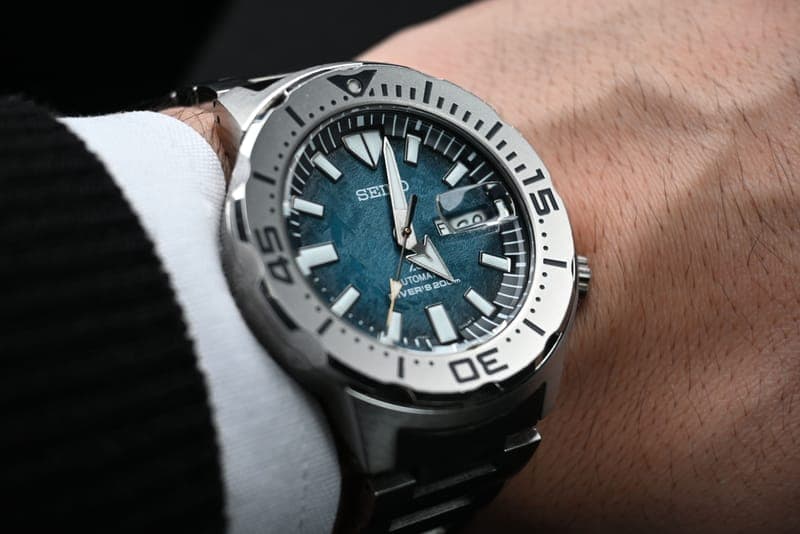 Casio MDV-106 DuroGenuine 200m water resistance for very littleUnder $50 | Under $50 — and it does not feel like a compromise | |
| 2 | Seiko 5 Sports (SRPD series)Automatic, swimmable, the standard first mechanicalUnder $250 | $100 to $250 — the sibling and partner band | |
| 3 | 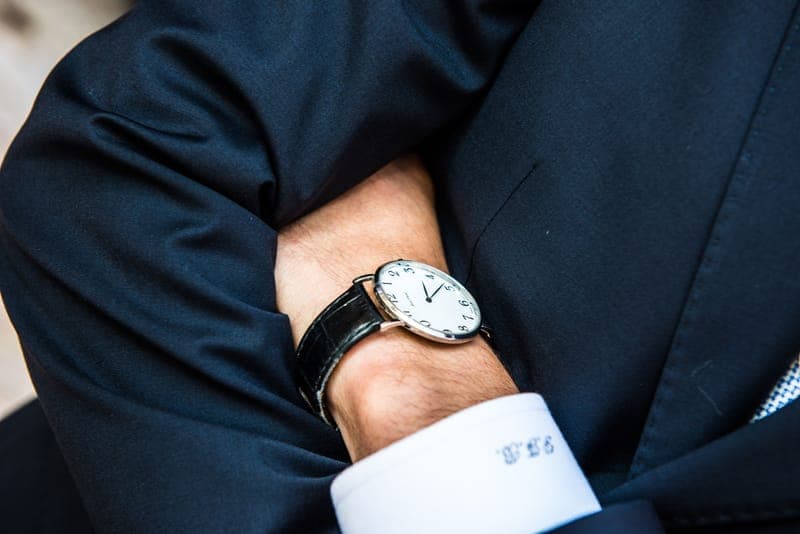 Orient Bambino Version 4Dress watch that looks several times its priceUnder $200 | $100 to $250 — for a milestone | |
| 4 | Seiko 5 Sports GMTA mechanical second time zone, at the cheapest it existsUnder $500 | $250 to $500 — the occasion band |
We have not handled these products. Nobody here has worn, tested or owned them, and we will not pretend otherwise. What we do is check that each pick is still sold, still holds up and still makes sense as a gift at this budget. How we choose.
What to buy, if you have decided
Casio MDV-106 Duro
Casio
A full-size analog dive-style watch with 200 meters of water resistance, a rotating bezel and a screw-down crown.
The reason the lowest band is not a compromise. Real 200-meter water resistance, a rotating bezel and a screw-down crown, in a watch that reliably gets mistaken for something four times the price. If your budget is fifty dollars and you want the recipient to be pleased rather than politely grateful, this is the pick — and there is enough left over for a strap.
What is good
- 200m water resistance means swimming, showering and dishes with no thought at all
- Looks far more expensive than it is, which is the compliment owners repeat most
- Takes a strap swap well, so it can be smartened up later for very little
What to know
- The stock rubber strap is the weakest part and many owners replace it
- A 42mm case is too big for a genuinely small wrist
Seiko 5 Sports (SRPD series)
Seiko
Seiko's modern 5 Sports: a 100m water-resistant automatic in a diver-style case, with a day-date display and a movement that both hand-winds and hacks.
The middle band's default answer. An automatic movement means no battery ever and a machine the wearer participates in, and the 100-meter rating means they can swim in it, which most mechanical watches at any price cannot manage. It is the most-recommended first mechanical watch there is, and it sits comfortably inside the band rather than at the top of it.
What is good
- The default recommendation for a first serious mechanical watch, and has been for years
- 100m water resistance covers swimming
- Dozens of dial colors, so it can be matched to a taste
What to know
- The case wears larger than its stated diameter suggests
- Mechanical accuracy drifts by seconds a day — normal, but worth explaining
Orient Bambino Version 4
Orient
A dress watch with a domed crystal, applied numerals and an in-house automatic movement, on a leather strap.
If the gift is marking something and the budget is the middle band, this is the best-looking way to spend it. The domed crystal is what does the work: it catches light like a vintage watch and lifts the whole thing well above its cost. It is automatic with an in-house movement, and the solid-caseback versions take an engraved date. Low water resistance, so it is a dress watch in the strict sense.
What is good
- Looks like a far more expensive dress watch, and the domed crystal does most of that work
- Automatic with hand-winding, so it can be set going without wearing it first
- The right answer for anyone who wears a jacket regularly
What to know
- Low water resistance, so it comes off before the pool
- The leather strap is the first thing most owners upgrade
Seiko 5 Sports GMT
Seiko
A Seiko 5 Sports with a second time-zone hand and a 24-hour bezel, on an automatic movement.
The top band's most interesting option, because a GMT hand is the rare complication somebody actually uses: anyone with family or colleagues abroad reads that second time zone daily. It is by a wide margin the cheapest mechanical GMT anyone sells. The case is tall, so it suits a wrist that can carry it — and it is a genuinely distinctive gift rather than a slightly better version of a cheaper watch.
What is good
- A second time zone is a real daily-useful feature for anyone who travels or works across borders
- By far the least expensive route into a mechanical GMT
- The same 100m water resistance as the rest of the 5 Sports line
What to know
- A thick case that sits noticeably tall on the wrist
- The bezel takes a moment to learn to read
The bands, and what each one buys
| Who it is for | Band | What that buys |
|---|---|---|
| Colleague, casual friend, teenager | $25 to $100 | A genuine 200m diver, a field watch, a G-Shock, a retro digital — none of them a compromise |
| Sibling, parent, close friend | $100 to $250 | Automatics, solar watches that never need a battery, real dress watches |
| Established partner, spouse | $150 to $500 | The same, better finished, plus sapphire crystals and second time zones |
| A milestone: graduation, wedding, retirement | $250 to $500 | A watch worth engraving and keeping for decades |
| New romantic relationship | $50 to $150 | Something interesting rather than something meaningful — see the note below |
One rule cuts across all of them: a gift that visibly outspends the relationship creates awkwardness rather than delight. A three-hundred-dollar watch from a colleague is an uncomfortable object. The bands above are about matching the gift to the relationship, not about what a watch is worth.
Ignore the salary rules
You will find rules suggesting you spend one, two or three months' salary on a watch, usually on sites that sell watches. They are marketing, not advice — the same shape as the engagement-ring rule, and with the same origin. There is no relationship between what a watch costs and what it does past a few hundred dollars.
A more useful frame: a watch is worn every day for years, so think about cost per wear rather than a percentage of income. A fifty-dollar watch worn daily for five years costs less than three cents a day. That is a better way to decide whether something is worth buying than any fraction of a paycheck.
Where the value curve flattens
Accuracy stops improving almost immediately — a twenty-dollar quartz watch keeps better time than a mechanical watch at any price. Water resistance stops mattering past 200 meters unless the wearer dives commercially. Legibility stops improving once a dial has clear markers and working lume, which happens well under $100.
What keeps improving is finishing — the crispness of case edges, the depth of a dial, the smoothness of a bracelet — and brand. Both are real, both are worth paying for if you want them, and neither makes the watch work better. That is why $500 is a genuine ceiling for a gift rather than an arbitrary one.
The decision that beats extra budget
Split the money. A watch plus a second strap lands better than a slightly better watch alone, at every single band. The reason is that the strap proves you thought about the watch after choosing it — and practically, it means the recipient can change the look without asking for anything.
The same logic extends upward. At the top band, one dressy watch plus one casual watch covers a whole life better than a single better watch does, and a roll to keep them in costs very little. Two well-chosen objects at $200 each beat one at $400 more often than not.
What to do with an awkward budget
If your budget lands between bands — say $150 — do not stretch to the next tier's entry-level option. A well-chosen watch at the top of its band is better made than the cheapest thing in the band above, because you are buying the best version of a proven design rather than the compromised version of a better one.
And if the budget is genuinely small, spend it on a strap for a watch they already own. It is the highest-impact watch gift per dollar on this entire site, and it never risks duplicating something in their drawer.
Questions buyers ask
How much should you spend on a watch for a gift?
$50 to $100 for a colleague, friend or teenager; $100 to $250 for a sibling, parent or established partner; $250 to $500 when the watch marks an occasion. Above $500 you are buying finishing and brand rather than function.
Is the one-month-salary rule real?
No. It is marketing with the same origin as the engagement-ring rule, and it appears most often on sites that sell watches. Cost per wear is a far more useful way to think about it.
How much should you spend on a watch for a boyfriend or girlfriend?
Early in a relationship, $50 to $150 — something interesting rather than something meaningful, because an expensive watch reads as a statement and can leave them feeling obliged to match it. Established partners sit in the $150 to $500 band.
Is $100 enough for a good watch?
Yes, comfortably. Under $100 buys genuine 200-meter divers, proper field watches and G-Shocks — finished products rather than cut-down versions of better ones. It is the best-value bracket in the whole category.
Should I spend more or buy two things?
Two things, usually. A watch plus a strap lands better than a marginally better watch, at every budget, because the second item shows you thought about the first. At the top of the range, one dressy and one casual watch covers more of someone's life than a single better watch.
Read next
- Best watches under $100
The lowest band, and the best value on the site.
- Best watches under $200
Where automatics and dress watches start.
- Best watches under $500
The occasion band, and where the curve flattens.
- Is a watch a good gift?
Worth settling before deciding what to spend.
- Best watch straps under $50
The highest-impact watch gift per dollar.