How Much Should You Spend on a Gift?
The number matters less than matching it to what everybody else in the room is spending.

For most occasions: $15 to $25 for a coworker, $25 to $50 for a friend, $50 to $100 for a close friend or sibling, $100 or more for a partner, parent or child, and whatever the invitation implies for a wedding. Those are the bands people actually use, and the exact figure inside a band matters far less than being roughly in the same band as everybody else giving at the same event. Overspending is a real social cost, not a generosity, because it obliges the recipient and embarrasses the other givers.
The useful way to think about this is matching rather than measuring. A gift that costs noticeably more than what the recipient is likely to give back puts them in debt; a gift that costs noticeably less than what everyone else in the group gave reads as an afterthought. Neither is about the money itself. Below: the figures by relationship, the four situations where the normal rules do not apply, and the honest answer to what to do when the number you can afford is lower than the band.
How this page is funded: if you buy through a link here we may earn a commission, at no extra cost to you. It never decides what makes a list or what order the picks are in. Full disclosure.
Quick picks
The whole list at a glance. Tap any row to jump to the full write-up further down the page, or go straight to the listing.
| # | Product | Best for | Price |
|---|---|---|---|
| 1 |  Moleskine Classic notebookThe real version of a small thing, not a cheap big thingUnder $25 | The $25 band, done properly | |
| 2 | 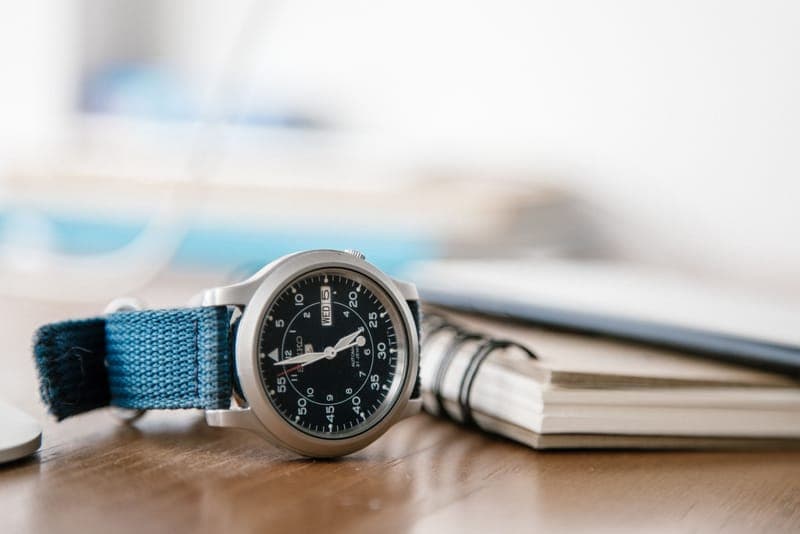 Timex Weekender 38mmA proper watch at $50; 38mm fits almost any wristUnder $50 | The $50 band | |
| 3 |  Anker Soundcore wireless earbudsNoise canceling at a fraction of the big-brand priceUnder $100 | The $100 band | |
| 4 | 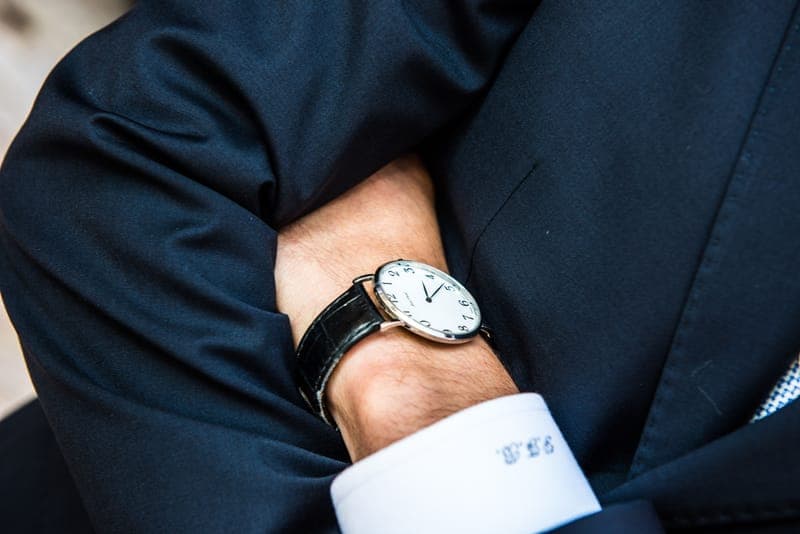 Orient Bambino Version 4Looks far dearer; a keepsake rather than a consumableUnder $200 | The $200-plus band, for an occasion |
We have not handled these products. Nobody here has worn, tested or owned them, and we will not pretend otherwise. What we do is check that each pick is still sold, still holds up and still makes sense as a gift at this budget. How we choose.
What to buy, if you have decided
Moleskine Classic notebook
Moleskine
A hardcover notebook with an elastic closure, a ribbon marker and a pocket in the back.
The example that makes the strategy concrete at the lowest band. Twenty-five dollars buys the genuine version of a small object — a hardcover notebook that sits flat when open, with an elastic closure and a back pocket — and it does not buy a credible version of anything larger. That is the whole trick at this level: go narrower rather than bigger. A real notebook feels like a real thing in the hand; a $25 speaker or a $25 leather bag announces its compromises immediately. Thin paper means fountain-pen users see show-through, and on its own it can read as a safe choice, which is why pairing it with something small helps.
What is good
- A safe pairing gift with almost anything else on this site
- Sits flat when open, which cheap notebooks do not
- A dozen formats, so it suits a planner or a sketcher
What to know
- Thin paper, so fountain-pen users will see show-through
- On its own it can read as an afterthought
Timex Weekender 38mm
Timex
A simple field-style watch on a slip-through fabric strap, with Timex's Indiglo backlight that lights the whole dial.
The example for the $50 band, where the field widens considerably. At this level you can buy a genuine wristwatch rather than a fashion imitation of one: a 38mm field watch with a slip-through fabric strap that comes off in seconds, and an Indiglo backlight that lights the entire dial. The reason it illustrates the band well is that it does not feel like a budget purchase — 38mm fits almost any wrist, so the sizing risk is low, and a second strap for a few dollars makes it feel like a considered gift rather than a single item. It ticks audibly in a quiet room, and fabric is never formal.
What is good
- The strap pulls off in seconds, so one watch becomes several looks for pocket money
- A 38mm case is the safest size guess when you do not know the wrist
- Indiglo makes it readable in the dark, which sounds trivial until you use it
What to know
- The quartz movement ticks audibly in a quiet room
- A fabric strap is comfortable but never formal
Anker Soundcore wireless earbuds
Anker
Bluetooth earbuds with active noise canceling, a charging case and an app for adjusting the sound.
The example at $100, the band for a close friend or a sibling. Noise-canceling earbuds are a good illustration because they show what the band buys: a feature that used to be premium-only, at a price where losing one is survivable. They work with both iPhone and Android, which is not true of every alternative and removes the most common way a tech gift fails. Battery life is shorter than premium models and the fit varies, so the alternative tips in the box matter. The broader point stands: at $100 you are buying real function rather than a token.
What is good
- Noise canceling at a fraction of the big-brand price
- Works with both iPhone and Android, which is not true of every alternative
- Losing one is survivable at this price
What to know
- Shorter battery life than premium models
- Fit varies, so some ears need the alternative tips
Orient Bambino Version 4
Orient
A dress watch with a domed crystal, applied numerals and an in-house automatic movement, on a leather strap.
The example at the top band, where the character of the gift changes. Above roughly $150 the point is no longer function but permanence: a dress watch with a domed crystal over applied numerals and an in-house automatic movement is a keepsake that can still be running in thirty years, which is a different kind of gift from anything above it on this page. It hand-winds as well as self-winds, so it is running correctly when the box is opened. Low water resistance means it comes off before the pool, and the leather strap is the first thing most owners upgrade — a natural addition to the gift.
What is good
- Looks like a far more expensive dress watch, and the domed crystal does most of that work
- Automatic with hand-winding, so it can be set going without wearing it first
- The right answer for anyone who wears a jacket regularly
What to know
- Low water resistance, so it comes off before the pool
- The leather strap is the first thing most owners upgrade
If your budget flexes
Everything on this page respects the ceiling in the title. Nothing here needs you to spend more — but if the number moves, these are the neighboring lists.
The figures, by relationship
| Recipient | Typical band | Notes |
|---|---|---|
| Office gift exchange | Whatever it sets, usually $15 to $25 | Never exceed it. Overspending pressures everyone else. |
| Coworker, individually | $15 to $25 | Keep it off the body and impersonal. |
| Your boss | Under $100, often under $50 | Modest is the point. A group gift is safer. |
| Friend | $25 to $50 | Match roughly what they gave you last time. |
| Close friend or sibling | $50 to $100 | Where function rather than token starts. |
| Parent or grandparent | $50 to $150 | Usually scales with your own income, not theirs. |
| Partner or spouse | $100 and up | Agree a ceiling together. Mismatch here causes real friction. |
| Child, your own | $50 to $150 | Watch sibling parity more than the absolute figure. |
| Kid's birthday party | $15 to $30 | Ask another parent what the group is doing. |
| Wedding | $75 to $150 per guest | Scales with how close you are, not with the venue. |
Those bands are descriptions of what people do, not instructions. The figure that is correct for you is the one you can give without resentment, and nobody who matters is keeping a ledger. What people do notice is a gift that is dramatically out of step with the room, in either direction.
The matching rule, which beats every figure
Try to land in the same band as the other people giving at the same occasion, and in the same band as what the recipient would give you. This is why the office exchange ceiling exists and why ignoring it is bad manners rather than generosity: the person who spends triple makes eight other people feel their gift was inadequate, and leaves the recipient with an obligation nobody wanted.
The same logic applies upward and downward in a family. Giving a sibling a gift that costs four times what they can afford to reciprocate is not kindness, it is an imbalance they then have to manage. If you want to give more than the band allows and you can comfortably afford it, the graceful route is to give the extra as something that cannot be priced — time, a shared experience, something made — rather than as a bigger object.
What each band actually buys
- Under $25: the real version of a small thing. A genuine notebook, a keychain tool, a pour-over cone. Never the cheap version of a big thing.
- $25 to $50: a proper object with one real feature. A genuine watch, a polarized pair of sunglasses, an insulated tumbler, a decent wallet.
- $50 to $100: real function. Noise canceling, a burr grinder, a daypack, a good leather wallet, a G-Shock.
- $100 to $250: a keepsake or a serious tool. A mechanical watch, a dive watch, a quality bag, a device somebody uses daily.
- Above $250: something marking an occasion, and the point stops being function entirely.
The useful thing about reading the bands this way is that it reframes the question. Instead of asking how much to spend, you can ask which of those five sentences describes the gift you want to give — and the number follows from the answer rather than the other way round.
Four situations where the bands do not apply
Weddings, where the convention is that the gift scales with how close you are to the couple and not with how expensive the wedding looked. A destination wedding you travelled to has already cost you a gift's worth, and nobody reasonable expects both.
Milestone occasions — a graduation, a retirement, an eighteenth or a significant anniversary — where a gift is expected to be a keepsake and the band moves up a step regardless of relationship. A watch is the archetype here for exactly this reason: it lasts, and it can be engraved.
Children's parties, where the group sets the figure and asking one other parent is the fastest way to find it. And a gift for somebody in genuine financial difficulty, where the normal matching rule inverts: the kind thing is to give something practical and underplay what it cost.
When you cannot afford the band
Spend less, and spend it well. A small gift chosen with obvious attention beats a larger one chosen at random, and this is not a consolation — it is how most people genuinely rank the gifts they have received. The specific technique is the one running through this whole page: buy the real version of a smaller thing rather than a compromised version of a bigger one.
The second technique is pairing. Two small things that go together — a notebook and a good pen, a watch and a second strap, coffee and the canister to keep it in — read as a considered set rather than a single modest item, for the same total. It is the cheapest way to make a gift feel like it took thought, because it did.
A note on gift cards
A gift card is honest and nobody is secretly offended by one, but it does make the amount explicit, which is the one thing a gift usually leaves tactfully vague. That is fine between colleagues and awkward between close family. The standard compromise — a modest card plus one real object — keeps the certainty and restores the vagueness, and it is the right answer more often than either extreme.
Questions buyers ask
How much should you spend on a gift?
Roughly $15 to $25 for a coworker, $25 to $50 for a friend, $50 to $100 for a close friend or sibling, and $100 or more for a partner, parent or child. The exact figure inside a band matters much less than landing in the same band as everybody else giving at the same occasion.
How much should you spend on a wedding gift?
Around $75 to $150 per guest is the common range, and it scales with how close you are to the couple rather than with how expensive the wedding looked. If you travelled to a destination wedding, that cost counts, and nobody reasonable expects both.
Is it bad to spend more than everyone else on a gift?
Yes, in a group setting. A gift well above the band makes the other givers feel inadequate and leaves the recipient with an obligation they did not ask for. If you want to give more, give something that cannot be priced — time, an experience, something made.
How much should you spend on a kid's birthday party gift?
About $15 to $30 is the usual range, and the fastest way to get it right is to ask one other parent what the group is doing. Children's parties are the clearest case of a figure set by the group rather than by the relationship.
What if you cannot afford the usual amount?
Spend less and spend it well: buy the real version of a smaller thing rather than a compromised version of a bigger one, and consider pairing two small items that go together. A small gift chosen with obvious attention outranks a larger one chosen at random.
Read next
- How much to spend on a watch
The same question for the one category where the bands work differently.
- Gifts for coworkers under $25
The lowest band, with the office rules attached.
- Gifts for your boss
Where spending less is actively the correct choice.
- Best gifts under $100
The band most people land in for a close friend or sibling.