Dive Watch vs Field Watch
One is built for water. One is built to be read. That is the whole decision.
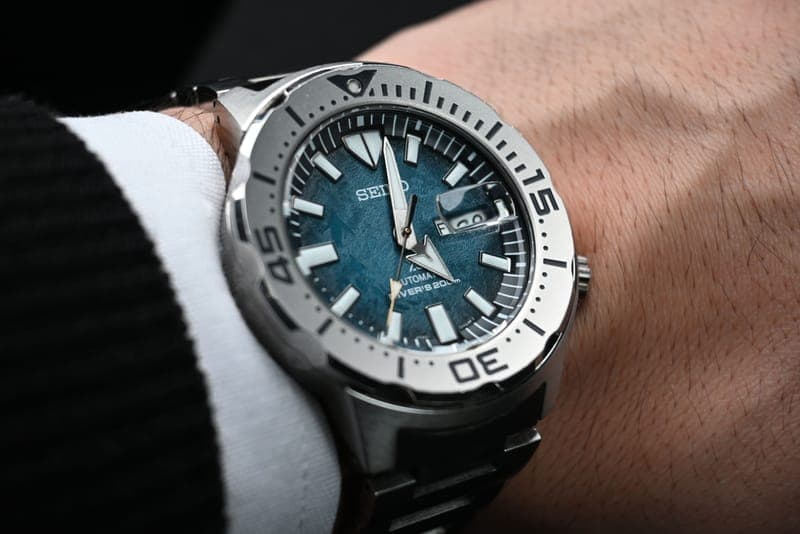
Buy a dive watch if the watch is going to get wet or needs to look substantial, and a field watch if it needs to be read instantly and worn under a cuff. That is the honest short version. A diver carries 200 meters of water resistance, a rotating bezel and a screw-down crown, and it is thick and heavy because those features cost thickness. A field watch carries a plain high-contrast dial, a thinner case, usually 50 to 100 meters of water resistance, and it exists to tell you the time without any decoding at all.
Most people searching this comparison have already half-decided and are checking themselves, so here is the reality check in one line: the dive watch is the more impressive object and the field watch is the one more people actually wear every day. If the recipient has a wrist under about six and a half inches, or wears a shirt to work, the field watch is probably the right answer even if the diver is the more exciting one.
What follows is what each style actually gives you, a table comparing the four picks below on the axes that matter, four watches — two divers and two field watches, at two budget levels each — and a short section on the hybrid case where neither is quite right.
How this page is funded: if you buy through a link here we may earn a commission, at no extra cost to you. It never decides what makes a list or what order the picks are in. Full disclosure.
Quick picks
The whole list at a glance. Tap any row to jump to the full write-up further down the page, or go straight to the listing.
| # | Product | Best for | Price |
|---|---|---|---|
| 1 | 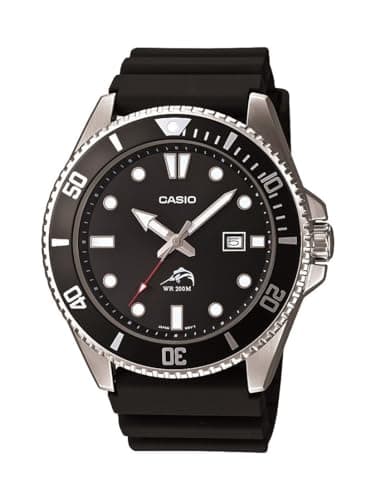 Casio MDV-106 Duro200m and a screw-down crown for the price of a cheap dinnerUnder $100 | The dive watch answer at the bottom of the budget | $68.99$84.95−19% View on Amazon #ad How this is funded · Price as of October 17, 2026 |
| 2 | 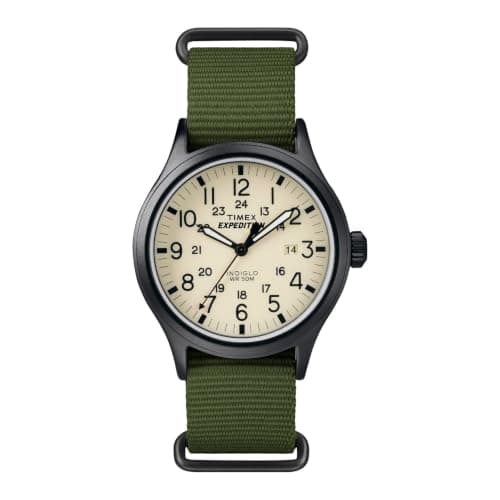 Timex Expedition Scout 40mmA legible field dial with a whole-dial backlight, at 40mmUnder $100 | The field watch answer at the bottom of the budget | $62.00 View on Amazon #ad How this is funded · Price as of October 17, 2026 |
| 3 | 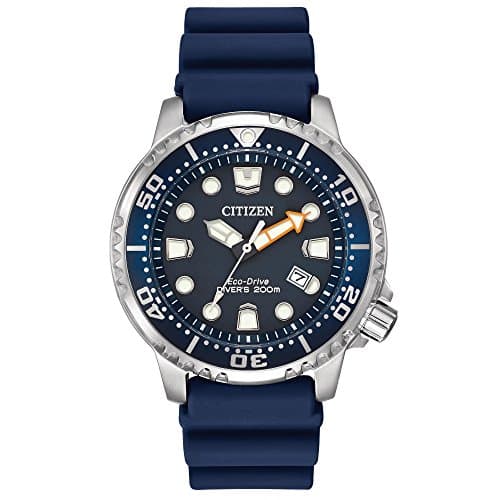 Citizen Promaster Diver200m and a screw-down crown, powered by light so nothing to serviceUnder $500 | The dive watch worth keeping, with no maintenance at all | $315.00$450.00−30% View on Amazon #ad How this is funded · Price as of October 17, 2026 |
| 4 | 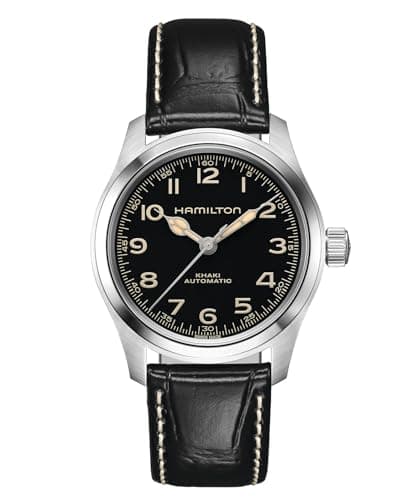 Hamilton Khaki Field Murph AutoThe most legible dial here, with an 80-hour power reserveUnder $1,000 | The field watch worth keeping, and the reference version | $995.00 View on Amazon #ad How this is funded · Price as of October 17, 2026 |
We have not handled these products. Nobody here has worn, tested or owned them, and we will not pretend otherwise. What we do is check that each pick is still sold, still holds up and still makes sense as a gift at this budget. How we choose.
What to buy, if you have decided
Casio MDV-106 Duro
Casio
A full-size analog dive-style watch with 200 meters of water resistance, a rotating bezel and a screw-down crown.
The cheapest honest dive watch there is, and the reason nobody needs to spend much to settle this question. The MDV-106 Duro is a full-size analog diver with 200 meters of water resistance, a rotating bezel and a screw-down crown, and the screw-down crown is the detail that makes the rating mean something rather than being a number on a caseback. 200 meters means swimming, showering and washing up stop being decisions. It also looks considerably more expensive than it is — the compliment owners repeat most often — and it takes a strap swap well, so a rubber-strapped diver becomes a smart one for very little. Two honest points, both normal for the category. The stock rubber strap is the weakest part and many owners replace it inside a year. And the 42mm case is simply too big for a genuinely small wrist, which is the single most common reason somebody ends up preferring a field watch.
What is good
- 200m water resistance means swimming, showering and dishes with no thought at all
- Looks far more expensive than it is, which is the compliment owners repeat most
- Takes a strap swap well, so it can be smartened up later for very little
What to know
- The stock rubber strap is the weakest part and many owners replace it
- A 42mm case is too big for a genuinely small wrist
#ad How this is funded · Price as of October 17, 2026
Timex Expedition Scout 40mm
Timex
A rugged field watch with a 24-hour inner track, Indiglo backlight and 50 meters of water resistance.
The field watch that makes the case for the whole style. The Expedition Scout is rugged without being a plastic sports watch — a 24-hour inner track, an Indiglo backlight that lights the entire dial rather than a corner of it, and 50 meters of water resistance — and legibility is the point rather than a side effect. It is readable at a glance, which sounds trivial until you are the person squinting at a cluttered diver's dial in low light, and it handles rain, lakes and washing up without being precious. At 40mm it is a meaningfully smaller watch than the diver above and sits flatter, which is why more people wear a field watch daily than wear a diver daily. Two honest points. It is not rated for scuba depths, so it loses the moment water is the actual point. And the steel case picks up scratches with hard use, which is a field watch doing its job rather than a fault.
What is good
- Built for outdoor use without being a plastic sports watch
- Legible at a glance, which matters to anyone over forty
- Handles rain, lakes and washing up
What to know
- Not rated for scuba depths
- The steel case picks up scratches with hard use
#ad How this is funded · Price as of October 17, 2026
Citizen Promaster Diver
Citizen
A solar-powered dive watch with 200 meters of water resistance and a screw-down crown, running Citizen's Eco-Drive technology so it never needs a battery.
The pick if the diver is going to be a long-term watch rather than a cheap experiment. The Promaster Diver carries 200 meters of water resistance and a screw-down crown, and it is powered by Citizen's Eco-Drive technology, which means it runs on light and never needs a battery change — the lowest-maintenance serious watch anybody sells. For a diver that matters more than it does for a dress watch, because a water-resistant case has to be opened to change a battery and every opening is a chance for its seals to be refitted badly. Eco-Drive removes that event entirely. It costs a fraction of the mechanical divers in the same case shape while being more practical than any of them. Two honest points. It is quartz, so it offers none of the mechanical appeal a collector is usually after. And the resin or rubber strap versions look their price — the steel bracelet versions are the ones that read as a serious watch.
What is good
- Never needs a battery and never needs winding — the lowest-maintenance serious watch anyone sells
- 200m water resistance with a screw-down crown, so water genuinely stops being a consideration
- Costs a fraction of the mechanical divers on this page while being more practical than any of them
What to know
- Quartz, so it offers none of the mechanical appeal a watch enthusiast is usually after
- The resin or rubber strap versions look their price
- Needs to see light occasionally — months in a closed drawer will stop it
#ad How this is funded · Price as of October 17, 2026
Hamilton Khaki Field Murph Auto
Hamilton
A Swiss-made military-styled field watch with a sapphire crystal and an automatic movement carrying an 80-hour power reserve.
The field watch other field watches are measured against. The Khaki Field is Swiss-made with a sapphire crystal and an automatic movement carrying an 80-hour power reserve, and the dial is the most legible of anything on this page — a field watch exists to be read at a glance and this is the version that defines what that means. The 80-hour reserve is the quiet practical feature: a weekend off the wrist does not stop it, which is the usual annoyance with an automatic watch and the reason many people give up on them. The military heritage is genuine rather than styling, which matters to the kind of recipient who asks about it. Three honest points. It is deliberately plain, so it is the wrong direction if the watch needs to look expensive. Water resistance covers rain and washing up rather than swimming — this is the field watch trade. And the stock strap is the first thing many owners change.
What is good
- The most legible dial of anything on this page — a field watch exists to be read at a glance, and this one is the reference version
- 80-hour power reserve, so a weekend off the wrist does not stop it
- Military heritage that is genuine rather than styling, which matters to the kind of recipient who asks about it
What to know
- Deliberately plain — if the recipient wants a watch that looks expensive, this is the wrong direction
- Water resistance covers rain and washing up rather than swimming
- The stock strap is the first thing many owners change
#ad How this is funded · Price as of October 17, 2026
If your budget flexes
Everything on this page respects the ceiling in the title. Nothing here needs you to spend more — but if the number moves, these are the neighboring lists.
Dive watch vs field watch, side by side
The two styles differ on five things, and every one of them is a consequence of the first. A diver has to keep water out under pressure, which means thick steel, a gasketed screw-down crown and a thick crystal. A field watch has to be read instantly in bad light, which means a plain dial, strong contrast and no bezel in the way.
| Pick | Style | Water resistance | On the wrist | Powered by |
|---|---|---|---|---|
| Casio MDV-106 Duro | Diver | 200m, screw-down crown | Large, 42mm, substantial | Battery |
| Citizen Promaster Diver | Diver | 200m, screw-down crown | Large and thick | Light (Eco-Drive) |
| Timex Expedition Scout | Field | 50m | 40mm, flat, easy under a cuff | Battery |
| Hamilton Khaki Field Auto | Field | Rain and washing up | Mid-size, slim for the style | Automatic, 80h reserve |
What a dive watch actually gives you
Three things. Real water resistance, usually 200 meters with a crown that screws shut, which means water genuinely stops being a consideration — swimming, showering, washing up, rain, none of it needs a thought. A rotating bezel, which is a simple elapsed-time timer: line the marker up with the minute hand and you can see how long something has been running without doing arithmetic. And strong luminous markers, because a dive watch is designed to be read in dark water.
What you pay for that is size. All three features need a thicker case, and a thick case wears larger, catches on cuffs and sits badly on a narrow wrist. Nobody buying a diver should be surprised by this, and plenty of people who bought one for the water end up wearing something thinner most days.
What a field watch actually gives you
Legibility, first and above everything. A field watch dial is plain, high-contrast and uncluttered by design — the specification is that somebody can read it in a single glance in bad light, and every design decision follows from that. If the recipient is over forty, or checks the time constantly, this is worth more than any feature a diver has.
Second, size and comfort. Field watches run smaller and flatter than divers, which is why they go under a shirt cuff and why they suit a slim wrist. Third, versatility: a plain field watch on a leather or fabric strap is acceptable at a desk, at a weekend and at most evenings out, which a 42mm diver on rubber is not.
The trade is water. 50 meters covers rain, handwashing and a lake; it does not cover a swimming session with any confidence, and it is nowhere near a diver's rating. If the watch is going in the water regularly, a field watch is the wrong tool and no amount of liking the dial changes that.
How to choose, in four questions
- Will it get wet regularly? Yes means diver, and the question is effectively over. 200 meters with a screw-down crown is a different category from 50 meters.
- How big is the wrist? Under about six and a half inches, go field. A 42mm diver on a narrow wrist is the single most common reason a watch stops being worn.
- Do they wear a shirt to work? Field, usually. A thinner case goes under a cuff and a plain dial does not fight a suit.
- Do they want the watch to be noticed? Diver. A dive watch has presence and a field watch is deliberately quiet — that is the honest difference in how each one reads.
When neither is quite right
Two cases. If the recipient wants water resistance and a slim watch, the answer is not a compromise diver — it is a 100-meter sports watch or a tough digital, both of which give real water capability without a diver's thickness. The G-Shock line is the obvious version of this and it is a genuinely sensible answer that neither style on this page provides.
If the recipient wants legibility and a watch that looks dressy, a field watch is close but a plain dress watch is closer. A field dial is high-contrast but it is also military-plain, and some people read that as scruffy rather than understated. A slim steel dress watch with a clean dial covers the same legibility brief while looking like it belongs with a jacket.
How we compared these
We have not worn or tested the watches on this page, and there is no testing lab behind this site. Water resistance, case size, crystal material, movement type and power reserve all come from each manufacturer's published specification and its live listing. The conclusions about how each style wears are editorial judgements about the consequences of those specifications, not measurements of our own.
No price is typed into this page. The number inside each buy button comes from Amazon's live listing with the date it was read, so it goes out of date by disappearing rather than by being wrong.
Questions buyers ask
What is the difference between a dive watch and a field watch?
A dive watch is built to keep water out under pressure — usually 200 meters, a screw-down crown and a rotating bezel — which makes it thick and heavy. A field watch is built to be read instantly: a plain high-contrast dial, a thinner case, and typically 50 to 100 meters of water resistance.
Which is better, a dive watch or a field watch?
A diver if the watch will get wet or needs presence on the wrist. A field watch if it needs to be read at a glance and worn under a shirt cuff. The field watch is the one more people wear daily; the diver is the more impressive object.
Can you swim with a field watch?
A 50-meter field watch handles rain, handwashing and a dip in a lake, but it is not a swimming watch and it is nowhere near a diver's 200 meters. If the watch is going in the water regularly, buy a diver and do not talk yourself out of it.
Is a dive watch too big for a small wrist?
Often, yes. A 42mm diver on a wrist under about six and a half inches overhangs, and that is the most common reason a gifted diver stops being worn. A field watch at 38mm to 40mm is the better answer for a narrow wrist.
What is the rotating bezel on a dive watch for?
It is a simple elapsed-time timer. Line the bezel's marker up with the minute hand and you can read off how long something has been running without any arithmetic — originally a dive's duration, in practice a parking meter or a pan on the stove.
Which style is better for a gift?
A field watch, slightly, because it fits more wrists and more wardrobes and is harder to get wrong. Buy the diver when you know the recipient swims, works around water, or has said they want a watch with some presence to it.
Read next
- Best dive watches under $500
The diver side of this page, ranked properly.
- Best field watches
The field side, ranked properly.
- Best waterproof watches
If water resistance is the whole decision.
- What type of watch should I get?
The wider version of this question, across every style.
- Can you shower with a watch?
What each water rating really permits.
- Casio Duro vs Seiko 5
A cheap diver against a cheap automatic, head to head.