Can You Shower With a Watch?
The number on the caseback is not a depth. Here is what each rating really allows.
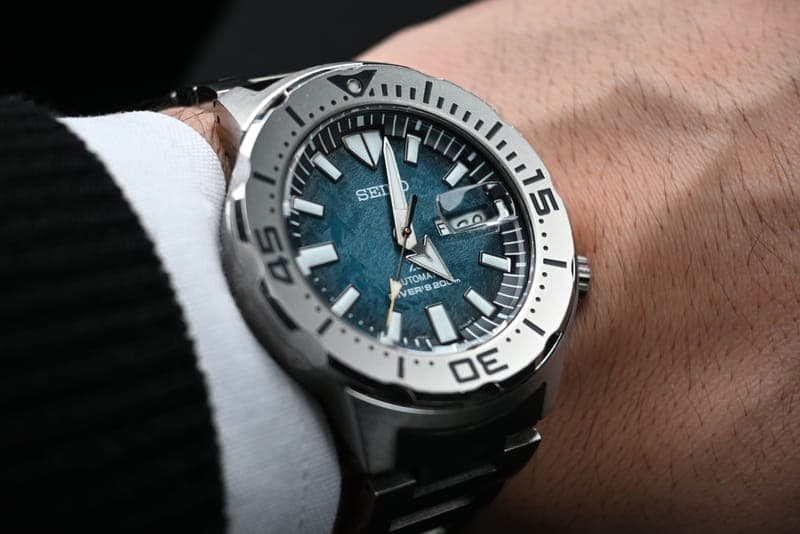
Only if the watch is rated to at least 100 meters, and even then not on a leather strap. A watch marked 30 meters or 50 meters should not go in the shower: those ratings cover splashes and handwashing, not a sustained jet of hot water. At 100 meters a shower is fine. At 200 meters it is irrelevant. The reason hot water is treated more harshly than cold is that heat expands the metal case and the rubber gaskets at different rates, which briefly opens the seal that keeps water out.
The confusion here is created by the ratings themselves, because they are not depths. A watch stamped 30 meters is not safe at 30 meters underwater — it is tested to a static pressure equivalent, in a lab, on a new watch, with no movement. Real water involves motion, temperature and ageing gaskets, all of which eat into the margin. The table below translates each rating into what it actually permits, and the rest of the page covers the two things that matter more than the number: the strap, and the crown.
How this page is funded: if you buy through a link here we may earn a commission, at no extra cost to you. It never decides what makes a list or what order the picks are in. Full disclosure.
Quick picks
The whole list at a glance. Tap any row to jump to the full write-up further down the page, or go straight to the listing.
| # | Product | Best for | Price |
|---|---|---|---|
| 1 | Casio MDV-106 Duro200m and a screw-down crown; shower, swim, sea, all fineUnder $50 | A watch you never have to think about in water | |
| 2 | Citizen Promaster Diver200m, screw-down crown, light-powered so no battery eitherUnder $500 | Waterproof and zero maintenance | |
| 3 | 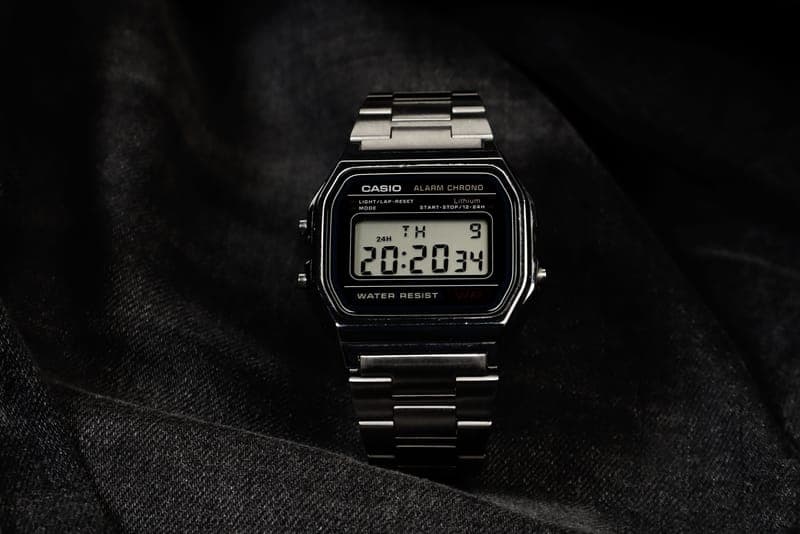 Timex Ironman Classic 30100m rated, resin case and strap, nothing to damageUnder $50 | Swimming and timing, cheaply |
We have not handled these products. Nobody here has worn, tested or owned them, and we will not pretend otherwise. What we do is check that each pick is still sold, still holds up and still makes sense as a gift at this budget. How we choose.
What to buy, if you have decided
Casio MDV-106 Duro
Casio
A full-size analog dive-style watch with 200 meters of water resistance, a rotating bezel and a screw-down crown.
The pick if the answer should simply be yes, forever. 200 meters of water resistance with a screw-down crown means showers, dishes, pools and the sea are all genuinely irrelevant — this is well beyond the margin where hot water or an ageing gasket becomes a concern. It is also the cheapest honest way to get there, which matters because the alternative is being careful with a watch for its whole life. Two things to know: at 42mm it is too large for a genuinely small wrist, and the stock rubber strap is the weakest part. On the water question specifically, a rubber or silicone strap is the correct choice anyway.
What is good
- 200m water resistance means swimming, showering and dishes with no thought at all
- Looks far more expensive than it is, which is the compliment owners repeat most
- Takes a strap swap well, so it can be smartened up later for very little
What to know
- The stock rubber strap is the weakest part and many owners replace it
- A 42mm case is too big for a genuinely small wrist
Citizen Promaster Diver
Citizen
A solar-powered dive watch with 200 meters of water resistance and a screw-down crown, running Citizen's Eco-Drive technology so it never needs a battery.
The pick if the watch should be beyond the water question and beyond the maintenance question at the same time. 200 meters with a screw-down crown, powered by light rather than a battery, which means there is nothing to replace and nothing to wind — and critically for this topic, no reason for anyone ever to open the case. A battery change is one of the most common ways a watch quietly loses its water resistance, because the gasket is often not replaced properly, and a light-powered watch never needs one. It is quartz, so it offers nothing to an enthusiast, and it is a substantial watch on a small wrist.
What is good
- Never needs a battery and never needs winding — the lowest-maintenance serious watch anyone sells
- 200m water resistance with a screw-down crown, so water genuinely stops being a consideration
- Costs a fraction of the mechanical divers on this page while being more practical than any of them
What to know
- Quartz, so it offers none of the mechanical appeal a watch enthusiast is usually after
- The resin or rubber strap versions look their price
- Needs to see light occasionally — months in a closed drawer will stop it
Timex Ironman Classic 30
Timex
The long-running Ironman sports watch: 30-lap memory, stopwatch, alarms and 100 meters of water resistance.
The pick if the requirement is pool and shower rather than sea and depth, and the budget is small. A 100 meter rating covers showering and swimming properly, and the resin case and strap are the right materials for water — nothing to crack, nothing to absorb, nothing that needs drying carefully. The stopwatch and lap memory are genuinely useful to a swimmer. The honest limits are that it is pure sports styling that will never go with a jacket, and the resin strap stiffens over several years of chlorine and sweat, which is a cheap thing to replace rather than a reason to avoid it.
What is good
- Genuinely useful to anyone who times runs, swims or intervals
- Light enough to forget on the wrist mid-exercise
- Handles pool and ocean swimming
What to know
- Pure sports styling, so it will not go with a suit
- The resin strap eventually stiffens
What each rating actually permits
| Marked | Rain and handwashing | Shower | Swimming | Snorkeling or diving |
|---|---|---|---|---|
| Water resistant, no number | Yes | No | No | No |
| 30m / 3 ATM | Yes | No | No | No |
| 50m / 5 ATM | Yes | Not advised | Briefly, cold | No |
| 100m / 10 ATM | Yes | Yes | Yes | Snorkeling only |
| 200m / 20 ATM | Yes | Yes | Yes | Yes |
If you remember one line from this page, make it this: 100 meters is the threshold where a watch stops needing to be managed around water. Below it, the owner has to think. At or above it, they do not.
Why the numbers are not depths
Water resistance is tested as static pressure in a laboratory, on a new watch, held still. Moving an arm through water generates pressure spikes far above the static equivalent of the depth you are at, which is why a 30 meter watch can leak in a swimming pool at one meter. The number is a test result, not a permission slip, and the gap between the two is the margin that gets used up by real conditions.
Two conditions eat that margin faster than anything else. Heat, because a hot shower expands the case and the gaskets at different rates and briefly compromises the seal — this is the specific reason showering is treated more cautiously than swimming. And age, because gaskets are rubber, rubber hardens, and a ten-year-old watch does not have the water resistance printed on its caseback unless somebody has replaced the seals.
The strap decides as much as the case
A 200 meter watch on a leather strap is not a shower watch, because the strap will not survive what the case shrugs off. Leather absorbs water, dries stiff, cracks at the fold and starts to smell. This is the single most common way a water-resistant watch gets ruined: the case is fine and the strap is destroyed.
For water, the correct materials are rubber, silicone and steel. Nylon is acceptable and dries quickly, though it holds moisture against the skin. If you are giving somebody a watch they will wear in water and it arrives on leather, buy a silicone strap in the right lug width at the same time — it costs very little and it is the difference between a watch that survives and one that needs rescuing.
The crown is the other weak point
The crown — the little winding knob on the side — is the hole in the case. On a dive watch it screws down, which is why a screw-down crown appears in every specification above: screwed in, the case is sealed; left unscrewed, a 200 meter watch is not water resistant at all. On most non-dive watches the crown simply pushes in, which is adequate for splashes and less so for immersion.
Two practical rules follow. Never operate the crown or the pushers while the watch is wet or underwater, because that is an open invitation. And if the watch has a screw-down crown, check it is screwed in before anything involving water, which takes two seconds and is worth mentioning when you hand the watch over.
Soap, chlorine and salt
Soap and shampoo are worse for a watch than plain water, because surfactants reduce water's surface tension and let it work into gaps it would otherwise bridge. They also leave residue in the gaps around a bezel and under a bracelet. Chlorine degrades rubber gaskets over time, and salt water is the harshest of all, leaving crystals that attack seals and finishes as they dry.
The fix in all three cases is the same and takes ten seconds: rinse the watch under clean fresh water afterwards and dry it. For a dive watch that has been in the sea, work the bezel under the running water so the salt comes out of the teeth. This single habit extends the life of a water-resistant watch more than anything else an owner can do.
What to do about a battery change
Opening a watch case breaks the seal, and a battery change is the moment most watches quietly lose their water resistance. A proper job means replacing the case gasket and pressure testing afterwards; a cheap job means popping the back on and handing it over. If a watch matters and it goes in water, ask for the gasket to be replaced and the watch to be tested, and expect to pay more than the shopping-center rate.
This is also the quiet argument for a light-powered watch if water is part of the recipient's life. A watch that never needs a battery is a watch whose case is never opened, and a case that is never opened keeps the water resistance it was sold with.
Quick rules to pass on with the gift
- Under 100m: rain and handwashing only. No shower, no pool.
- 100m and above: shower and swim freely. Screw the crown down first if it has one.
- Never operate the crown or pushers while the watch is wet.
- Leather and water do not mix, whatever the case is rated to.
- Rinse with fresh water after soap, chlorine or the sea, then dry it.
- After any battery change, assume the water resistance is gone until it has been tested.
Questions buyers ask
Can you shower with a watch?
Only if it is rated to at least 100 meters, and never on a leather strap. A 30 or 50 meter watch should stay out of the shower: hot water expands the case and gaskets at different rates and briefly compromises the seal, which is why showering is treated more cautiously than swimming.
What does 100m water resistant mean on a watch?
It means the watch passed a static pressure test equivalent to 100 meters of depth, when new and held still. In practice it is the threshold at which showering and swimming are both fine, and the point at which an owner stops having to think about water at all.
Can you swim with a 50m water resistant watch?
Briefly and in cold water, but it is not a swimming watch. Moving an arm through water creates pressure spikes well above the static equivalent of the depth, which is why 50 meter watches leak in swimming pools. For regular swimming, buy 100 meters or more.
Why is hot water worse for a watch than cold?
Heat expands the steel case and the rubber gaskets at different rates, which can briefly open the seal that keeps water out. Steam is worse still, because the water is in a form fine enough to pass through gaps liquid water would bridge.
Does a watch lose water resistance after a battery change?
Often, yes. Opening the case breaks the seal, and a proper job means replacing the case gasket and pressure testing afterwards. If the watch goes in water, ask specifically for both, and assume the rating is void until it has been tested.
Read next
- Best dive watches under $500
Where the 200 meter answers live, mechanical and solar.
- Best watches for nurses
The job where constant handwashing makes this the deciding question.
- Best watch straps under $50
The silicone strap that makes a water-resistant watch actually usable in water.
- What type of watch should I get?
If water is the main requirement, this is where the choice narrows fast.