Best Watches for Running
One question decides this: does the runner need GPS, or just a lap timer?
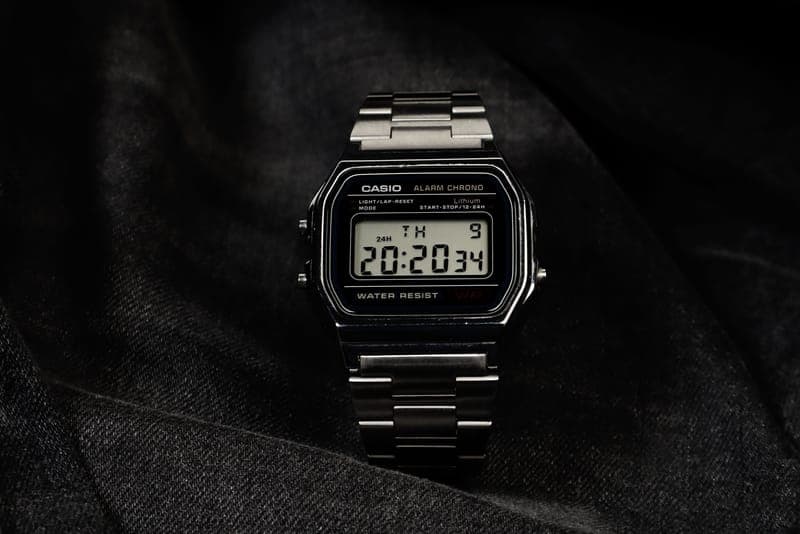
The best running watch for most people is the Garmin Forerunner 55: it has GPS, so it records pace and distance without a phone, and it runs for days rather than hours on a charge, which is the difference between a running watch and a smartwatch that happens to track runs. If the runner does laps on a track or a treadmill and does not care about a map, the Timex Ironman Classic does the job for a fraction of the money. Five picks are below, chosen by what the runner actually needs rather than by specification count.
Buying a running watch as a gift goes wrong in one predictable way: the buyer shops for features and the runner wanted battery life. A watch that must be charged every night is a watch that is flat on the morning of the long run, and that single frustration is why expensive sports watches end up unworn more often than cheap ones. The honest split is below — GPS against lap timer, multi-day battery against nightly charging — along with what each kind of runner should actually be given.
How this page is funded: if you buy through a link here we may earn a commission, at no extra cost to you. It never decides what makes a list or what order the picks are in. Full disclosure.
Quick picks
The whole list at a glance. Tap any row to jump to the full write-up further down the page, or go straight to the listing.
| # | Product | Best for | Price |
|---|---|---|---|
| 1 | Garmin Forerunner 55GPS pace and distance, multi-day battery, light enough to sleep inUnder $250 | The best running watch for most runners | |
| 2 | Timex Ironman Classic 30Stores laps, Indiglo, and a battery measured in yearsUnder $50 | The best running watch under $50 | |
| 3 | Apple Watch SEGPS plus notifications and payments; charges nightlyUnder $250 | A runner who also wants a smartwatch | |
| 4 | Casio F-91WStopwatch, alarm, almost no weight, years of batteryUnder $25 | The cheapest watch that genuinely works for running | |
| 5 | Casio G-Shock DW-5600E200m water resistance, lap-capable chronograph, near-indestructibleUnder $100 | A runner who is hard on watches |
We have not handled these products. Nobody here has worn, tested or owned them, and we will not pretend otherwise. What we do is check that each pick is still sold, still holds up and still makes sense as a gift at this budget. How we choose.
Every pick in detail
Garmin Forerunner 55
Garmin
An entry-level GPS running watch with pace, distance, heart rate and suggested workouts, in a light plastic case.
The pick for anybody who runs outdoors and wants to know how far and how fast. GPS is the specification that matters, because it records pace and distance from satellites rather than estimating from arm swing, and it does it without carrying a phone — which is the thing runners most want from a watch. The battery is the second reason this is the default recommendation: it lasts days rather than needing a nightly charge, so the watch is never flat on race morning. It is light enough to sleep in, which is how it tracks rest, and it offers suggested workouts for somebody who has no plan. Two honest caveats. It looks like a plastic sports watch and does not pretend otherwise, so it will not double as an everyday watch, and it needs a phone app set up once before it is useful — worth doing before you wrap it.
What is good
- Multi-day battery life, unlike a smartwatch that needs charging every night
- GPS pace and distance is exactly what a runner wants from a watch
- Light enough to sleep in for rest tracking
What to know
- A plastic sports look and a single-purpose watch
- Needs a phone app set up before it is useful
Timex Ironman Classic 30
Timex
The long-running Ironman sports watch: 30-lap memory, stopwatch, alarms and 100 meters of water resistance.
The pick when the runner does intervals, laps or a treadmill and a map is irrelevant. The Ironman has been the default cheap running watch for decades for a simple reason: the buttons work with cold wet fingers, the chronograph stores laps so a session can be reviewed afterwards, and the battery lasts years instead of days. Indiglo lights the whole display, which matters on a winter morning run. For a gift it has one underrated advantage over anything with GPS — there is nothing to set up, no account to create and no app to pair, so it works the moment it comes out of the box. What it cannot do is tell the runner how far they went, which is exactly why the Garmin above exists. The resin strap is comfortable but unmistakably sporty, and the case will pick up scratches.
What is good
- Genuinely useful to anyone who times runs, swims or intervals
- Light enough to forget on the wrist mid-exercise
- Handles pool and ocean swimming
What to know
- Pure sports styling, so it will not go with a suit
- The resin strap eventually stiffens
Apple Watch SE
Apple
Apple's entry smartwatch: notifications, workouts, heart rate, fall detection and Apple Pay, paired to an iPhone.
The pick when the recipient would rather own one watch than two, and runs a few times a week rather than training seriously. It has GPS, so pace and distance are real rather than estimated, and it adds everything a dedicated running watch deliberately leaves out: notifications, music control, contactless payment and workouts of every other kind. For a casual runner that breadth is genuinely more useful than a better running watch would be. The two limits are hard ones, though. It requires an iPhone, so it is useless to an Android user and you must check before buying. And it charges nightly, which is the single biggest complaint runners have about smartwatches — a flat watch on long-run morning is a real and recurring annoyance that the Garmin above simply does not have.
What is good
- Genuinely useful every day, which almost nothing else at this money can claim
- Fall detection and emergency calling matter for an older recipient
- The default gift for a teenager who already lives inside an iPhone
What to know
- Requires an iPhone, so it is useless to an Android user
- Charges nightly, which some people never adapt to
Casio F-91W
Casio
The thin resin digital watch Casio has sold, essentially unchanged, since 1989. Time, date, alarm, stopwatch, backlight.
The pick when the budget is tiny or the runner is just starting and nobody wants to spend money on a habit that may not stick. The F-91W weighs almost nothing, which on a run matters more than it sounds like it should, it has a stopwatch and an alarm, and the battery is measured in years. It is also the most honest gift on this page: it makes no promises about training zones or recovery scores, and it costs so little that losing or breaking it is not an event. What it lacks is lap memory — the stopwatch times a run but will not store splits — so a runner doing structured intervals will outgrow it quickly. The strap is thin resin and will eventually crack, and the display is small enough that reading it mid-stride takes a deliberate look.
What is good
- Weighs so little that people who say they hate watches forget it is on
- Battery life is measured in years, not months
- Genuinely hard to damage, which makes it a safe gift for anyone rough on things
What to know
- The resin strap looks exactly as inexpensive as it is
- Splash-resistant only, so it is not a swimming watch
Casio G-Shock DW-5600E
Casio
The original square G-Shock: shock resistant, 200 meters water resistant, resin case, digital display.
The pick for a runner who also does obstacle races, trail runs, hard manual work or anything else that destroys plastic sports watches. The DW-5600 is the original square G-Shock and it is close to indestructible: 200 meters of water resistance, a case built around shock absorption rather than style, and a chronograph with enough memory for a session's laps. It is heavier on the wrist than the Timex or the Casio above, which some runners dislike and others never notice. Its real advantage as a gift is that it is not only a running watch — it looks correct worn casually, so it earns its place on the wrist on days with no run in them. It does not have GPS and will not tell anybody how far they ran, and the square case is a specific look that the recipient either already likes or does not.
What is good
- Survives work sites, gyms, boats and teenagers
- Small enough for a slim wrist despite the tough reputation
- A universally recognized silhouette that needs no explaining
What to know
- An all-resin build will never read as dressy
- The backlight is dim by modern standards
If your budget flexes
Everything on this page respects the ceiling in the title. Nothing here needs you to spend more — but if the number moves, these are the neighboring lists.
The five, side by side
| Watch | GPS | Stores laps | Battery | Best for |
|---|---|---|---|---|
| Casio F-91W | No | No | Years | The cheapest thing that works |
| Timex Ironman Classic | No | Yes | Years | Intervals and treadmills |
| Casio G-Shock DW-5600E | No | Yes | Years | A runner who breaks watches |
| Garmin Forerunner 55 | Yes | Yes | Days | The best all-round pick |
| Apple Watch SE | Yes | Yes | About a day | One watch for everything |
The battery column is the one buyers skip and runners care about most. Days of battery means the watch is charged when the alarm goes off; about a day means it is charged if the owner remembered last night. For somebody training to a plan, that difference decides whether the gift gets worn.
Does the runner actually need GPS?
GPS answers one question: how far and how fast. If the runner goes out of the door and down a road, that question has no other answer, and a watch without GPS leaves them estimating. If they run on a treadmill, round a measured track, or follow the same known route every time, the distance is already known and GPS adds cost and charging for nothing.
- Buy GPS if they run outdoors on varied routes, are training for a distance, or talk about pace.
- Skip GPS if they run on a treadmill, do laps of a track, or run the same fixed loop.
- Skip GPS if they already run with a phone and an app and are happy with it.
- Buy GPS anyway if they have ever said they do not know how far they went.
One thing to know before buying: a watch marketed as a fitness tracker is not the same as a GPS watch. Step-and-wrist-motion tracking estimates distance from arm swing, which is approximate on a walk and poor on a run. If pace matters, the specification to look for is GPS, not step counting.
Heart rate, and whether it is worth paying for
Wrist heart rate is genuinely useful for steady running and much less reliable for hard intervals, because the sensor reads light through skin and a sudden change in effort outruns it. For a recreational runner it is an interesting number. For somebody doing threshold work to a plan, a chest strap is the accurate option and most GPS watches will pair with one.
In gift terms: do not pay a premium specifically for heart rate. Pay for GPS and battery life, and treat the heart rate sensor as a bonus that comes attached. Both GPS picks on this page include one anyway.
Why battery life decides whether a running watch gets worn
A dedicated GPS running watch measures battery in days because it is doing one job with a simple screen. A smartwatch measures it in about a day because it is doing twenty with a bright one. Neither is a defect — they are different products — but the consequence for a runner is specific and recurring: the long run is the session most likely to be planned in advance, and the watch is most likely to be flat on exactly that morning.
If you are buying for somebody who runs to a plan, that single fact is the strongest argument for the Garmin over the Apple Watch, regardless of which has more features. If you are buying for somebody who runs when the mood takes them, it hardly matters and the smartwatch is the more useful object the other six days of the week.
What to buy for which runner
- Brand-new runner, might not stick with it: the Casio F-91W or the Timex Ironman. Cheap, instant, nothing to set up.
- Treadmill or track, doing intervals: the Timex Ironman, for stored laps and buttons that work with wet hands.
- Runs outdoors, training for a 10K or a half: the Garmin Forerunner 55. This is the default answer.
- Runs occasionally and wants one watch for everything: the Apple Watch SE, if they have an iPhone.
- Trail, obstacle races, or hard on equipment: the G-Shock DW-5600E.
- Already owns a GPS watch: buy a chest strap or a replacement band instead of a second watch.
How these picks were chosen
We have not worn or run in any of these watches. Each pick was checked for three things: that it is currently sold, that the one specification this page turns on — GPS or no GPS, laps or no laps, days or hours of battery — is accurately stated, and that its real limits appear next to its strengths. The Apple Watch's iPhone requirement, the F-91W's missing lap memory and the Garmin's unavoidable plastic-sports-watch look are all written above because those are the things buyers find out afterwards.
No prices appear on this page and no ratings are awarded. Every pick links to its live listing, so the figure you see is today's.
Questions buyers ask
What is the best watch for running?
For most runners, the Garmin Forerunner 55 — GPS pace and distance without a phone, and a battery measured in days rather than hours. If the running happens on a treadmill or a track where distance is already known, the Timex Ironman Classic does the job for a fraction of the price.
Do I need a GPS watch for running?
Only if the runner needs to know how far and how fast they went on varied outdoor routes. On a treadmill, a measured track or a single fixed loop, the distance is already known and GPS adds cost and charging for nothing. A lap-timing watch is the better buy there.
Is an Apple Watch good for running?
It is good for casual running and a poor fit for serious training. It has real GPS and tracks runs accurately, but it charges nightly, so it is the watch most likely to be flat on long-run morning. It also requires an iPhone, which is worth confirming before you buy one as a gift.
What is the best cheap running watch?
The Timex Ironman Classic, because it stores laps, the buttons work with cold wet fingers, Indiglo lights the whole display, and the battery lasts years. The Casio F-91W is cheaper still and weighs almost nothing, but its stopwatch will not store splits.
How long should a running watch battery last?
A dedicated GPS running watch should run for several days of normal use between charges, and a non-GPS digital watch for years on a cell. Anything that needs charging every night is a smartwatch first and a running watch second, which matters most to runners following a training plan.
Read next
- Best smartwatch gifts
If one watch has to do everything, start here instead.
- Smartwatch vs regular watch
The decision behind this page, in gift terms.
- Can you shower with a watch?
What the water-resistance rating on a sports watch actually allows.
- Best watches for nurses
The other on-your-feet-all-day shortlist, with washable straps.