Best Smartwatch Gifts for New Parents
Battery life matters more than features. Everything else on this page follows from that.
If you want the short answer: buy the Fitbit Inspire 3. It is the cheapest thing on this page, it is rated for about ten days per charge, it tracks sleep stages, and it is small enough that a parent carrying a baby on one arm will forget it is on the other. A new parent does not need a wearable with more features. They need one they will not have to think about, and that is a different product.
The reason this question needs its own page is that almost every smartwatch recommendation you will find optimizes for the wrong thing. The usual winners are judged on screen quality, app ecosystems and workout accuracy. None of those survive contact with a four-month-old. What survives is battery life, a silent vibrating alarm, something you can operate with one hand, and sleep tracking that does not fall apart when sleep arrives in ninety-minute pieces. Rank wearables on those four things and the list comes out almost backwards from the usual one.
There is also an honest warning that belongs near the top rather than buried at the bottom. Sleep tracking can be the wrong gift. A device that scores a parent's night out of 100 and tells them they got four hours and eleven minutes is, for some people, a small daily cruelty rather than useful information. If the person you are buying for is anxious about their sleep rather than curious about it, the pick further down this page with no screen at all is the better choice, and a watch with no health tracking whatsoever is a legitimate third answer. Our full reasoning on that lives in the section on when not to buy one.
What follows is nine picks, from a band at the bottom of the price range through to the full iPhone-tier smartwatch, with the criteria they were judged on stated before the picks rather than after. Every one was checked as live and in stock on the day this page was written, and every one has its real drawbacks listed, because a gift guide that pretends nine products are all excellent is not a guide.
How this page is funded: if you buy through a link here we may earn a commission, at no extra cost to you. It never decides what makes a list or what order the picks are in. Full disclosure.
Quick picks
The whole list at a glance. Tap any row to jump to the full write-up further down the page, or go straight to the listing.
| # | Product | Best for | Price |
|---|---|---|---|
| 1 | 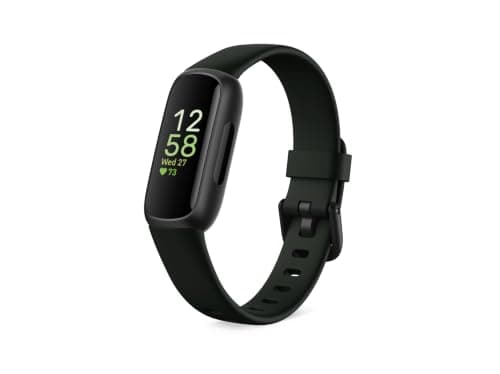 Fitbit Inspire 3Rated ten days per charge, sleep stages, small enough to forgetUnder $100 | The best pick for most new parents | |
| 2 | 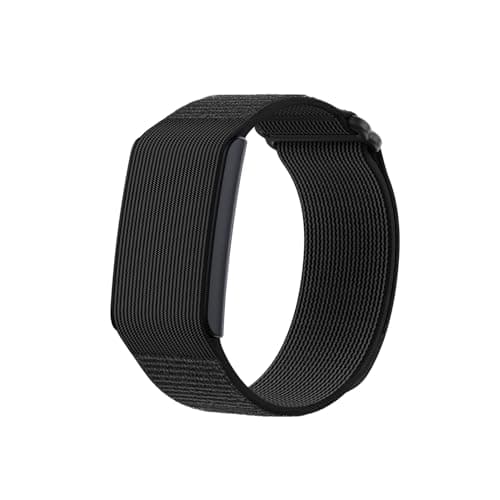 Amazfit Helio StrapScreenless sleep and recovery band, ten-day battery, no subscriptionUnder $100 | Best if they do not want a screen in bed | $99.00 View on Amazon #ad How this is funded · Price as of November 21, 2026 |
| 3 | 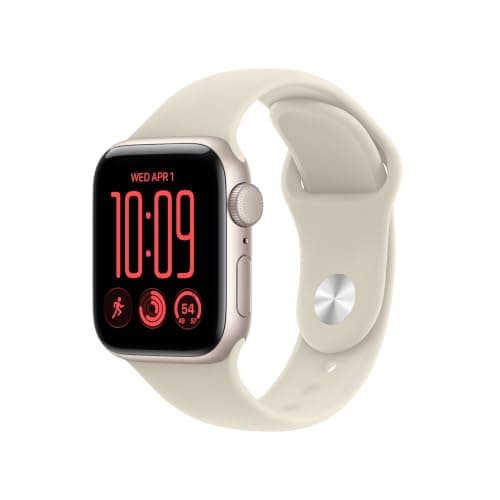 Apple Watch SEThe safe default if they already live inside an iPhoneUnder $250 | Best for an iPhone household | $199.00$249.00−20% View on Amazon #ad How this is funded · Price as of November 21, 2026 |
| 4 | 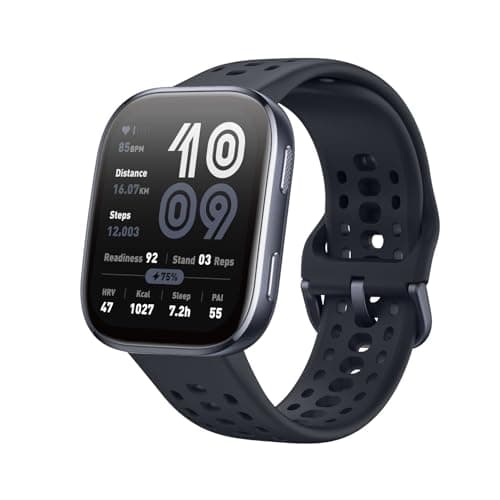 Amazfit Bip 6Rated up to fourteen days, big readable screen, works with any phoneUnder $100 | Best battery life under $100 | $79.00 View on Amazon #ad How this is funded · Price as of November 21, 2026 |
| 5 | 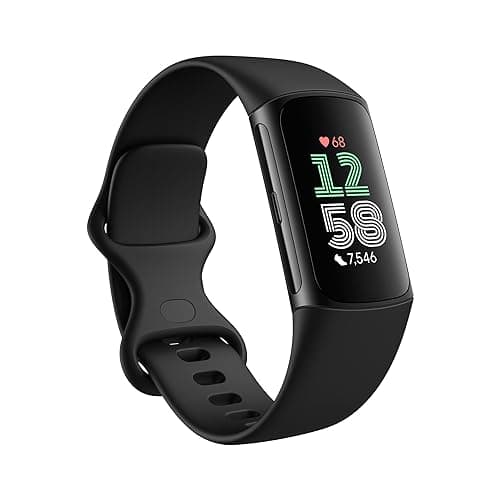 Fitbit Charge 6Built-in GPS and an ECG sensor, still a slim band not a watchUnder $200 | Best if heart health is the reason | |
| 6 | 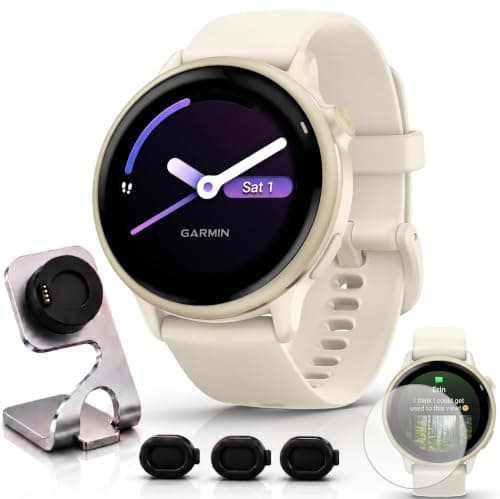 Garmin Vivoactive 6Eleven-day rating, real GPS and workouts, pairs with any phoneUnder $500 | Best for a parent getting back into exercise | $259.99$309.99−16% View on Amazon #ad How this is funded · Price as of November 21, 2026 |
| 7 | 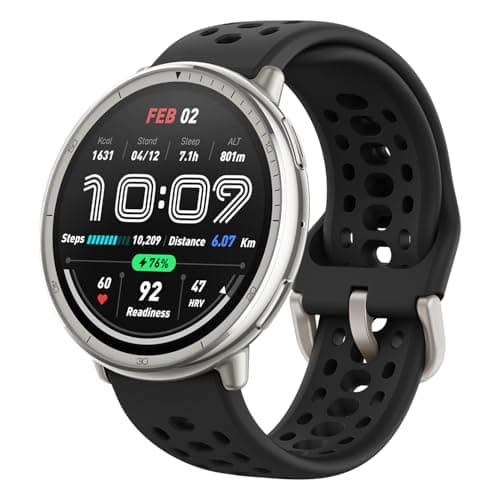 Amazfit Active 2Round case, more sensors than the Bip 6, still works with any phoneUnder $100 | Best watch-looking pick at the low end | |
| 8 | 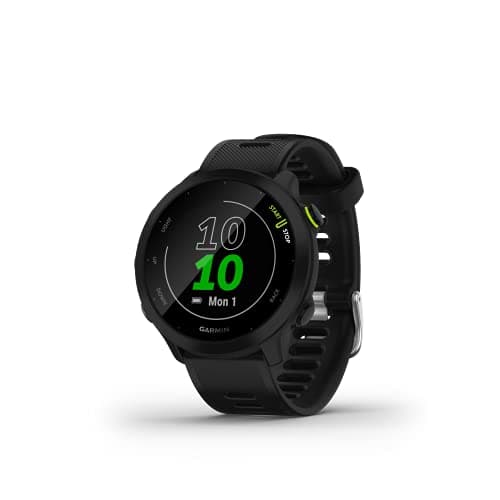 Garmin Forerunner 55Multi-day battery, GPS pace and distance, light enough to sleep inUnder $250 | Best for a parent who already runs | $161.99$199.99−19% View on Amazon #ad How this is funded · Price as of November 21, 2026 |
| 9 | 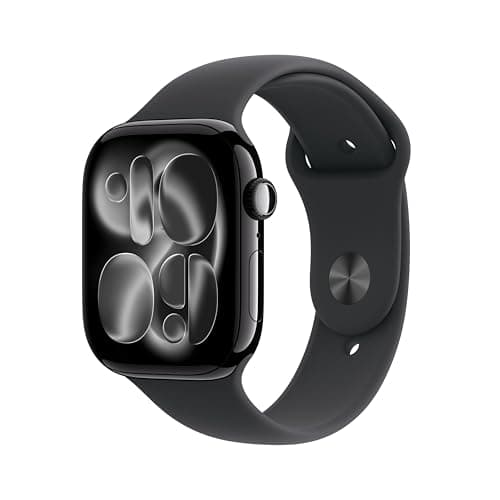 Apple Watch Series 11The full iPhone smartwatch — bigger screen, more sensors than the SEUnder $500 | Best if the budget is open and they have an iPhone |
We have not handled these products. Nobody here has worn, tested or owned them, and we will not pretend otherwise. What we do is check that each pick is still sold, still holds up and still makes sense as a gift at this budget. How we choose.
Every pick in detail
Fitbit Inspire 3
Fitbit
A slim fitness band that tracks steps, heart rate and sleep stages, rated by Fitbit at up to ten days per charge. It borrows the phone's GPS rather than carrying its own.
The pick for almost everybody reading this. Fitbit rates the Inspire 3 at up to ten days per charge, which is the single most important number on this page: a new parent is not going to remember to charge a watch, so the device has to be the one making that easy. It is a slim band rather than a watch, light and narrow enough that somebody who has never worn anything on their wrist stops noticing it inside a day, and that matters when the wrist in question is holding a baby for several hours a day. Sleep stages are the headline feature, and they are the one number an exhausted person actually looks at. It also has the vibrating silent alarm, which is the feature that quietly justifies the whole purchase: it wakes one parent without waking the other and without waking the baby. The honest cons are real. It uses connected GPS, meaning it borrows the phone's location rather than carrying its own, so it logs the duration and heart rate of a walk but not the route. There is no ECG sensor; the Charge 6 further down has that. Setup needs a phone app and a Google account, so it is not a gift that works the moment it is unwrapped. And the hardware dates from 2022 and is overdue a replacement, so a newer model may well appear during its life.
What is good
- The longest rated battery life in the Fitbit range, so it can be worn through the night without a nightly charge
- Light and narrow enough that somebody who has never worn a watch forgets it is on
- Sleep stages are the headline feature, which is the one number an exhausted recipient actually looks at
What to know
- Connected GPS only: it records duration and heart rate but not a route or a GPS pace
- No ECG sensor, which the step-up Charge 6 has
- Setup needs a phone app and a Google account, so it is not a gift that works straight out of the box
- The hardware dates from 2022 and is overdue a replacement, so a newer model may land during its life
Amazfit Helio Strap
Amazfit
A screenless band worn for sleep and recovery tracking rather than for telling the time. Rated at ten days per charge, water-resistant to 5 ATM, and it carries no subscription fee.
The pick when the recipient has said, out loud, that they do not want another screen. This is a band with no display at all: it tracks sleep and recovery and reports to a phone app, and there is nothing on the wrist to light up at three in the morning. Reviewers consistently rate its sleep tracking well above its price, which is the entire reason it earns a slot here rather than being a curiosity. It is rated at ten days per charge, water-resistant to 5 ATM so showers and baths are not a consideration, and — unusually for this style of recovery tracker — there is no subscription fee to read your own data. The cons are structural and you should take them seriously before wrapping it. No screen means no time, no notifications and nothing glanceable; it is a sensor, not a watch, and somebody expecting a watch will be disappointed in a way that is awkward to fix. It has no GPS, so it cannot map a walk or a run. Reviewers found its automatic workout detection unreliable. And it is a slightly unusual object, so it is the right gift only for somebody you are confident wants data rather than a watch.
What is good
- No screen at all, so there is nothing to light up at 3am and nothing to pull attention
- Reviewers rate its sleep tracking well above its price, which is the entire reason to buy it
- No subscription, unlike the strap-style recovery trackers it is modeled on
What to know
- No screen means no time, no notifications and nothing glanceable — it is a sensor, not a watch
- No GPS, so it cannot map a run
- Reviewers found the automatic workout detection unreliable
- The wrong gift for anybody who wanted a watch, and worth being certain about before you wrap it
#ad How this is funded · Price as of November 21, 2026
Apple Watch SE
Apple
Apple's entry smartwatch: notifications, workouts, heart rate, fall detection and Apple Pay, paired to an iPhone.
The pick when the recipient has an iPhone and you want the thing they would probably have bought themselves. The SE is Apple's entry smartwatch: notifications, workouts, heart rate, fall detection and Apple Pay, all of it working the moment it is paired. For a new parent the useful part is not the fitness tracking at all — it is being able to read a message or silence a call from the wrist while both hands are occupied, which happens roughly forty times a day in the first year. Fall detection and emergency calling are a genuine reassurance when one parent is home alone with a baby. And because it is the default, there is no explaining to do: they already know how it works. Two honest cons, and the first one is a hard gate. It requires an iPhone, so it is completely useless to an Android user — check the phone before you buy, because this is the single most common expensive mistake in gifting a smartwatch. And it charges nightly, which is exactly the habit a new parent has the least capacity to maintain, and it also means it is off the wrist during the hours you might have wanted it tracking sleep.
What is good
- Genuinely useful every day, which almost nothing else at this money can claim
- Fall detection and emergency calling matter for an older recipient
- The default gift for a teenager who already lives inside an iPhone
What to know
- Requires an iPhone, so it is useless to an Android user
- Charges nightly, which some people never adapt to
#ad How this is funded · Price as of November 21, 2026
Amazfit Bip 6
Amazfit
A budget smartwatch with a large bright screen, built-in GPS with offline maps, and a battery Amazfit rates at up to fourteen days. No subscription is needed to see your own data.
The pick when battery life is the only thing you care about and the budget is tight. Amazfit rates the Bip 6 at up to fourteen days per charge, which is the longest figure on this page and roughly a fortnight of not thinking about it. The screen is a 1.97-inch AMOLED, the biggest of anything at this money, and that genuinely matters at 4am when somebody half asleep wants to know the time without putting their glasses on. It has built-in GPS with offline maps, so unlike the Fitbit bands it can map a walk on its own, and it pairs with both iPhone and Android, which removes the compatibility gamble entirely. The health data is not behind a paywall. The honest cons: the app ecosystem is thin next to Apple's or Google's, so beyond health, notifications and timers it does not do much, and anybody expecting app-store breadth will find it limited. The build is plastic and feels like the price, which is a real consideration for something that gets unwrapped in front of people. And a 1.97-inch screen on a small wrist looks exactly like a 1.97-inch screen on a small wrist.
What is good
- Nearly two weeks of rated battery life, which is the most forgiving feature a gift smartwatch can have
- The biggest screen of anything at this money, so it reads at a glance without reading glasses
- Works with iPhone and Android, and the health data is not paywalled
What to know
- The app ecosystem is thin next to Apple or Google, so it does little beyond health, notifications and timers
- The build is plastic and feels like the price, which matters for something unwrapped in front of people
- A screen that large on a small wrist looks exactly like a screen that large on a small wrist
#ad How this is funded · Price as of November 21, 2026
Fitbit Charge 6
Fitbit
Fitbit's full-feature band: built-in GPS, an ECG sensor, heart rate and sleep tracking, rated at up to seven days per charge and about five hours of continuous GPS.
The pick when the reason for the gift is health rather than convenience. The Charge 6 is the Fitbit band with the hardware the Inspire 3 leaves out: built-in GPS and GLONASS, so a walk with the stroller is mapped without carrying a phone, and an ECG sensor, which is the difference that matters if heart health is on anybody's mind — postpartum or otherwise. It is still a slim band rather than a watch, so it keeps the main advantage of the Inspire 3: it suits somebody who does not want a watch-sized screen on their wrist. It is the right pick when the recipient has specifically mentioned wanting more than step counting. The cons are a straight trade against the Inspire 3. Rated battery life drops to about seven days, and heavy GPS use cuts that to roughly four, so you are trading the thing we said mattered most for capability. Some features — the ECG readings among them — sit behind a Fitbit Premium subscription once the included trial runs out, which is a recurring cost the recipient inherits rather than you. And like every Fitbit it needs a phone app and a Google account before it does anything at all.
What is good
- Built-in GPS and GLONASS, so a walk or a run is mapped without carrying a phone
- Has the ECG sensor the cheaper Inspire 3 does not, which matters when heart health is the reason for the gift
- Still a band rather than a watch, which suits a recipient who does not want a screen the size of a watch face
What to know
- Shorter rated battery life than the Inspire 3, and heavy GPS use cuts it to roughly four days
- Some features, the ECG readings among them, sit behind a Fitbit Premium subscription once the included trial ends
- Like every Fitbit it needs a phone app and a Google account before it does anything
Garmin Vivoactive 6
Garmin
Garmin's all-round health and fitness smartwatch: an AMOLED screen, built-in GPS, workout and sleep tracking, rated at up to eleven days in smartwatch mode and about twenty-one hours with GPS running.
The pick when the recipient has said they want to get back into running or the gym once things settle down. Garmin rates the Vivoactive 6 at up to eleven days in smartwatch mode and about twenty-one hours with GPS running, which is a genuinely different class of endurance from an Apple Watch, and it has an AMOLED screen, a 5 ATM water rating and the workout tracking Garmin is actually known for. The important practical point for a gift: it pairs with both iPhone and Android, so you cannot get the compatibility question wrong. It is useful without a phone in a pocket, which is the right shape for a parent who wants to leave the house with as little as possible. Four honest cons, and the first is the one people get caught by. Switching the always-on display on drops the rated battery from about eleven days to about five, so the figure you bought it for depends on a setting. Reviewers found GPS less accurate in canyons and dense forest, and there are no detailed navigation maps. Some of the more advanced metrics sit behind Garmin's paid tier. And it is the most expensive wearable on this site — a casual wearer will never touch most of what they paid for.
What is good
- Eleven days of rated battery life is the difference between a watch that gets worn and one that lives on a charger
- Built-in GPS, a 5 ATM water rating and real workout tracking, so it is useful without a phone in a pocket
- Pairs with both iPhone and Android, which removes the worst single risk in gifting a smartwatch
What to know
- Switching the always-on display on drops the rated battery life from about eleven days to about five
- Reviewers found GPS less accurate in canyons and dense forest, and there are no detailed navigation maps
- Some of the more advanced metrics sit behind Garmin's paid tier
- The most expensive wearable on this site, and a casual wearer will never touch most of it
#ad How this is funded · Price as of November 21, 2026
Amazfit Active 2
Amazfit
The Bip 6's round-faced sibling: a smaller, more watch-like case with more sensors, including the body-temperature and elevation tracking the Bip 6 leaves out.
The pick when the recipient would like a wearable but does not want to look like they are wearing a fitness gadget. The Active 2 is the Bip 6's round-faced sibling: a smaller 1.32-inch AMOLED in a case that reads as a watch rather than as a device, with more sensors than the Bip 6 — body temperature and elevation among them. It is the better pick of the two Amazfits for somebody who will wear it to work and to dinner as well as to bed, and it keeps the two things that make Amazfit a sensible budget answer: it pairs with iPhone and Android, and reading your own health data costs nothing extra. The cons: rated battery life is shorter than the Bip 6's, which is the trade for the extra sensors, and battery life is the thing we have argued matters most here. It is sold in more than one version, so it is genuinely easy to order the one without the feature you were buying it for — read the listing title carefully. And the smaller screen is harder to read at a glance than the Bip 6's, which cuts against the 4am use case.
What is good
- Looks like a watch rather than a gadget, which is the reason to choose it over the big-screen Bip 6
- More sensors than the Bip 6, body temperature and elevation among them
- Still far below any Apple or Garmin wearable, and still no subscription to read your own data
What to know
- Rated battery life is shorter than the Bip 6's, which is the trade for the extra sensors
- Sold in more than one version, so it is easy to order the one without the feature you were buying it for
- The smaller screen is harder to read at a glance than the Bip 6's
Garmin Forerunner 55
Garmin
An entry-level GPS running watch with pace, distance, heart rate and suggested workouts, in a light plastic case.
The pick when the recipient was a runner before the baby and intends to be one again. The Forerunner 55 is a single-purpose GPS running watch — pace, distance, heart rate and suggested workouts in a light plastic case — and the reason it belongs on a new-parent page is the battery: multi-day, not nightly, so it does not compete with everything else demanding attention in that house. It is light enough to sleep in for rest tracking, which means it can do double duty on a page where sleep is the headline metric. And GPS pace and distance is exactly, precisely what a runner wants from a watch, with no translation needed. Two honest cons. It has a plastic sports look and it is a single-purpose watch — it will not dress up and it is not trying to. And it needs a phone app set up before it is useful, like everything else here. One more thing worth saying plainly: if the recipient is not already a runner, this is the wrong gift. Buying somebody a running watch as a hint is a well-documented way to make a gift land badly.
What is good
- Multi-day battery life, unlike a smartwatch that needs charging every night
- GPS pace and distance is exactly what a runner wants from a watch
- Light enough to sleep in for rest tracking
What to know
- A plastic sports look and a single-purpose watch
- Needs a phone app set up before it is useful
#ad How this is funded · Price as of November 21, 2026
Apple Watch Series 11
Apple
The middle model in Apple's current line, above the SE and below the Ultra: a larger always-on display, more health sensors than the SE, plus notifications, workouts and Apple Pay, paired to an iPhone.
The pick when the budget is genuinely open and the recipient has an iPhone. The Series 11 is the middle model in Apple's current line, above the SE and below the Ultra: a larger always-on display, more health sensors than the SE, and all the notification and payment convenience that makes an Apple Watch useful to somebody whose hands are full. It is the most capable everyday smartwatch an iPhone owner can be handed, and the one they will not want to replace for years, which is a reasonable thing to buy for a milestone like a first baby. The bigger, brighter always-on screen is the difference you notice first; the extra sensors are the actual reason to spend above the SE. The cons matter more here than usual because of the money. It is iPhone only, so check the phone first. It charges most nights, which rules out uninterrupted sleep tracking unless the wearer tops it up in the shower — and on a page where sleep data is the point, that is a significant limitation rather than a footnote. And it costs substantially more than the SE for a difference a casual wearer will not use, so if the recipient is not already an enthusiastic Apple Watch user, the SE is the better buy and the Inspire 3 is better still.
What is good
- The most capable everyday smartwatch an iPhone owner can be handed, and one they will not want to replace for years
- A bigger, brighter always-on screen than the SE, which is the difference you notice first
- More health sensors than the SE, which is the actual reason to spend the extra
What to know
- iPhone only, so it is a wasted gift for an Android user — check the phone before you buy
- Charges most nights, which rules out uninterrupted sleep tracking unless the wearer tops it up in the shower
- Costs substantially more than the SE for a difference a casual wearer will not use
If your budget flexes
Everything on this page respects the ceiling in the title. Nothing here needs you to spend more — but if the number moves, these are the neighboring lists.
What we judged these on
The criteria came before the picks, which is the only way a list like this stays honest. Four things decide whether a wearable works for somebody with a newborn, and they are not the four things smartwatch reviews are usually built around.
- Battery life, weighted heaviest. A device that needs charging every night will be charged for a week and then left in a drawer. Anything rated under about five days started this page at a disadvantage.
- A silent vibrating alarm. One parent needs to be woken without waking the other and without waking the baby. Every pick here has this; it is the most underrated feature in the category.
- One-handed operation and low bulk. The other arm is holding a baby. A device that needs two hands, or a case that catches on a sling or a car seat strap, is the wrong shape.
- Sleep tracking that handles fragmented sleep. Newborn sleep arrives in pieces, and the useful question is whether a device records several short blocks sensibly rather than whether it produces a tidy score.
What we deliberately did not weight: screen resolution, app-store breadth, running-watch accuracy to the second, and anything requiring a subscription to be useful. Those are real differentiators for other buyers. For this buyer they are noise, and ranking on them is how you end up recommending a watch that needs charging every night to somebody who has not slept through a night in four months.
The nine picks compared
Rated battery life below is the manufacturer's own figure, not a measured one, and real-world numbers come in lower — particularly with an always-on display or heavy GPS use. We have noted where a setting changes the figure materially.
| Pick | Rated battery | GPS | Works with | Shape |
|---|---|---|---|---|
| Fitbit Inspire 3 | Up to 10 days | Connected (uses phone) | iPhone and Android | Slim band |
| Amazfit Helio Strap | Up to 10 days | None | iPhone and Android | Screenless band |
| Apple Watch SE | About a day | Built in | iPhone only | Watch |
| Amazfit Bip 6 | Up to 14 days | Built in, offline maps | iPhone and Android | Large-screen watch |
| Fitbit Charge 6 | Up to 7 days | Built in | iPhone and Android | Slim band |
| Garmin Vivoactive 6 | Up to 11 days | Built in | iPhone and Android | Watch |
| Amazfit Active 2 | Shorter than Bip 6 | Built in | iPhone and Android | Watch |
| Garmin Forerunner 55 | Multi-day | Built in | iPhone and Android | Sports watch |
| Apple Watch Series 11 | About a day | Built in | iPhone only | Watch |
Read that table with one question in mind: is the recipient going to charge this thing? If the answer is an honest no, the top two rows are the only ones that make sense, regardless of budget. The two Apple Watches are excellent devices that need to be on a charger for part of every day, and that is a worse fit for this particular recipient than a cheaper band that does less.
Why battery life beats everything else here
In any other context, a day of battery life is fine. You charge your phone nightly and your watch alongside it, and the habit costs nothing. The first year with a baby breaks exactly that habit, because the thing that used to happen reliably at a fixed time each evening now happens at an unpredictable time, or does not happen, and the charger is in the bedroom where the baby is now asleep.
The practical consequence is that a nightly-charge watch gets charged in the daytime instead, which means it is off the wrist during the hours it would have been tracking sleep. So the device marketed hardest on health tracking ends up collecting the least data about the metric that actually matters to this person. A ten-day band collects all of it, because it never comes off.
This is also why the price order on this page looks inverted. The cheapest pick is the top pick, and that is not a value judgment dressed up as advice — it is what happens when you rank on the criterion that decides whether the gift gets used. If your budget stretches further, the better use of it is a second gift the recipient can actually enjoy rather than a more expensive watch that solves a problem they do not have.
Sleep tracking with a newborn: what it can and cannot tell you
It is worth setting expectations honestly, because this is the feature everybody buys these for. A wrist wearable estimates sleep stages from movement and heart rate. It is good at telling you roughly when somebody was asleep and roughly how broken that sleep was, and it is genuinely useful for spotting a pattern over weeks — that the 11pm feed costs less than the 2am one, for instance, or that the recipient is getting more total sleep than they feel they are.
What it is not is a clinical measurement, and it gets less reliable as sleep gets more fragmented, which is precisely the situation here. Several twenty-minute blocks are harder for any wrist device to classify than one solid seven-hour one. Treat the nightly score as a rough trend line rather than a fact, and ignore any single night entirely.
One more practical note: a vibrating silent alarm is the feature that most often ends up being the reason the device stays on the wrist, long after the sleep graphs have stopped being interesting. Being able to wake at 6am without an audible alarm going off in a room where a baby is finally asleep is worth more day to day than any metric on this page.
When not to buy one of these at all
There are three situations where every pick on this page is the wrong gift, and it is better to say so than to sell you one anyway.
- If the recipient is anxious about their sleep rather than curious about it. A device that scores their worst nights out of 100 can turn a bad night into a bad day. The screenless pick is a softer option because the number is not on their wrist, but no wearable is the right answer for somebody who will take it badly.
- If they have already said they do not want more notifications. A smartwatch is, for most people, a device that makes a phone harder to escape. A plain watch with no connectivity is a genuinely better gift for that person, and we have a whole section of the site for it.
- If you do not know what phone they have and cannot find out. Two of the nine picks here are iPhone-only. If you are buying blind, buy one of the Fitbit or Amazfit or Garmin picks, every one of which works with both.
A note on prices and availability
Every price on this page comes from the retailer at the time you load it, not from us typing a number into an article. We do not quote figures in the text, because a price written into prose is wrong within a week and anchoring you to a stale number is worse than showing none. If a pick shows no price, the listing could not be confirmed as live at that moment and the honest action is to check before committing.
Wearables in particular move fast. Models get replaced on roughly annual cycles, and several picks here are sold in multiple versions that look identical in a thumbnail and differ in sensors. Read the listing title before you buy — this is the one category where that advice is not boilerplate.
Questions buyers ask
What is the best smartwatch gift for someone who just had a baby?
The Fitbit Inspire 3, for most buyers. It is rated at about ten days per charge, it tracks sleep stages, it has a vibrating silent alarm that wakes one parent without waking the baby, and it is small enough to forget about. Battery life is what decides whether a wearable gets worn by a new parent, and nothing else here combines that rating with that price.
Is a smartwatch a good gift for new parents at all?
Usually yes, with one exception: somebody who is anxious about their sleep rather than curious about it. A device that scores a broken night out of 100 can make a hard morning harder. For that person a screenless tracker, or a plain watch with no health features, is the kinder gift.
Should I buy one that tracks the baby's sleep too?
No. These are wrist wearables for adults, and nothing here monitors an infant. Baby monitoring is a separate category with its own safety considerations, and a device that estimates an adult's sleep from wrist movement is not designed for, or useful on, a newborn.
Do any of these work without a subscription?
All of them show basic health and sleep data without paying extra. The gaps are specific: some Fitbit features, including the Charge 6's ECG readings, need Fitbit Premium once the included trial ends, and some of Garmin's more advanced metrics sit behind its paid tier. The Amazfit picks have no subscription for reading your own data.
iPhone or Android — does it matter which one they have?
For two of the nine picks it is decisive. The Apple Watch SE and Series 11 require an iPhone and are useless to an Android user. The Fitbit, Amazfit and Garmin picks all pair with either, so if you are buying without knowing what phone is in the house, choose from those.
Will a smartwatch survive being worn around a newborn?
Water is the usual worry, and the answer is mostly yes: the Garmin and the Amazfit Helio Strap carry 5 ATM ratings, which covers hand-washing, baths and showers. What actually fails is attention — a device that needs daily charging gets taken off and not put back on, which is why the long-battery picks rank highest here.
Read next
- Best smartwatch gifts
The general version of this list, without the newborn constraint.
- Best smartwatch to give someone who has never worn one
If the recipient has never owned a wearable of any kind.
- Best smartwatch for a mom who wants to track her health
The same picks judged on health metrics rather than battery life.
- Best gifts for new moms
Everything on this list that is not a wearable.
- Best gifts for new dads
The same brief, for the other parent.
- Best watches for beginners
If a plain watch with nothing to charge is the better call.