How to Choose a Wallet
Count the cards first. Everything else follows from that number.
Count the cards first. That one number decides more about which wallet is right than material, brand or style do, and it is the step almost everybody skips. Under six cards and no cash, a slim card sleeve or a metal cardholder is the right answer and a bifold is overkill. Eight or more cards, or cash and coins carried daily, and a slim wallet will be permanently overstuffed and a bifold is the right answer no matter how dated it looks.
After the card count there are three more decisions, in this order: front pocket or back pocket, which rules out some shapes entirely; material, which is mostly about how it ages and whether it meets water; and RFID blocking, which is cheap enough now that it is rarely worth paying extra for specifically. Get the first decision right and a near-miss on the other three is still a wallet that gets used.
What follows is each decision with what actually changes if you choose differently, then four wallets — one for each branch rather than a ranked list — and the two mistakes that leave a new wallet in a drawer. If you want the category ranked instead of explained, the wallet roundups do that; this page is for working out what you are looking for first.
How this page is funded: if you buy through a link here we may earn a commission, at no extra cost to you. It never decides what makes a list or what order the picks are in. Full disclosure.
Quick picks
The whole list at a glance. Tap any row to jump to the full write-up further down the page, or go straight to the listing.
| # | Product | Best for | Price |
|---|---|---|---|
| 1 | 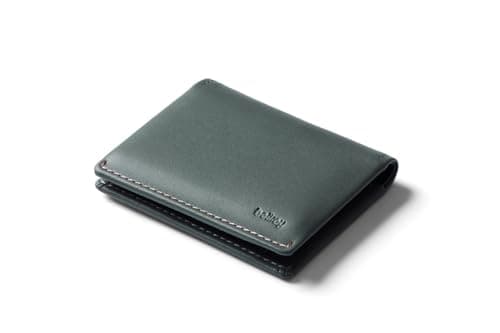 Bellroy Slim SleeveVery thin leather sleeve with pull-tab card accessUnder $100 | Six cards or fewer, front pocket | $85.00 View on Amazon #ad How this is funded · Price as of October 17, 2026 |
| 2 | 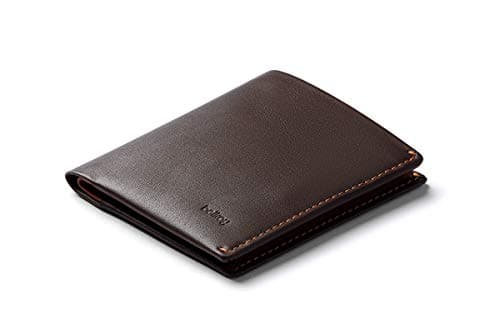 Bellroy Note SleeveA real bifold with a coin pouch, still much slimmer than normalUnder $100 | Eight or more cards, or cash and coins daily | $95.00 View on Amazon #ad How this is funded · Price as of October 17, 2026 |
| 3 | 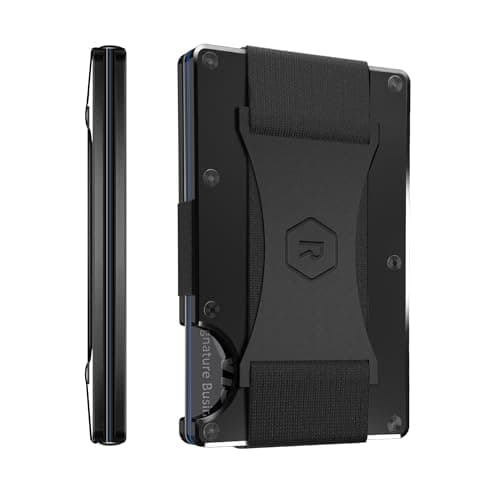 The Ridge WalletTwo metal plates and an elastic band — effectively indestructibleUnder $100 | A hard card count, and somebody rough on things | $76.00$94.99−20% View on Amazon #ad How this is funded · Price as of October 17, 2026 |
| 4 | 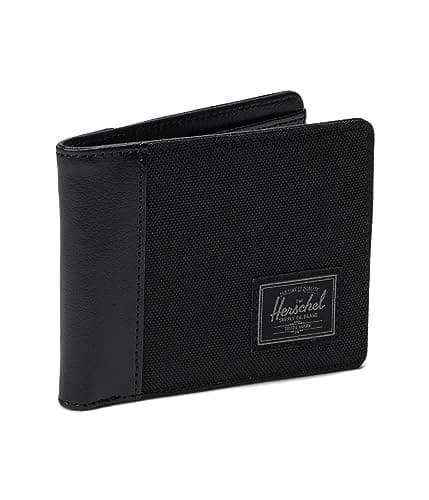 Herschel Hank WalletCoated fabric bifold with RFID, shrugs off waterUnder $50 | Rain, a low budget, or somebody who loses wallets | $45.00 View on Amazon #ad How this is funded · Price as of October 17, 2026 |
We have not handled these products. Nobody here has worn, tested or owned them, and we will not pretend otherwise. What we do is check that each pick is still sold, still holds up and still makes sense as a gift at this budget. How we choose.
What to buy, if you have decided
Bellroy Slim Sleeve
Bellroy
A very thin leather wallet with pull-tab card access and a slot for folded notes, made from environmentally certified leather.
The pick when the card count came back low and the wallet is going in a front pocket. A very thin leather wallet with pull-tab card access and a slot for folded notes, made from environmentally certified leather, and thin enough to carry in a front pocket — which is the entire point of it rather than a side benefit. The pull-tab is the detail that makes a slim wallet workable day to day: cards come out in a fan rather than being prised from a tight slot, which is the thing that makes people abandon minimal wallets in the first fortnight. The leather softens rather than cracks with use, so it looks better after a year than it does new, and there is a three-year warranty, which means an early fault is the maker's problem and not the recipient's. Two honest points, and both follow from the design. It holds fewer cards than a traditional bifold, so it is the wrong answer above about six. And there is no coin pocket at all.
What is good
- Thin enough to carry in a front pocket, which is the entire point of it
- The leather softens rather than cracks with use
- A three-year warranty, so a fault is the maker's problem and not the recipient's
What to know
- Holds fewer cards than a traditional bifold
- No coin pocket
#ad How this is funded · Price as of October 17, 2026
Bellroy Note Sleeve
Bellroy
Bellroy's bifold: leather, a quick-access card slot, a coin pouch and a full-length note section, still far slimmer than a standard wallet.
The pick when the honest answer is that they carry cash, coins and more cards than a sleeve holds. This is Bellroy's bifold — leather, a quick-access card slot, a coin pouch and a full-length note section — and it is still far slimmer than a standard wallet, which is the whole reason it is here rather than any high-street bifold. It is the safe choice for somebody who wants a slimmer wallet but is not willing to give up cash and coins, and that describes a lot of people who have been talked into a card sleeve and quietly gone back. The familiar bifold shape means there is no habit to relearn, which matters more than it sounds for a daily-carry object. The quick-access slot for the one card used ten times a day is the best feature on it. Two honest points. It is bulkier than a pure card sleeve, unavoidably. And the leather takes a few weeks to break in, so it feels stiff at first.
What is good
- The safe pick for someone who wants a slim wallet but still carries cash and coins
- A familiar bifold shape, so there is no habit to relearn
- A quick-access slot for the card used ten times a day
What to know
- Bulkier than a pure card sleeve
- The leather takes a few weeks to break in
#ad How this is funded · Price as of October 17, 2026
The Ridge Wallet
Ridge
Two metal plates held by an elastic band, with RFID blocking and either a cash strap or a money clip. Cards fan out with a thumb push.
The pick when the wallet is going to be abused, or when a firm card limit is a feature rather than a problem. Two metal plates held by an elastic band, with RFID blocking built in and either a cash strap or a money clip, and cards fan out with a thumb push. It is effectively indestructible, which is why owners keep them for years rather than replacing them, and the metal construction provides the RFID shielding rather than having a lining added to do it. The fan-out action is genuinely satisfying and is the part people show their friends, which makes this an unusually good gift for somebody who did not ask for a wallet. The hard card limit also enforces the discipline that a leather wallet lets you avoid. Two honest points. Metal edges can wear a pocket lining over time, which is a real cost on good trousers. And the firm card limit means a card hoarder will struggle and resent it.
What is good
- Effectively indestructible, which is why owners keep them for years
- RFID blocking is built in rather than bolted on
- The fan-out action is the part people show their friends
What to know
- Metal edges can wear a pocket lining
- A firm card limit, so a card hoarder will struggle
#ad How this is funded · Price as of October 17, 2026
Herschel Hank Wallet
Herschel
A classic bifold in Herschel's coated 600D fabric, with card slots, a note section and RFID blocking.
The pick when the answer to the material question is not leather. A classic bifold in Herschel's coated 600D fabric with card slots, a note section and RFID blocking, and the fabric is the reason to choose it: coated fabric shrugs off rain far better than untreated leather, which matters for anybody who cycles, works outdoors, or has ever had a wallet go through a wash. It is a familiar bifold at an easy price, which makes it a low-risk gift, and the wide range of patterns means it can suit a specific taste rather than defaulting to black. For somebody who loses wallets regularly, this is the sensible replacement rather than the fifth nice leather one. Two honest points. Fabric reads more casual than leather and will look wrong with a suit. And it is not a slim wallet — it is a normal-thickness bifold that happens to be made of something tougher.
What is good
- A familiar bifold at an easy price, which makes it a low-risk gift
- Fabric versions shrug off rain better than untreated leather
- Plenty of patterns, so it can suit a specific taste
What to know
- Fabric reads more casual than leather
- Not a slim wallet
#ad How this is funded · Price as of October 17, 2026
If your budget flexes
Everything on this page respects the ceiling in the title. Nothing here needs you to spend more — but if the number moves, these are the neighboring lists.
Decision one: count the cards
This is the decision that constrains all the others, and it takes thirty seconds. Empty the current wallet, count the cards that are genuinely used — not the loyalty cards for shops nobody visits — and note whether cash and coins are carried daily or never.
| Cards carried | Cash and coins | Buy | Why |
|---|---|---|---|
| 1 to 4 | No | Card sleeve or metal holder | Anything larger is carrying air |
| 5 to 7 | Notes sometimes | Slim leather sleeve | Folded notes fit; coins do not |
| 8 or more | Either | Bifold | A slim wallet will be overstuffed |
| Any number | Coins daily | Bifold with a coin pouch | Only a bifold solves coins properly |
The failure this prevents is the common one: buying somebody a beautiful minimal wallet when they carry nine cards and a handful of change. It gets used for a week, it bulges, the elastic or the leather stretches, and the old wallet comes back out of the drawer. A wallet one size too big is a minor annoyance; a wallet one size too small is unusable.
Decision two: front pocket or back pocket
Where the wallet is carried rules out shapes. A front-pocket carrier needs something genuinely thin and roughly card-sized, because a bifold in a front pocket is uncomfortable and visibly bulges. A back-pocket carrier can carry anything, but a thick wallet sat on all day is worth avoiding for comfort reasons that have nothing to do with style.
If you are buying for somebody else, look at where their current wallet lives. Somebody who has carried a bifold in a back pocket for twenty years is not going to switch to a front-pocket card sleeve because the sleeve is nicer — that is a habit change, and a gift is a bad place to request one. Buy for the pocket they already use.
Decision three: material
Three realistic choices and they differ mostly on water and on how they age. Leather is the default: it softens and develops character with use, it reads as formal, and good leather lasts years. It also does not like being soaked, and cheap leather cracks rather than softening — which is why a budget leather wallet is usually a worse buy than a mid-price fabric one.
- Leather: ages well, reads formal, lasts years. Dislikes water, and the cheap stuff cracks.
- Coated fabric: shrugs off rain, cheaper, more patterns. Reads casual and will look wrong with a suit.
- Metal: effectively indestructible, built-in RFID shielding, firm card limit. Can wear a pocket lining.
One thing worth knowing about leather descriptions: full-grain and top-grain are the two terms that indicate a hide worth having, while genuine leather is a lower grade despite sounding like the opposite. If a listing avoids the term entirely and just says leather, treat it as the bottom of the range.
Decision four: RFID blocking
This is the decision people worry about most and it should be the one they worry about least. RFID blocking shields contactless cards from being read through the wallet, and it is now built into most wallets at most prices — including every pick on this page in one form or another, whether through a lining or through the metal construction itself.
So the practical advice is simple: take it if it is there, and do not pay a premium for it or choose a worse wallet to get it. If it matters a lot to the recipient, a metal cardholder provides it structurally rather than through a lining, which is the most robust version.
Two mistakes that leave a new wallet unused
- Buying a smaller wallet than they actually carry. A minimal wallet is a lifestyle change disguised as an object, and it only works if the person wanted the change. If they carry nine cards, buy something that holds nine cards.
- Buying for a different pocket than they use. A front-pocket sleeve for a lifelong back-pocket bifold carrier is a gift that asks them to rearrange a daily habit, and most people simply do not.
A third worth a sentence: do not transfer their cards over for them before gifting it, however helpful that seems. Moving somebody's cards, cash and receipts without them is intrusive in a way that is hard to explain afterwards, and the ten-minute transfer is part of the pleasure of a new wallet.
How we put this guide together
We have not tested the wallets named above, and there is no testing lab behind this site. Everything stated about each one — materials, capacity, construction, warranty terms, whether RFID blocking is included — comes from the manufacturer's description and the live listing. The decision order is an editorial judgement, and it is argued above rather than asserted: card count comes first because it is the only one of the four that can make a wallet unusable rather than merely imperfect.
No price is typed into this page. The number inside each buy button comes from Amazon's live listing with the date it was read, so it goes out of date by disappearing rather than by being wrong.
Questions buyers ask
How do you choose a wallet?
Count the cards first — that number decides more than anything else. Then pick for the pocket they actually use, then material, then RFID blocking. Under six cards and no coins means a slim sleeve; eight or more, or coins daily, means a bifold.
How many cards should a wallet hold?
As many as they actually carry, counted rather than guessed. A slim sleeve suits up to about six cards with folded notes. Above eight, or with coins carried daily, only a bifold works — a slim wallet stuffed past its design stretches and gets abandoned.
Is a slim wallet or a bifold better?
Neither, in the abstract. A slim wallet is better if the card count is low and it goes in a front pocket. A bifold is better if there are cards, cash and coins to carry. Buying a slim wallet for somebody who carries nine cards is the most common wallet mistake.
What is the best material for a wallet?
Leather if it needs to look formal and age well, coated fabric if it will meet rain or the budget is tight, metal if it is going to be abused. Note that genuine leather is a lower grade than full-grain or top-grain, despite the name suggesting otherwise.
Do I need an RFID-blocking wallet?
Take it where it is included — which is most wallets now — but do not pay a premium for it or accept a worse wallet to get it. A metal cardholder provides the shielding structurally rather than through a lining, which is the most robust version of it.
Should I move their cards into a wallet before gifting it?
No. Going through somebody's cards, cash and receipts without them is intrusive in a way that is awkward to undo, and the transfer is part of the pleasure of a new wallet. Hand it over empty.
Read next
- Bifold vs slim wallet
Decision one and two, argued out head to head.
- Best wallets under $50
The category ranked, once you know the shape you want.
- Is a wallet a good gift?
Worth reading before any of the four decisions.
- Best wallet for travel
The same decisions with a passport in the mix.
- Best leather goods gifts
If decision three came back leather.
- Best budget accessories
Where to spend instead, if cheap leather was the plan.