Best Wallet for Travel
Two different jobs. One wallet for the pocket, one folio for the documents — decide which before you buy.
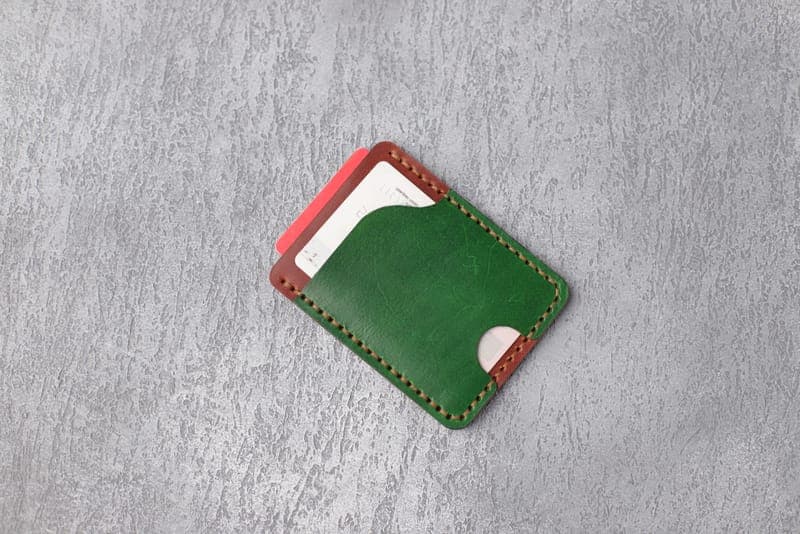
For the trip itself, the best travel wallet is the Bellroy Slim Sleeve: thin enough to live in a front pocket, which is the only pocket worth using in a crowded station, and built from leather that softens rather than cracks. If the problem is documents rather than pockets, the Bellroy Travel Folio is the better buy — it holds passports, boarding passes, cards and currency in one place, which is what actually stops airport panic. Under $25, the Travelambo RFID front-pocket wallet does the thin-wallet job for very little. Five picks are below, split by which of those two problems you are solving.
Buying a travel wallet goes wrong when the buyer does not separate the two jobs. A thin card wallet is for the three weeks of walking around: it moves to a front pocket, it holds a couple of cards and some notes, and it does not create a visible bulge. A passport folio is for the two hours at either end of the trip: it gathers every document in one place so nothing is hunted for at a desk. They are different objects, both useful, and buying the wrong one is the usual mistake. Below: which to buy for which traveller, what RFID blocking honestly does, and the pocket rule worth more than any wallet.
How this page is funded: if you buy through a link here we may earn a commission, at no extra cost to you. It never decides what makes a list or what order the picks are in. Full disclosure.
Quick picks
The whole list at a glance. Tap any row to jump to the full write-up further down the page, or go straight to the listing.
| # | Product | Best for | Price |
|---|---|---|---|
| 1 | Bellroy Slim SleeveThin enough for a front pocket, with a three-year warrantyUnder $100 | The best travel wallet for most people | |
| 2 |  Bellroy Travel FolioPassport, boarding passes, cards, currency and a pen in one placeUnder $250 | The document problem, not the pocket problem | |
| 3 | Travelambo RFID front-pocket walletCompact card wallet with RFID lining, under $25Under $25 | The cheapest way to solve the thin-wallet problem | |
| 4 | Secrid MiniwalletAluminum card case — cards fan out, metal blocks RFID physicallyUnder $250 | The most interesting wallet to receive | |
| 5 | Buffway slim walletMinimal RFID card wallet in a long list of colorsUnder $25 | A spare, a decoy, or a very small budget |
We have not handled these products. Nobody here has worn, tested or owned them, and we will not pretend otherwise. What we do is check that each pick is still sold, still holds up and still makes sense as a gift at this budget. How we choose.
Every pick in detail
Bellroy Slim Sleeve
Bellroy
A very thin leather wallet with pull-tab card access and a slot for folded notes, made from environmentally certified leather.
The pick for the travelling itself rather than the airport. Thinness is the specification that matters, because the entire security advice for a crowded city is to carry your wallet in a front pocket rather than a back one — and a traditional bifold is too thick to do that comfortably, which is why people revert to the back pocket and the risk. The Slim Sleeve is thin enough that the front pocket stops being a compromise, with pull-tab card access and a slot for folded notes. The leather softens with use rather than cracking, and a three-year warranty makes a fault the maker's problem rather than the recipient's on day nine of a trip. Two honest limits: it holds fewer cards than a bifold, and there is no coin pocket, which matters more abroad than at home.
What is good
- Thin enough to carry in a front pocket, which is the entire point of it
- The leather softens rather than cracks with use
- A three-year warranty, so a fault is the maker's problem and not the recipient's
What to know
- Holds fewer cards than a traditional bifold
- No coin pocket
Bellroy Travel Folio
Bellroy
A leather folio holding a passport, boarding passes, cards, currency and a micro pen.
The pick for somebody who flies regularly, and the right answer when the complaint is about airports rather than pickpockets. The folio's value is consolidation: passport, boarding passes, cards, currency and a micro pen all live in one object, so the desk-side scramble through four pockets simply does not happen. It holds more than one passport, which makes it work for a couple or a parent carrying a family's documents — genuinely useful and often overlooked. The leather looks better after a few trips rather than worse. Two caveats to be honest about. It is only useful to somebody who actually flies regularly, so it is a poor guess for a once-a-year holidaymaker, and it is bulkier than a simple passport sleeve, which is the price of holding everything.
What is good
- Puts every document in one place, which is what stops airport panic
- Holds more than one passport, so it works for a couple or a family
- Leather that looks better after a few trips
What to know
- Only useful to someone who flies regularly
- Bulkier than a simple passport sleeve
Travelambo RFID front-pocket wallet
Travelambo
A compact leather card wallet with an RFID-blocking lining, in a wide range of colors.
The pick when the budget is small or the wallet is a secondary gift alongside something larger. It does the one thing that matters for travel — it is small enough to live in a front pocket without a visible bulge — and it includes an RFID-blocking lining at a price where that is unusual. The wide color range makes it easy to match a taste, and it is small enough to work as a stocking filler rather than a main present. It is also a good second wallet: many experienced travellers carry a cheap decoy wallet with a couple of expired cards and a small amount of cash, and this is exactly the right object for that job. The leather is basic and will not last a decade, and it is tight until broken in, which takes a week or two of use.
What is good
- The least expensive way to fix a bulging back-pocket wallet
- RFID lining included at the price
- Small enough to be a stocking filler rather than a main gift
What to know
- Basic leather quality — it will not last a decade
- Tight until broken in
Secrid Miniwallet
Secrid
A leather wallet built around an aluminum card case: a lever slides six cards out in a fan, and the metal itself provides RFID protection.
The pick when the wallet needs to be a gift somebody remembers opening. The mechanism is the point: a lever on the back slides six cards out in a fan, which is genuinely satisfying and is the thing people comment on. For travel it has two real advantages beyond the trick. The aluminum case physically protects cards from bending, which is what actually destroys a card in a back pocket or a packed bag, and the metal itself provides RFID blocking as a consequence of being metal rather than as a claimed lining. The leather outer can be replaced without replacing the card case, so it ages well. Two limits: the case holds six cards and no more, and it is bulkier than a plain card sleeve.
What is good
- The mechanism is the gift — it is the wallet people notice
- Cards are physically protected from bending
- Leather outers can be replaced without replacing the card case
What to know
- A six-card limit in the case
- Bulkier than a plain card sleeve
Buffway slim wallet
Buffway
A minimal leather card wallet with RFID-blocking lining, in a long list of colors.
The pick when you want the thin-wallet benefit at the lowest possible price, or when you want two. It is a minimal leather card wallet with an RFID-blocking lining and a long list of colors, small enough to pass as a stocking filler and cheap enough to buy alongside a main gift. For travel specifically, the case for owning two cheap wallets is stronger than it sounds: one carried in a front pocket with the cards actually being used, and one in a bag with a backup card and a reserve of local cash, so a single loss is not the end of the trip. Its limits are the price: basic leather that will not last a decade, few card slots, and no coin pocket at all.
What is good
- The cheapest way to fix a bulging back-pocket wallet
- Small enough to work as a stocking filler rather than a main gift
- Enough colors to match a specific taste
What to know
- Basic leather that will not last a decade
- Holds few cards, and no coin pocket
If your budget flexes
Everything on this page respects the ceiling in the title. Nothing here needs you to spend more — but if the number moves, these are the neighboring lists.
The five, side by side
| Pick | Job | RFID | Holds | Best for |
|---|---|---|---|---|
| Travelambo RFID | Pocket wallet | Lining | A few cards, notes | Under $25, or a decoy |
| Buffway slim | Pocket wallet | Lining | A few cards | A spare or a backup |
| Bellroy Slim Sleeve | Pocket wallet | No | Cards, folded notes | The best all-round pick |
| Secrid Miniwallet | Pocket wallet | Aluminum case | Six cards plus leather outer | The most giftable |
| Bellroy Travel Folio | Document folio | No | Passports, passes, cards, currency | Somebody who flies often |
Read the job column first. Four of these go in a pocket and one holds documents, and a traveller who complains about airport chaos wants the last row while a traveller who complains about pickpockets wants one of the first four.
Pocket wallet or passport folio?
A pocket wallet is the right gift if the recipient travels in cities, uses public transport, walks a lot, or has ever mentioned a bulging back pocket. The win is that it is thin enough to carry in a front pocket, and the front pocket is the single most effective anti-pickpocket measure there is — more effective than any lining or lock.
A passport folio is the right gift if the recipient flies several times a year, travels with family, or has ever been the person patting down four pockets at a check-in desk. The win is consolidation rather than security: everything a desk might ask for lives in one object that comes out once and goes away once.
- Buy a pocket wallet for city travel, backpacking, commuting and daily use.
- Buy a folio for frequent flyers, families travelling together, and anybody who manages somebody else's documents.
- Buy both for somebody who travels for work. They do not compete — one is for the pocket and one is for the bag.
- Buy neither, and buy packing cubes instead, if the recipient's actual complaint is about luggage rather than documents.
What RFID blocking actually does
RFID blocking puts a metal layer or metallised fabric between a contactless card and the outside world, so a reader held near the wallet cannot energise the chip. That is a real physical effect and the lining does what it claims.
What is worth being honest about is how often it matters. Documented cases of contactless skimming are rare, and modern contactless cards and payment systems use one-time codes rather than static numbers, which limits what a captured signal is worth. Treat an RFID lining as a free bonus when a wallet you already like has one — three of the picks above do — rather than as a feature worth paying a premium for. A passport, by the way, has an RFID chip too, and most passport covers block it.
How many cards a traveller actually needs
- One debit card, for cash withdrawals from bank machines abroad.
- One credit card, as the primary payment method and for the purchase protection it carries.
- One backup card from a different bank, kept separately in a bag rather than in the pocket wallet.
- Identification, which abroad means a passport rather than a driving license in most situations.
- A small amount of local cash, because contactless coverage is uneven in more places than people expect.
Notice that this list fits comfortably in a thin card wallet, and that the loyalty cards, store cards and receipts filling most everyday wallets have no place on a trip at all. That is the real argument for a travel-specific wallet: it is not a better wallet so much as a smaller one, and the smallness is the feature.
The decoy wallet trick
Experienced travellers in higher-risk cities often carry two wallets: a cheap one in an accessible pocket holding a few expired cards and a small amount of cash, and the real one somewhere less convenient. If the worst happens, the decoy is what gets handed over or taken, and the trip continues.
That is why two of the picks above are cheap card wallets rather than nice ones. If you are buying a travel wallet as a gift and the recipient goes to places where this matters, buying the Bellroy and the Travelambo together is a more useful present than buying one more expensive wallet — and it costs barely more.
How these picks were chosen
We have not carried or travelled with any of these. Each pick had to solve one of the two problems this page separates — pocket thinness or document consolidation — and each is a currently sold model. The limits are stated beside the strengths because they are what buyers find out later: the Slim Sleeve's missing coin pocket, the folio's bulk and its narrow usefulness to infrequent flyers, the basic leather on the two budget picks, Secrid's six-card ceiling.
No prices appear on this page and no ratings are awarded. Every pick links to its live listing, so the figure you see is today's.
Questions buyers ask
What is the best wallet for travel?
For the trip itself, the Bellroy Slim Sleeve — thin enough to live in a front pocket, which is the single most effective anti-pickpocket measure there is. If the problem is documents rather than pockets, the Bellroy Travel Folio holds passports, boarding passes, cards and currency in one place.
Do I need an RFID wallet for travel?
It is a useful bonus rather than a necessity. The lining physically works, but documented contactless skimming is rare and modern cards use one-time codes that limit what a captured signal is worth. Take an RFID lining when a wallet you already like has one; do not pay a premium for it.
Should I use a money belt or a wallet when travelling?
A thin wallet in a front pocket covers most situations and is far more convenient, which matters because an inconvenient system gets abandoned. A money belt makes sense for carrying a passport and reserve cash you will not need during the day, not for the card you are paying with.
How many cards should I take travelling?
Three: a debit card for cash machines, a credit card as the main payment method, and a backup card from a different bank kept separately in a bag. Add identification and a small amount of local cash. Leave loyalty and store cards at home — they are what makes a wallet bulky.
What is a decoy wallet?
A cheap second wallet carried in an accessible pocket with a few expired cards and a small amount of cash, while the real wallet sits somewhere less convenient. If it is taken, the trip continues. It is why buying one good wallet and one cheap one is often better than buying one expensive one.
Read next
- Best wallets under $50
The everyday shortlist, where thinness matters less.
- Bifold vs slim wallet
The decision behind this page, for a wallet staying at home.
- Best travel accessories
The rest of the kit, from packing cubes to adapters.
- Is a wallet a good gift?
Whether to buy a wallet at all, answered by relationship.