Sapphire vs Mineral Crystal
Sapphire does not scratch. Mineral glass does not shatter. Here is which one a gifted watch actually needs.
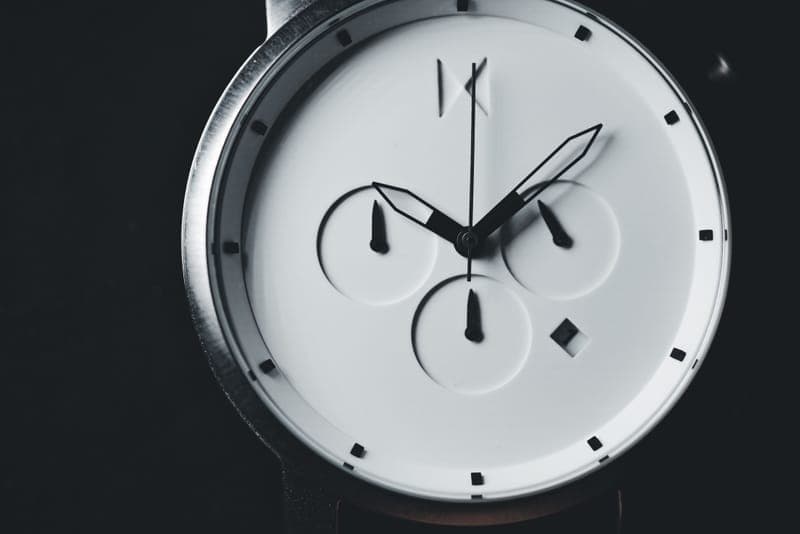
Sapphire is the one to want for a gift. It is dramatically harder than mineral glass, which means the watch still looks new after two years of being knocked against door frames, desk edges and car doors — and a scratched crystal is the one kind of damage the wearer sees every single time they check the time. Mineral glass has one genuine advantage in exchange: it flexes and chips rather than shattering, so under a hard, sharp impact it tends to fail less dramatically.
Here is the part that decides most purchases. Below about $100 you will almost always get mineral glass, and that is fine — at that money the crystal is not what you are choosing between. Between $100 and $250 it varies by model and is worth checking on the listing. Above roughly $400 sapphire becomes standard rather than a feature worth advertising. The useful exception is Orient: the Kamasu puts a sapphire crystal into a $200-ish automatic diver, which is unusual enough to be the main reason people buy it.
What follows is what each material actually is, how to tell which one a listing is describing when it uses vague language, and the four watches in our registry where the crystal is the deciding factor one way or the other.
How this page is funded: if you buy through a link here we may earn a commission, at no extra cost to you. It never decides what makes a list or what order the picks are in. Full disclosure.
Quick picks
The whole list at a glance. Tap any row to jump to the full write-up further down the page, or go straight to the listing.
| # | Product | Best for | Price |
|---|---|---|---|
| 1 | 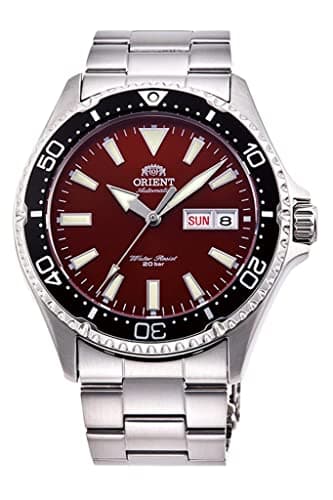 Orient KamasuA sapphire crystal in a 200m automatic diver — unusual at the moneyUnder $500 | Sapphire at the lowest price worth having | $285.00 View on Amazon #ad How this is funded · Price as of October 10, 2026 |
| 2 | 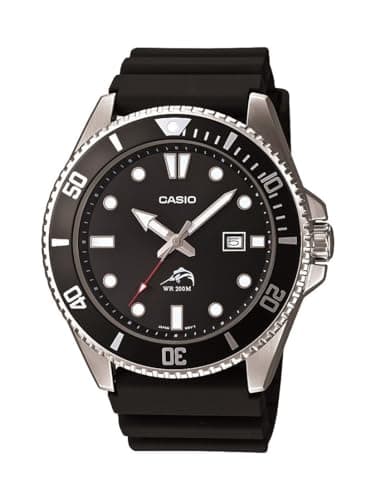 Casio MDV-106 DuroMineral glass, 200m, under $100 — the crystal is not the point hereUnder $100 | When mineral glass is the right call | $68.99$84.95−19% View on Amazon #ad How this is funded · Price as of October 10, 2026 |
| 3 | 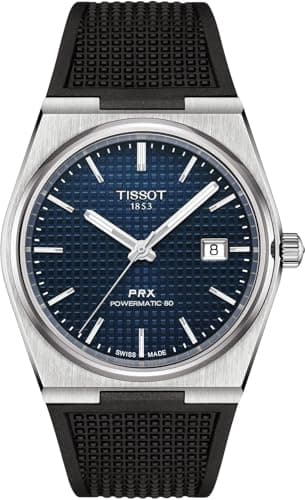 Tissot PRX Powermatic 80Swiss automatic with sapphire and an 80-hour reserveUnder $1,000 | The bracket where sapphire is standard | $775.00 View on Amazon #ad How this is funded · Price as of October 10, 2026 |
| 4 | 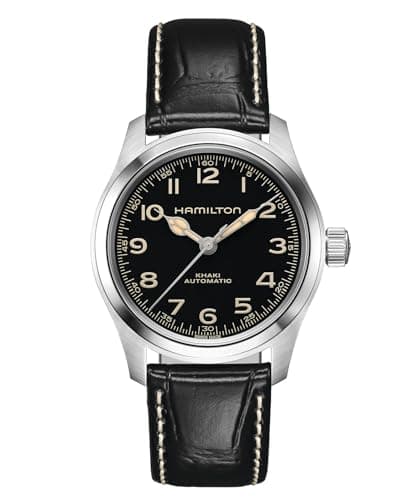 Hamilton Khaki Field Murph AutoSwiss automatic, sapphire, and the clearest dial in the registryUnder $1,000 | Sapphire on the most legible dial here | $995.00 View on Amazon #ad How this is funded · Price as of October 10, 2026 |
We have not handled these products. Nobody here has worn, tested or owned them, and we will not pretend otherwise. What we do is check that each pick is still sold, still holds up and still makes sense as a gift at this budget. How we choose.
What to buy, if you have decided
Orient Kamasu
Orient
A 200m automatic dive watch with a sapphire crystal and a steel bracelet, from Seiko-owned Orient.
The pick that exists on this page because of its crystal. The Kamasu is a 200-meter automatic dive watch from Seiko-owned Orient, and a sapphire crystal at this money is genuinely unusual — it is the specification that most affects how the watch looks in two years, because mineral glass picks up a visible scratch from one doorframe and sapphire does not. It also arrives on a steel bracelet, so nothing else needs buying. If the recipient is the kind of person who will wear one watch every day for years and is hard on things, this is the single best crystal-per-dollar decision in the registry. Its honest costs: it is substantial on the wrist and too much watch for a genuinely small one, and the bezel action is firm rather than smooth.
What is good
- A sapphire crystal at this money is unusual, and it resists scratches far better than mineral glass
- The 200m rating covers anything short of actual scuba work
- The bracelet is included, so nothing else needs buying
What to know
- Substantial on the wrist — think twice for a small-wristed recipient
- Bezel action is firm rather than smooth
#ad How this is funded · Price as of October 10, 2026
Casio MDV-106 Duro
Casio
A full-size analog dive-style watch with 200 meters of water resistance, a rotating bezel and a screw-down crown.
The pick that shows when not to pay for sapphire. The Duro is a 200-meter analog diver with a screw-down crown for under $100, and it has mineral glass. That is the correct trade at this price: you are buying water resistance and a convincing look, and the crystal is the part of the watch that could be upgraded later if it ever mattered enough. In practice it rarely does — a mineral crystal on a watch at this money can be replaced for a modest sum, which is simply not true of the watch itself. Buy it knowing the glass will pick up marks over years. Its other honest costs: the stock rubber strap is the weakest part and many owners swap it, and the 42mm case is too big for a small wrist.
What is good
- 200m water resistance means swimming, showering and dishes with no thought at all
- Looks far more expensive than it is, which is the compliment owners repeat most
- Takes a strap swap well, so it can be smartened up later for very little
What to know
- The stock rubber strap is the weakest part and many owners replace it
- A 42mm case is too big for a genuinely small wrist
#ad How this is funded · Price as of October 10, 2026
Tissot PRX Powermatic 80
Tissot
A Swiss automatic with a 1970s-style integrated bracelet — the case and bracelet are designed as one piece — running Tissot's Powermatic 80 movement with an 80-hour power reserve.
The pick that illustrates the top of the question. The PRX Powermatic 80 is Swiss-made with a sapphire crystal and an 80-hour power reserve, so a weekend in a drawer costs nothing, and at this level sapphire is not a feature anybody advertises — it is simply expected. If you are spending in this bracket and a listing does not say sapphire, treat that as a reason to look harder at the listing rather than a bargain. It is a genuine milestone-gift watch. The costs: sapphire plus Swiss assembly is most of why it costs several times a Seiko, its water resistance suits swimming but it is not a dive watch, and the integrated-bracelet design is a strong look that not everyone wants.
What is good
- An 80-hour power reserve means it is still running on Monday after sitting all weekend, which is the single most practical difference at this price
- The integrated bracelet is the look people pay many times this for, and it is the reason this watch sells out repeatedly
- Swiss automatic with a sapphire crystal, so it holds up to daily wear
What to know
- An integrated bracelet means you cannot simply swap in a standard strap — changing the look is limited and needs the right fitted part
- The polished case sides pick up hairline scratches quickly
- Water resistance suits swimming but it is not a dive watch
#ad How this is funded · Price as of October 10, 2026
Hamilton Khaki Field Murph Auto
Hamilton
A Swiss-made military-styled field watch with a sapphire crystal and an automatic movement carrying an 80-hour power reserve.
The pick when sapphire needs to sit over a dial the recipient can actually read. The Khaki Field Auto is Swiss automatic with a sapphire crystal, an 80-hour power reserve and genuine military lineage rather than military styling, and it has the most legible dial of anything in our registry by a clear margin. Sapphire matters more on a watch like this than on a dive watch, because a field watch gets worn while doing things, and the crystal is the surface that meets every doorframe. Honest limits: water resistance covers rain and washing up rather than swimming, so this is not the watch for a swimmer; it is deliberately plain, which will disappoint a recipient hoping for something showy; and sapphire plus Swiss assembly accounts for most of the price.
What is good
- The most legible dial of anything on this page — a field watch exists to be read at a glance, and this one is the reference version
- 80-hour power reserve, so a weekend off the wrist does not stop it
- Military heritage that is genuine rather than styling, which matters to the kind of recipient who asks about it
What to know
- Deliberately plain — if the recipient wants a watch that looks expensive, this is the wrong direction
- Water resistance covers rain and washing up rather than swimming
- The stock strap is the first thing many owners change
#ad How this is funded · Price as of October 10, 2026
Side by side
| Sapphire | Mineral glass | |
|---|---|---|
| What it is | Synthetic sapphire, grown rather than mined | Hardened silica glass, chemically or heat treated |
| Scratch resistance | Very high — effectively only harder minerals mark it | Moderate — keys, grit and doorframes all leave marks |
| Shatter resistance | Lower — brittle, so a hard sharp blow can crack it | Higher — flexes and chips rather than failing outright |
| Looks after two years | Usually indistinguishable from new | Visibly marked if the watch is worn daily |
| Glare | Often anti-reflective coated, which can wear in patches | Less reflective raw, rarely coated |
| Replacement | Expensive, and usually a watchmaker job | Cheap, and worth doing on an inexpensive watch |
| Typical price point | Standard above roughly $400 | Normal below roughly $100 |
| Best for | A watch worn every day for years | A watch that will take knocks, or a cheap watch |
The row that decides it is the fourth. Scratch resistance is not an abstract specification — it is the difference between a gift that looks like a gift in two years and one that looks tired. Shatter resistance sounds more serious and matters far less, because the circumstances that crack a sapphire crystal are rare enough that most people never meet one.
What sapphire actually is
Synthetic sapphire is grown in a furnace from aluminium oxide, then sliced and polished into a crystal. It is not a gemstone in any meaningful sense and it is not rare — what makes it expensive is that it is hard enough to be difficult to cut and shape, so the manufacturing is slow. The hardness is the whole point: on the standard mineral hardness scale it sits at 9, just below diamond at 10, and well above the quartz grit at around 7 that is in ordinary dust and sand.
That number is why sapphire works. Most of what scratches a watch in daily life is below 9 on that scale, so it simply slides off. Mineral glass sits around 5 to 6, which is below the grit in everyday dust, and that is the honest explanation for why an inexpensive watch looks hazy after a couple of years even if it has never had an obvious accident.
The trade-off is brittleness. Hardness and toughness are different properties, and sapphire is high on the first and lower on the second: it resists being scratched and resists being bent or absorbed less well, so a sharp impact on an edge can crack it. Mineral glass takes the same hit and often just chips. This is a real difference and it is why some tool watches and some military-specification watches still use mineral glass or acrylic deliberately.
Reading a listing without being misled
Crystal descriptions are where listings get slippery, and a few phrases are worth knowing before you spend.
- "Sapphire-coated" or "sapphire-treated" mineral glass is mineral glass. A thin coating wears through and the crystal underneath scratches normally. Treat the phrase as a warning rather than a half-measure.
- "Hardlex" is Seiko's own proprietary hardened mineral glass. It is better than ordinary mineral glass and it is not sapphire, and Seiko has never claimed otherwise.
- "Crystal glass" and "hardened glass" mean mineral. If a listing has sapphire, it says sapphire, because it is the better selling point.
- "Acrylic" or "plexiglass" is plastic. It scratches extremely easily and polishes out just as easily with a tube of plastic polish, which is why vintage reissues use it on purpose.
- Anti-reflective coating is a separate thing from the crystal material, usually on sapphire, and it can wear in patches over years. A coated sapphire that has started to look blotchy is cosmetic rather than structural.
One physical test is worth knowing if the watch is already in front of you. A drop of water sits in a tighter bead on sapphire than it does on mineral glass, which spreads it flatter. It is not conclusive and it is better than guessing. Tapping a crystal with a fingernail to judge the sound is folklore and tells you very little.
When mineral glass is the right choice
Three situations, and they are more common than the enthusiast consensus suggests. The first is any watch under about $100: at that price the crystal is not what distinguishes one option from another, and a mineral crystal on a cheap watch can be replaced for a small fraction of the cost of a sapphire replacement on an expensive one.
The second is a watch going to someone genuinely hard on things — a teenager, a tradesperson, anyone working around tools and metal. The failure mode matters here: a chipped mineral crystal is still readable and still sealed, while a cracked sapphire is a trip to a watchmaker. Casio's resin-cased watches are the obvious example, and they are made this way on purpose.
The third is a vintage reissue with an acrylic or domed crystal, where the slight distortion at the edge is the look being paid for. Scratches on acrylic polish out at home with a cloth and a tube of polish, which no other crystal material allows.
How to keep either crystal looking new
- Wear the watch on the inside of the wrist if the recipient works with their hands. It sounds eccentric and it moves the crystal away from every surface that would otherwise meet it.
- Rinse rather than wipe when the watch is dusty. Dragging a dry cloth across a mineral crystal grinds the grit into it, which is how most fine scratch patterns actually appear.
- Take the watch off for any job involving brick, concrete, stone or grinding. All of those are above mineral glass on the hardness scale and some are close to sapphire.
- Get a cheap mineral crystal replaced rather than living with it. On a watch under $100 a new crystal costs little and makes the watch look new, which is a better outcome than buying another watch.
None of this applies to the rest of the watch, which is a separate job. A crystal can be flawless while the band is the thing letting the whole watch down, and a band is far easier to fix.
Questions buyers ask
Is sapphire or mineral crystal better for a watch?
Sapphire, for a watch worn every day over years, because it resists scratches far better and a scratched crystal is damage the wearer sees constantly. Mineral glass is better for a watch that will take hard knocks or costs under about $100, since it chips rather than cracking and is cheap to replace.
Does sapphire crystal scratch at all?
Rarely, and only against something harder. Sapphire sits at 9 on the mineral hardness scale against the roughly 7 of the quartz grit in ordinary dust, so everyday contact does not mark it. Diamond will, and so will some grinding and masonry work.
Can sapphire crystal break?
Yes. Hardness and toughness are different things, and sapphire is brittle — a sharp blow on the edge can crack it where mineral glass would chip. It is uncommon in normal wear, and it is the one real argument for mineral glass on a watch used around tools.
At what price do watches get sapphire crystal?
Generally above about $400 it is standard, between $100 and $250 it varies by model and is worth checking the listing for, and below $100 it is almost never present. The notable exception is Orient, whose Kamasu puts sapphire into a $200-ish automatic diver.
What is Hardlex?
Seiko's own hardened mineral glass. It resists scratches better than ordinary mineral glass and not nearly as well as sapphire, and Seiko has always described it accurately. If a Seiko listing says Hardlex, the watch does not have sapphire.
Is sapphire-coated glass the same as sapphire?
No. It is mineral glass with a thin sapphire layer applied, and the layer wears through, after which the crystal scratches like the mineral glass it is. Read the phrase as a sign the watch does not have a sapphire crystal.
Read next
- Are expensive watches worth it?
Sapphire is one of four things more money actually buys.
- Best waterproof watches
Where sapphire matters most, because the watch never comes off.
- Best watches under $500
The bracket where sapphire starts appearing on most listings.
- Casio Duro vs Seiko 5
Mineral against Hardlex, in the two most-recommended cheap divers.
- How to clean a watch band
The other half of keeping a gifted watch looking new.